

Mechanical Homogenization: Disrupt Mammalian Cells Effectively
When a cell-culture scientist in Singapore encountered inconsistent lysis yield from a mammalian-cell harvest, she increased mechanical energy to recover more target material. The first run looked better; the next brought a warmer sample and lower target activity. The reversal was important: the problem was not bad equipment, but an uncontrolled method window in which energy input, temperature, suspension properties, and collection timing were changing together.
Summary: Mammalian cells often need a gentler lysis window than microbes because excessive shear or heat can damage the target as readily as it opens the cell. Compare at least two controlled conditions, measure both lysis and target quality, and use temperature as a release criterion rather than an afterthought. ISO 13320 is useful context when particle-size characterization matters, but it is a laser-diffraction test-method standard – not a homogenizer certification.
For lab managers and process engineers, the objective is not maximum force; it is repeatable recovery of fit-for-purpose material. In this article, mechanical approaches include high-pressure processing, rotor-stator shear, and bead-based disruption. The right choice depends on cell fragility, volume, viscosity, downstream assay, containment needs, and the evidence required for transfer or validation.
Set a controlled lysis window before adding energy
mechanical homogenization works by transferring energy into a suspended sample, but the useful output is a balance of cell opening, debris profile, temperature, and molecular integrity. Mammalian cells generally have no rigid wall, so a protocol borrowed from bacteria or yeast can be unnecessarily aggressive. High recovery of soluble protein or an active organelle depends on avoiding avoidable residence time, foaming, and repeated stress after the relevant cells have opened.
Start with a documented design space: harvest age, buffer, cell density, pass count, cooling, and collection delay. Use matched aliquots. A first screen can compare two controlled conditions with an untreated reference; assess lysis, target quality, and sample temperature immediately after collection.
The literature on cell disruption should be read with the expression system and analyte in mind. A review of disruptive and non-disruptive approaches for intracellular-product recovery discusses how downstream objectives affect method selection and highlights the trade-off between release and product damage.1 For mammalian work, define success with the downstream team: total protein, enzyme activity, intact nuclei, RNA quality, or a low-debris lysate are materially different endpoints.
Temperature, foam, and hold time are process variables
Warmth can change protease activity, viscosity, and stability. Record inlet and outlet sample temperature, use compatible chilled collection, and set a maximum post-process hold time. If foam appears, check fill level, aspiration, buffer chemistry, and transfer geometry before raising energy again.
Record sample identifier, buffer lot, volume, pass count, processing time, temperature, operator, and collection vessel. Those fields reveal whether a result changed with the material or the method.
Troubleshooting Mechanical Homogenization performance
Low lysis, low target activity, and an inconvenient debris burden are different failures. First confirm the result with a duplicate assay and handling control. Then adjust one primary factor while holding cell density, buffer, and collection constant.
| Observed result | Likely mechanism | First controlled check | TCO implication |
|---|---|---|---|
| Low release, stable target | Insufficient opening or clumped feed | Check dispersion and compare one incremental condition | Less rework and fewer repeat assays |
| Higher release, lower activity | Heat, shear, or delayed stabilization | Compare matched chilled collection and shorter hold | Protects value of each harvest |
| Variable clarification | Changing debris size or viscosity | Measure viscosity and review pass-to-pass consistency | Can reduce filtration and centrifugation burden |
| Foam or volume loss | Air entrainment or unsuitable transfer conditions | Review feed path, fill level, and vessel geometry | Reduces consumable loss and cleanup time |
For an illustrative cost calculation, compare one failed run – culture, analyst time, assay repeats, and delay – with a short structured screen. Set acceptance criteria before testing; a favorable lysis percentage alone is not decisive when the product assay disagrees.
Materials and sample compatibility for Mechanical Homogenization
Compatibility begins with the sample, not the machine. Fragile cells, dense pellets, viscous suspensions, serum-containing media, and particulate samples change energy distribution. In bead processing, bead properties, fill ratio, cycle length, and cooling affect the result. A viscous feed may require a different transfer strategy at scale.
bead mill homogenizer protocol development is appropriate when small-volume, high-throughput disruption or robust particulate samples are the priority. It is less automatically suitable for a mammalian lysate when minimizing heat, fine debris, or target stress is the core requirement. Compare methods on the actual analyte and downstream workload, rather than treating bead milling as a universal baseline.
Mammalian Cell Homogenizer Pressure selection checklist
mammalian cell homogenizer pressure should be selected through a method-development range, not copied from a microbial protocol or treated as a universal number. The selection question is whether a controlled energy input releases the desired material while preserving the intended quality attribute. Review equipment documentation for the operating range, sample-contact materials, cleaning approach, throughput, and safe operating instructions; then establish the actual usable window with the sample.
- Define the critical quality attribute: active protein, intact organelles, nucleic acid quality, or total soluble yield.
- Specify feed volume, expected viscosity, cell density, allowable temperature rise, and minimum sample recovery.
- Run a two-condition screen with identical buffer, harvest age, and analytical method; add a pass only when its value is measured.
- Document transfer, cleaning, and containment requirements before scaling, including who will review deviations.
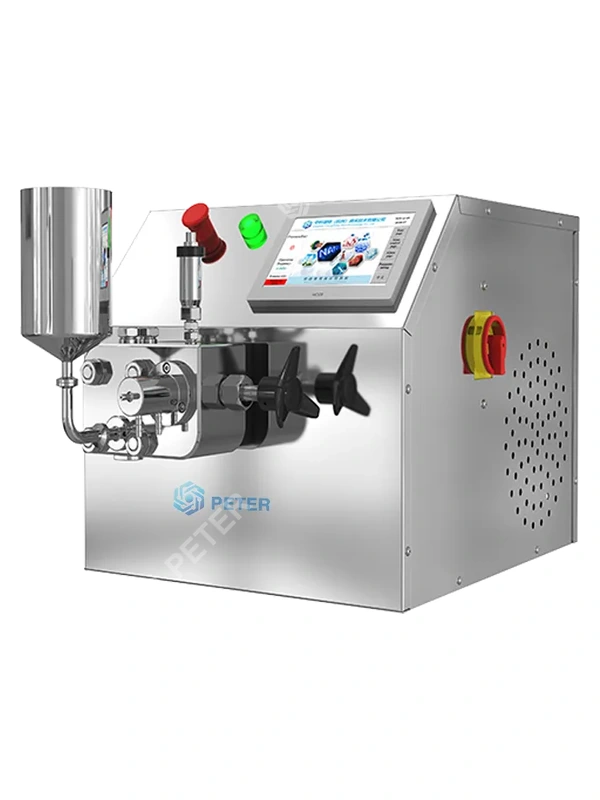
At the scale-up discussion, hardware should support a documented process rather than substitute for one. CAS PETER offers the PT-10 high-pressure homogenizer and the PT-20 high-pressure homogenizer; technical buyers should request the current specifications and assess them against their defined feed, throughput, and cleaning requirements. For a broader laboratory comparison framework, see this guide to cell disruptor homogenizers for laboratory needs.
Validation methods for Mechanical Homogenization in cell lysis and sample preparation
Validation should connect the machine step to a measurable decision. Exploratory work can use a documented method comparison; transfer may include repeatability across operators, days, and lots. A minimal package includes an acceptance criterion, representative sample, analytical method, and deviation record. Three independent preparations are more useful than three readings from one preparation when preparation variability matters.
| Application | Primary readout | Useful control | Decision use |
|---|---|---|---|
| Soluble-protein recovery | Target assay plus total protein | Untreated and handled-only samples | Balance release with activity |
| Organelle preparation | Integrity or marker-enrichment assay | Gentle reference preparation | Limit over-disruption |
| Particle or debris study | Size distribution and microscopy | Same feed before processing | Plan clarification steps |
| Process transfer | Repeatability and recovery | Qualified reference run | Set operating instructions |
If particle-size measurement is part of the decision, ISO 13320 provides laser-diffraction test-method context for reporting and method control; it does not certify a homogenizer or establish biological product quality.2 Use an orthogonal biological or biochemical assay to decide whether the observed physical change is desirable.
Standards, biosafety, and regulated-use boundaries
Biosafety procedures should follow the organism, sample origin, aerosols, and facility risk assessment. CDC’s Biosafety in Microbiological and Biomedical Laboratories is a biosafety guidance resource; apply its principles with local procedures and training rather than assuming that a piece of processing equipment alone controls risk.3
For regulated pharmaceutical applications, current good manufacturing practice requirements apply to the finished process and its records where the intended use and market make them applicable. FDA’s cGMP resources explain the regulatory framework, but they do not turn a laboratory method or a product listing into a compliant process.4 Unsupported claims about yield, sterility, validation, or regulatory status can create procurement and market-access risk. Align claims, test reports, qualification plans, and documentation with the destination market and intended use.
Frequently asked questions
What is a bead mill homogenizer used for in cell lysis?
A bead mill homogenizer is used to disrupt cells by agitating a sample with beads, producing collisions and shear. It can be effective for tough cells and small batches, but mammalian-cell applications should be assessed for heat generation, debris, and target sensitivity. Confirm recovery with a relevant activity or integrity assay.
How does a bead mill homogenizer disrupt cells?
Rapid bead movement creates mechanical impacts and local shear that break cellular structures. The outcome depends on bead characteristics, loading, cycle duration, cooling, and the sample itself. Use short, controlled comparisons instead of increasing cycle time until visible disruption occurs.
How does a bead mill homogenizer compare with mammalian cell homogenizer pressure?
Bead milling distributes energy through bead collisions, while pressure-based processing uses controlled flow and pressure release to create disruption forces. Neither is automatically gentler or more effective; choose by sample volume, desired debris profile, thermal control, and assay result. The phrase cell disruption highpressure homogenizer describes a use case, not a proof that any setting preserves a specific target.
Which conditions improve recovery with a bead mill homogenizer?
Matched buffer, limited processing time, controlled cooling, appropriate bead loading, and prompt stabilization can improve recovery. For mammalian targets, begin conservatively and compare lysis with activity, not just total released material. If the product signal drops as release rises, reduce stress or revise the collection workflow.
References
- NCBI PMC: review of cell-disruption approaches and intracellular-product recovery.
- ISO 13320: Particle size analysis – Laser diffraction methods.
- CDC: Biosafety in Microbiological and Biomedical Laboratories.
- FDA: Current Good Manufacturing Practice regulations.
The durable lesson is simple: a mammalian-cell lysis method is successful when it preserves the decision-relevant target, not when it delivers the most mechanical energy.
When your team is ready to define a scalable method window, review the PT-10 high-pressure homogenizer in the context of your sample and validation plan, then contact CAS PETER to discuss current technical information and sourcing support.