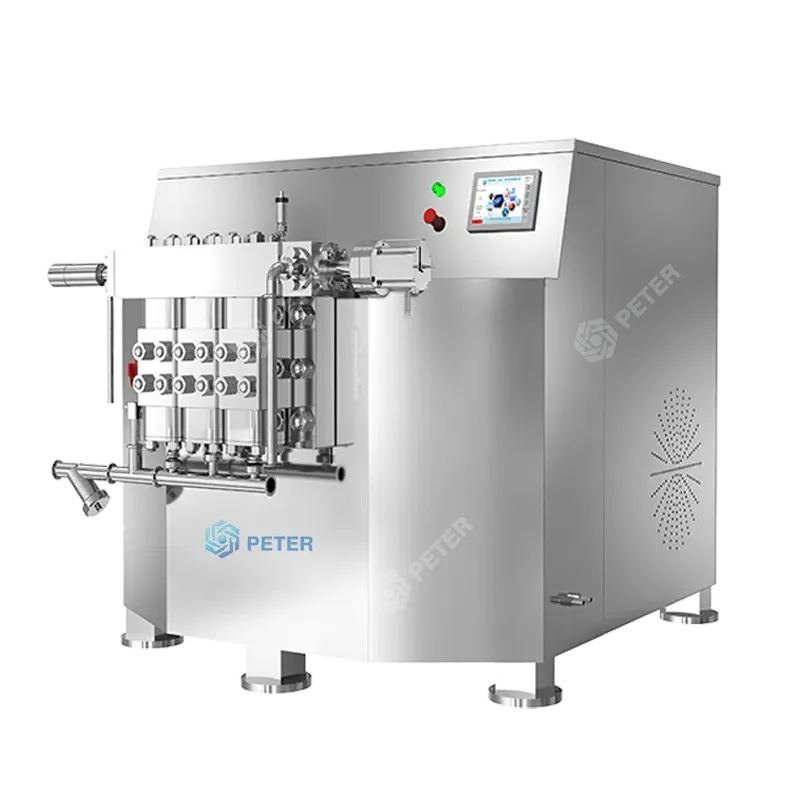
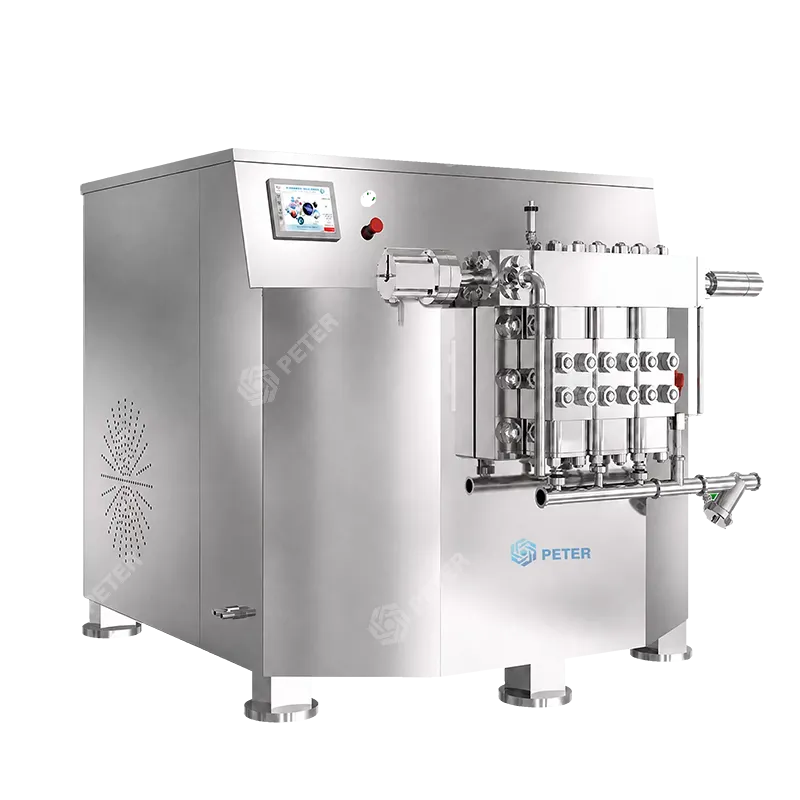
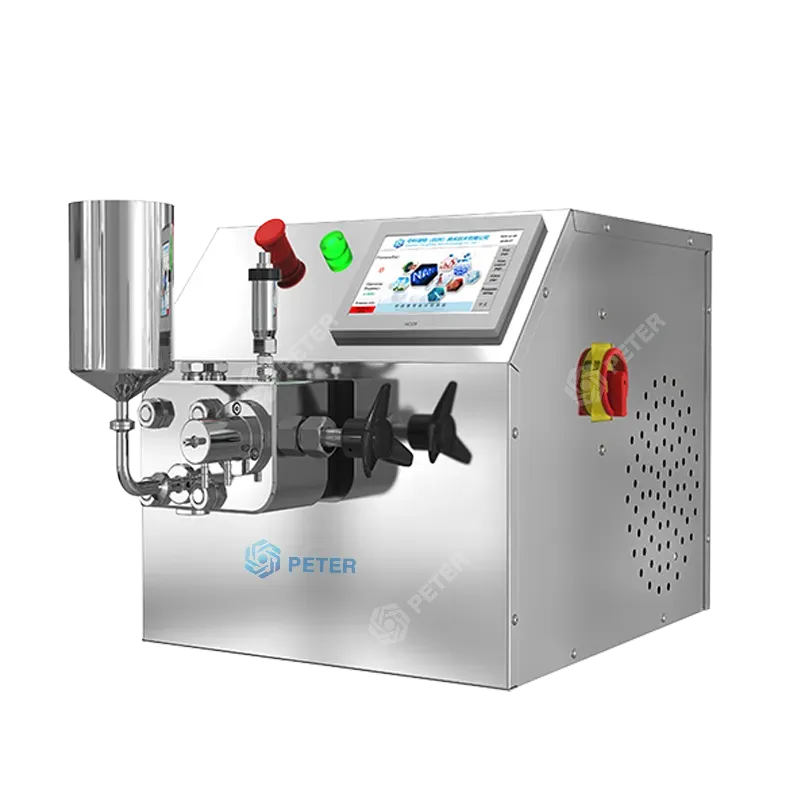
Pilot Homogenizer Feed and Formulation
State whether the trial is for dispersion, emulsification, cell disruption or another formulation result before selecting the operating window.
 PETER
Nanotechnology
PETER
Nanotechnology
Production type high-pressure homogenizer
This pilot-scale high-pressure homogenizer reaches a maximum pressure of 1500 bar with throughput up to 40 L/H and a minimum processing volume of 50 mL.Equipped with manual pressure regulation, it maintains stable bioactivity of materials and supports high-temperature sterilization, perfectly suited for pilot production trials.
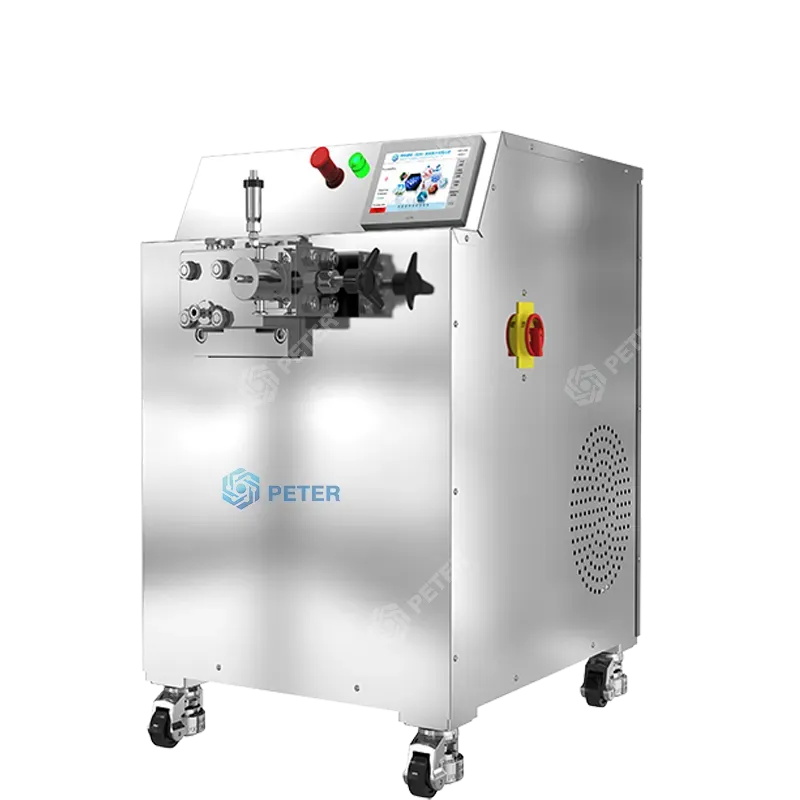
Core specifications
Pilot high-pressure homogenizer
PT-40 is presented for pilot-scale high pressure homogenization and scale-up discussions. Define the process result, feed conditions and handoff records before asking CAS PETER to confirm the quoted setup.
The public summary states up to 40 L/H and a 50 mL minimum volume while the technical table lists >=50 L/H and 40ML; confirm the quoted configuration.
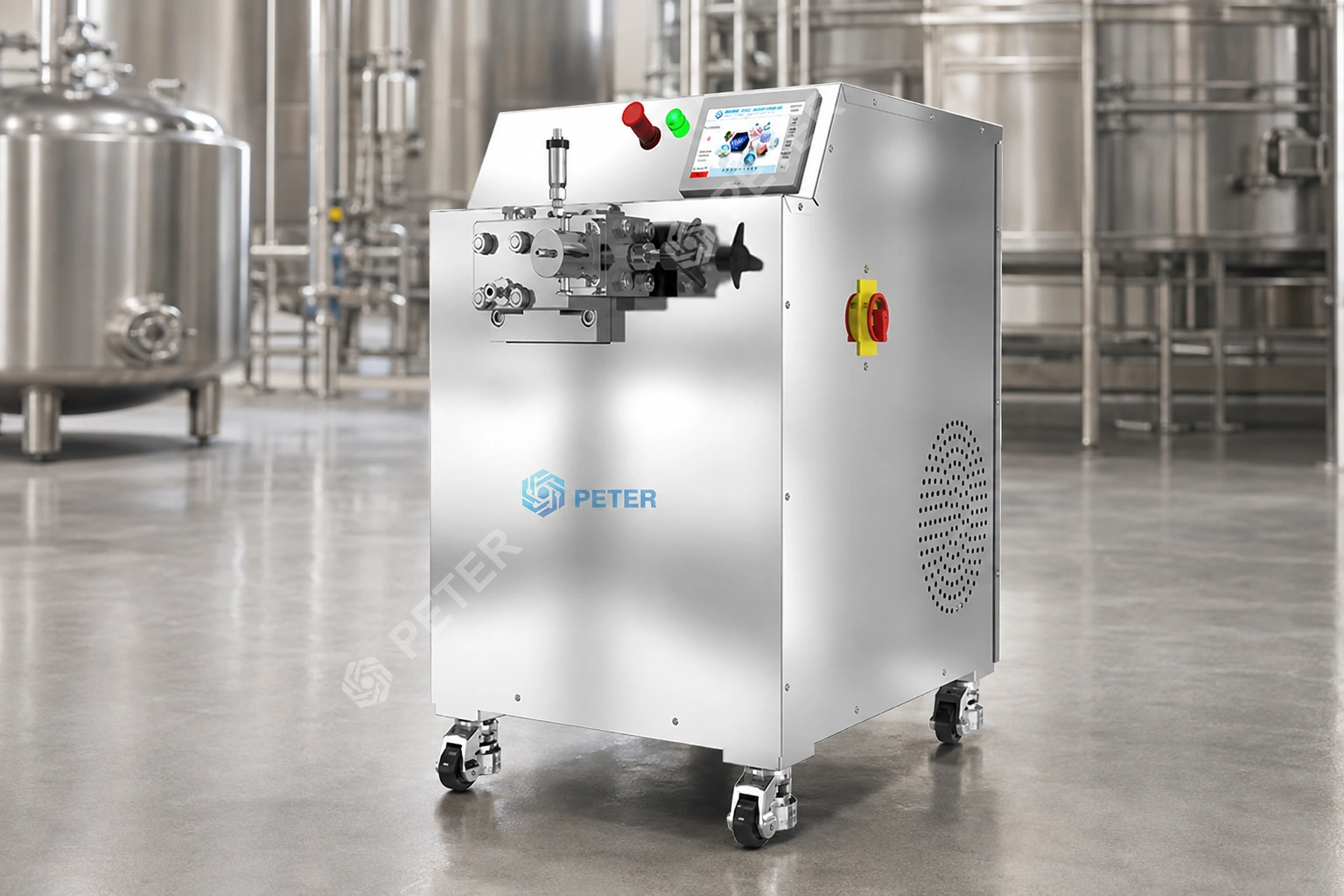
Model facts
The product page publishes model-level pressure, throughput, viscosity, power, temperature and feed or volume fields. Use the values below as the starting point for a process discussion and confirm the quoted configuration.
The technical table lists processing speed >=50 L/H, maximum pressure 1500 bar, viscosity <=9000, AC220V 1.5KW, operating temperature -10°C to 50°C, and minimum processing 40ML.
Quotation check: confirm the final pressure, throughput and configuration before purchase.
Selection route
CAS PETER positions its homogenization equipment for nano dispersion, emulsification, cell disruption and scale-up discussions. The right configuration depends on material behavior, required result and operating window.
State whether the trial is for dispersion, emulsification, cell disruption or another formulation result before selecting the operating window.
Compare the published throughput and minimum-volume fields with batch size, pass strategy and the volume available for validation.
Use a representative material brief and ask CAS PETER to confirm pressure, temperature, compatibility and records for the quoted setup.
Evidence and support
These are supplier-level statements from the captured CAS PETER pages. They explain what to discuss with the team; they do not replace model-specific compatibility or certification confirmation.
The technical content lists diamond for the homogeneous spool, zirconia ceramic for the valve core and plunger, PTFE seals, duplex stainless steel 2205/2507, 316L, Stelli alloy zirconia ceramic, fluorine rubber sealing ring and imported UPE with Ra0.1 internal-wall roughness.
CAS PETER’s Service page lists commissioning, process validation, operator training, maintenance planning and technical consultation.
The Support page lists application guidance, operating documentation, maintenance assistance and spare-parts enquiries.
Trial definition
A trial plan may start with the process result you need to demonstrate, then ask CAS PETER to confirm the operating window and records for the quoted configuration. This planning aid is not a performance guarantee.
| Decision field | What to provide | What to confirm |
|---|---|---|
| Material | Formulation, viscosity, solids or cell content and sensitivity. | Contact-material compatibility and cleaning boundary. |
| Target result | Dispersion, emulsification, cell disruption or another measurable outcome. | Test method, sampling point and acceptance criteria. |
| Operating window | Required pressure, throughput, temperature and pass strategy. | Final rating, controls, voltage and installation conditions. |
| Scale-up | Batch volume, repeatability needs and production handoff timing. | Records, service scope, documents and commissioning plan. |
Include the material system, viscosity, feed-particle or minimum-volume constraint and available sample volume.
Define the result that will decide whether the configuration moves forward.
Ask for pressure, flow, temperature, pass strategy, voltage and material compatibility in the quotation.
Agree which test records, operating guidance and support documents accompany the delivered setup.
Quotation checklist
Price, MOQ, lead time, packaging, trade terms, warranty, available documents and the final operating rating are not published as universal terms for this model. Confirm them for the intended market and configuration.
FAQ
These questions reflect Google People also ask themes for this product category. Model-specific limits and commercial terms remain quotation-stage confirmations.
A homogenizer is used to make a liquid or suspension more uniform through a controlled process step. PT-40 is positioned for pilot-scale process development and scale-up planning; confirm the target result and feed.
A high-pressure homogenizer processes a defined feed through a controlled pressure and flow path. The actual pass strategy, temperature window and result depend on the feed and quoted PT-40 configuration.
CAS PETER presents laboratory, pilot and production-oriented high-pressure configurations. Choose the scale by feed properties, target result, required sample volume and the handoff plan to production.
Homogenization is used to make a liquid feed more uniform and stable for the intended process. For a milk or dairy trial, confirm the target stability, formulation, temperature, cleaning method and PT-40 operating window.
Read PT-40 together with the feed, target result and scale-up plan. Confirm pressure, flow, pass strategy and temperature for the quoted configuration rather than transferring values from another model.
Include feed composition, target result, trial volume, throughput, viscosity, particle size, temperature, voltage, utilities, installation environment, documents, commissioning and the scale-up handoff requirements. Commercial terms require confirmation.
Performance
Model selection should be matched to material properties, target capacity, and the degree of process control required for your application.
Material testing, research projects, and industry exhibition records

Milk, soy milk, juice, and dairy products supported by uniform dispersion, finer taste, and stable emulsification.

Liposomes, vaccines, and cell disruption processes supported by repeatable high-pressure homogenization.

Essence, emulsion, and nano raw materials processed for ingredient uniformity, absorption, and formula stability.
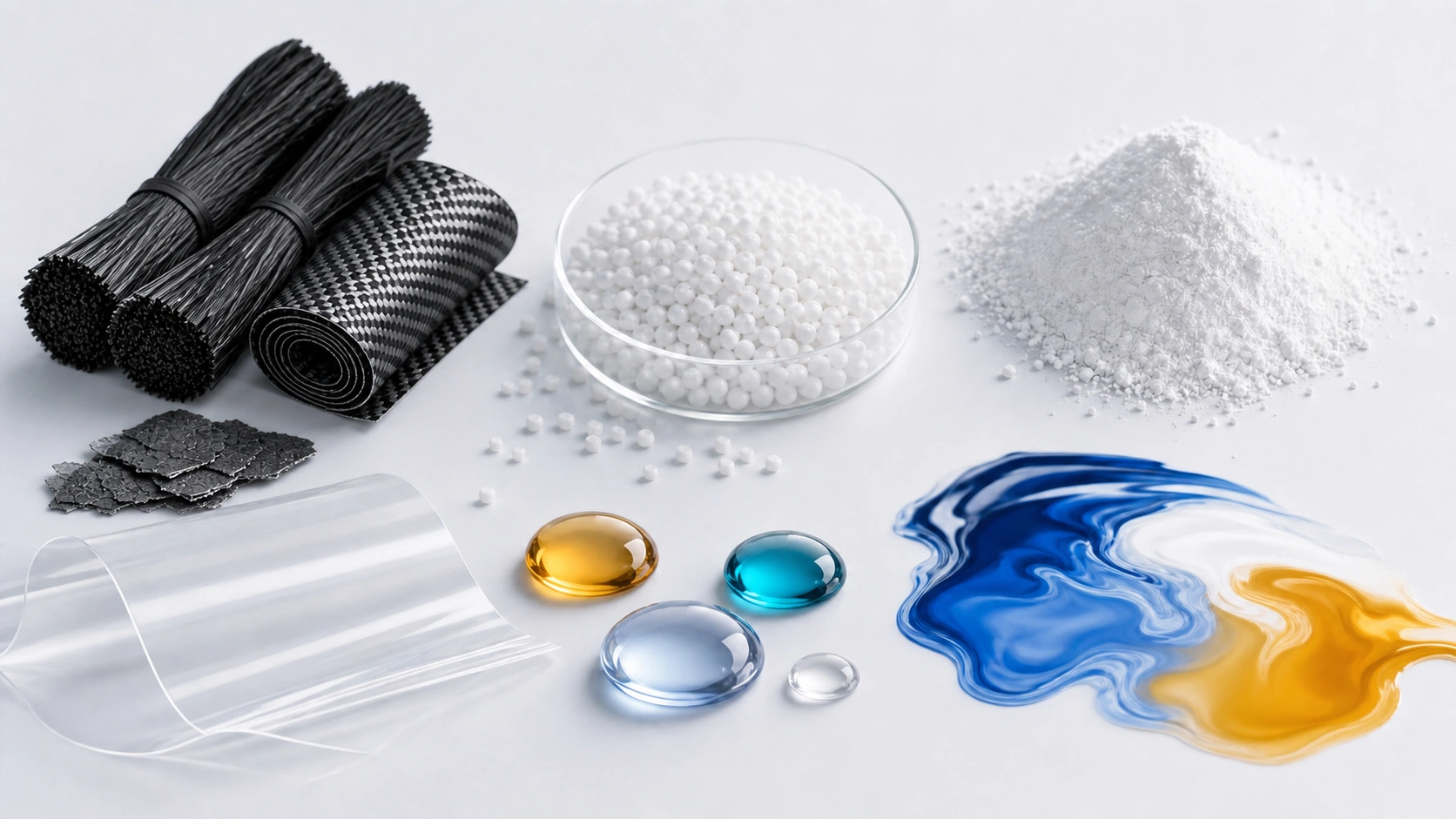
Nano materials, coatings, inks, graphene, and battery conductive slurry refined through high-energy dispersion for improved fineness and stable performance.

Essential oils, aroma compounds, fragrance emulsions, and specialty chemical formulations processed with repeatable fineness control and stable dispersion.

Dedicated homogenization equipment for universities, research institutes, and laboratory development projects.
Discuss Pilot type high pressure homogenizer PT-40Share your material, target capacity, and process objective. CAS PETER will help assess whether this model is suitable for your project.
Share your process requirements and we will follow up with equipment and application recommendations.