

Dairy Homogenizer Machine Price: Buyer and Selection Guide
When a procurement lead in Monterrey accepted a low initial quote for a new dairy line, the decision looked efficient until cleaning provisions, validation evidence, and expected downtime entered the review. The visible failure was not a broken machine; it was a budget that no longer covered the process. The reversal came when the team rewrote its request around product viscosity, target particle reduction, sanitation, throughput, and service access. The root cause was evaluating purchase price alone rather than application specification and total cost.
Summary: A meaningful dairy homogenizer machine price comparison begins with duty, hygienic design, verification, and lifecycle support, not a number on a quotation. Convert pressure consistently: 1 MPa equals 10 bar, then compare the delivered flow at the required pressure and product condition. For food operations, the FDA Food Safety Modernization Act frames preventive controls around the facility and process, not around a machine label. Ask suppliers for a documented application basis, cleaning approach, and acceptance plan before comparing commercial terms.
The milk homogenizer machine market contains equipment built for very different duties: pilot development, short production runs, continuous dairy processing, and high-shear dispersions that merely happen to be food products. A dairy homogenizer for sale is therefore not a comparable item until the buyer defines the feed, target result, operating window, and ownership responsibilities. Search phrases can help a buyer find options, but they cannot replace an application brief.
Start with the dairy duty, not the quoted machine
Homogenization is selected to reduce fat globule size distribution, improve dispersion stability, or create repeatable texture. In milk, cream, cultured products, ice-cream mix, and protein-rich formulations, the same pressure can produce different outcomes because composition, inlet temperature, fat level, solids, and viscosity change the response. A data sheet is not proof that a unit will meet a product target.
Specify the process window
Define nominal flow and the minimum and maximum flow that the line must sustain. Define pressure in one unit, such as MPa or bar, and record the maximum allowed product temperature rise. A 20 MPa requirement is 200 bar; that simple conversion prevents a comparison from mixing units. Also state whether one or two homogenization stages are required, the inlet condition, the particle or stability target, and the sample plan for proving the result.
Connect the homogenizer to upstream separation, blending, pasteurization, and downstream filling or fermentation. Capacity depends on the formulation and usable operating point. Illustrative only: a line asked to run at 5,000 L/h is not comparable if that flow is available only below the required pressure or with a low-viscosity test liquid. Require the quoted duty point to state flow and pressure together.
Food safety controls reflect the full operation. FDA FSMA materials describe preventive controls for covered food facilities, while the FAO food safety program provides broader context. Neither source certifies a homogenizer; they help frame hygienic construction, sanitation, traceability, and records.
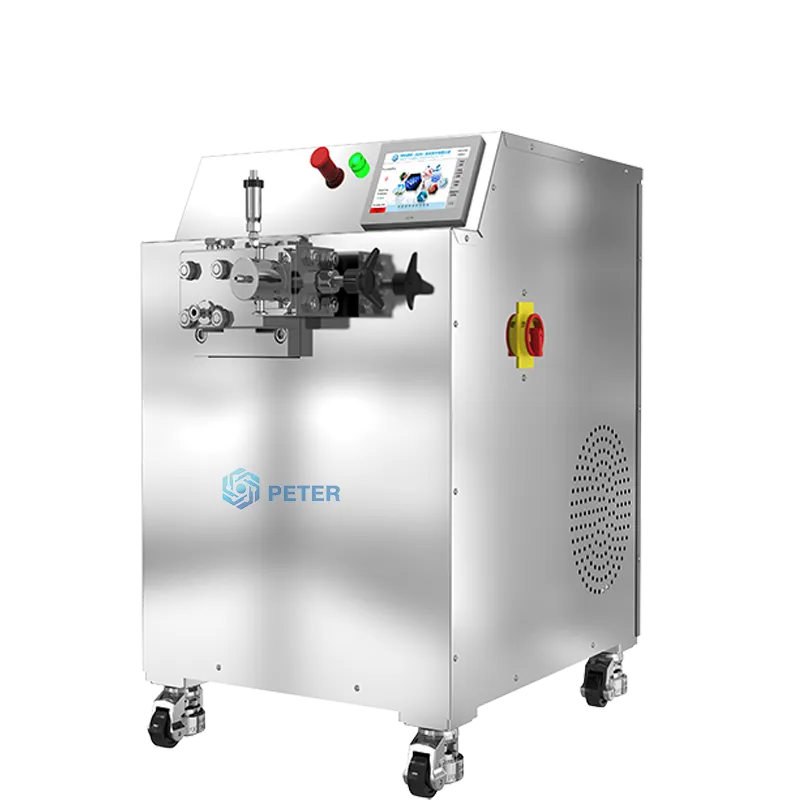
Compare lifecycle cost drivers before comparing total price
The honest answer is that no defensible universal price exists. Configuration, capacity, pressure, materials, controls, documentation, installation scope, and local support can all change the commercial proposal. A low purchase figure can be appropriate for a simple, well-understood duty; it becomes risky when it excludes the components or evidence needed to operate, clean, validate, and maintain the line.
| Comparison point | What to request | Why it affects value |
|---|---|---|
| Delivered duty | Flow and pressure at the actual product condition | Separates a stated maximum from usable production capacity. |
| Hygienic integration | Product-contact materials, seals, connections, and cleaning route | Influences sanitation consistency and changeover planning. |
| Controls and records | Instrumentation list, alarms, data needs, and acceptance documentation | Supports repeatability and investigation when a batch varies. |
| Serviceability | Wear-part plan, access steps, lead times, and training scope | Shapes planned maintenance and unplanned downtime exposure. |
| Scale-up path | Pilot conditions and production correlation plan | Reduces the risk of buying a production unit from an unrepresentative trial. |
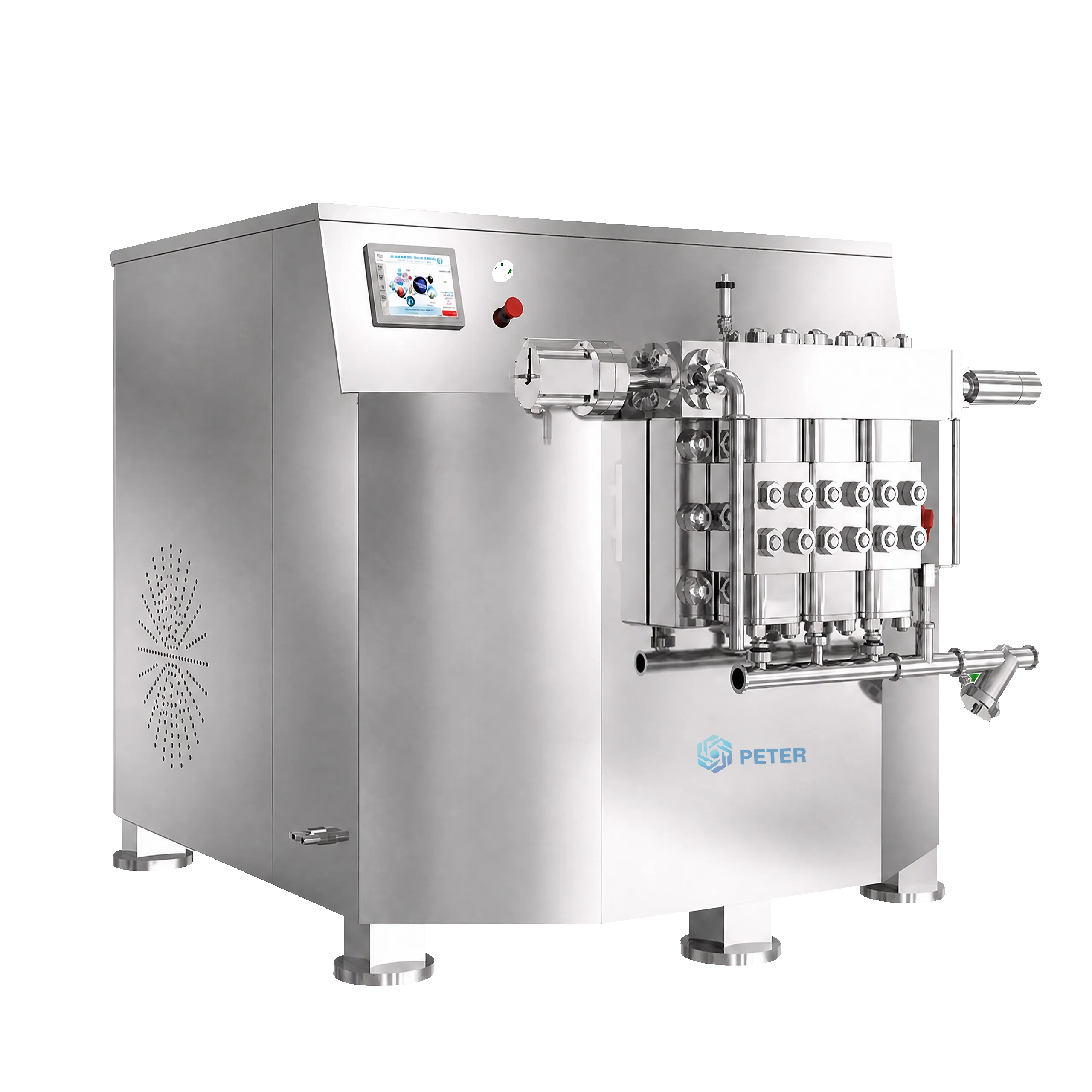
Use a total-cost worksheet with one-time and recurring assumptions. Keep exclusions visible. Where a supplier offers testing or commissioning, identify the included evidence. An illustrative lifecycle review may model energy, cleaning chemicals, wear parts, service labor, lost output, and qualification effort; it cannot represent assumed savings as a guarantee.
| Cost driver | Questions for the quotation | Lifecycle implication |
|---|---|---|
| Capacity and pressure duty | What operating point is warranted for this formulation? | Higher duty can change component selection, utility load, and maintenance planning. |
| Product-contact design | Which materials, elastomers, and surface requirements are supplied? | Compatibility affects cleanability, replacement choices, and product risk. |
| Cleaning and sanitation | What CIP connection, sequence assumptions, and validation support apply? | Cleaning time and verification effort affect availability and release confidence. |
| Controls and automation | Which sensors, interlocks, recipes, and records are included? | Integration scope may alter project engineering and operator workload. |
| Commissioning and support | Who installs, trains, services, and supplies critical parts? | Response time and documentation can materially affect recovery from downtime. |
Choose the equipment class that matches the process
Conventional high-pressure homogenizers use pumping and a homogenizing valve or interaction zone to apply controlled mechanical forces. Microfluidizer-style systems can suit controlled flow paths, development work, or particular dispersion targets. High-shear mixers, colloid mills, and inline emulsifiers may support blending or pre-dispersion, but are not interchangeable with a high-pressure system without product trials.
For scale-up, preserve more than the formulation. Record the test equipment, flow, pressure, number of passes, inlet temperature, hold conditions, sample point, and analytical result. ISO 72458 should be treated only as a test method where its scope applies; it is not a product certification and does not establish that every dairy process is compliant. A buyer should name the method used for particle sizing, stability, viscosity, microbiological controls, or other critical quality attributes, then agree the acceptance limits with the producer.
New equipment generally offers a current specification, configurable controls, and a documented commissioning path. Used equipment may suit a constrained budget when the duty is known, but its history, product-contact condition, parts availability, cleaning suitability, safety systems, and documentation should be assessed before it is valued. For a food line, a physical inspection and a written gap list are often more useful than a broad claim that equipment is “refurbished.”
Define compliance, validation, and supplier responsibilities
Compliance is not transferable through a purchase order. Destination market, product category, intended use, facility controls, and marketing claims decide which requirements matter. FDA FSMA materials concern food safety preventive controls; FAO resources offer international food safety context. They are not machine certificates. Unsupported statements that a machine alone makes a process compliant can create procurement, customer-audit, and claim-management risk.
For explicitly qualified pharmaceutical comparisons, FDA cGMP regulations can inform discussion of documentation and quality systems. They do not apply automatically to dairy equipment or imply pharmaceutical compliance for food. Ask which documents the supplier can provide: drawings, material information, operating manuals, test records, spare-parts recommendations, and agreed acceptance evidence.
Turn the specification into a selection decision
- Write a one-page application brief covering formulation, throughput range, pressure range, inlet condition, target quality attributes, cleaning route, utilities, and installation constraints.
- Request a comparable duty-point statement from each supplier, including what liquid or product was used for any performance test.
- Set acceptance criteria before purchase: sample locations, test methods, limits, documents, and the responsible party for corrective action.
- Evaluate service access by location, including recommended spares, training, remote support, and realistic lead-time assumptions.
- Score total cost with the same assumptions for every bid, while keeping purchase cost, integration, operation, maintenance, and risk visible as separate lines.
For buyers sourcing from China, CAS PETER can be included in a structured RFQ process when configurable high-pressure equipment, application discussion, and documentation requirements are in scope. Compare a dairy homogenizer machine for production duty and a dairy homogenizer for sale for a smaller application against the same written duty point, rather than against a headline capacity alone. Helpful background is available in the guides to choosing a pressure homogenizer and how high-pressure homogenizers work.
Frequently asked questions
How much does a milk homogenizer cost?
Cost depends on the required duty and commercial scope, so a generic figure is not a reliable buying basis. Compare quotations only after they state flow, pressure, hygienic design, controls, documentation, testing, and service assumptions. Request an itemized proposal and identify exclusions before making a budget decision.
What affects the price of a milk homogenizer?
Capacity, pressure, formulation characteristics, product-contact materials, cleaning design, automation, validation support, installation scope, and service coverage all affect price. A high specification is not always necessary, but each omitted requirement should be an intentional process decision. The buyer should link every option to a stated risk, quality target, or operating need.
How do new and used milk homogenizers compare?
New equipment can be specified for the intended process and delivered with an agreed testing and documentation plan. Used equipment can be a viable option when inspection confirms condition and when cleaning, safety, parts, and process-fit gaps are acceptable. Compare the cost to restore, verify, and support the unit, not just its asking price.
How should buyers assess dairy homogenizer for sale before choosing a milk homogenizer?
Start with the application brief and require the supplier to respond to the same flow, pressure, product, cleaning, and acceptance criteria. Review evidence for the quoted operating point, available documentation, and support route in the destination market. A trial or agreed test protocol is especially valuable when formulation behavior has not been established.
References and next step
- U.S. Food and Drug Administration, Food Safety Modernization Act
- Food and Agriculture Organization of the United Nations, Food Safety
- International Organization for Standardization, ISO 72458 – test method scope should be checked for the intended use.
- U.S. Food and Drug Administration, Current Good Manufacturing Practice regulations – relevant only for explicitly qualified comparisons.
A dairy homogenizer earns its place through a repeatable process, not a low number on page one of a quote. When the decision reaches the RFQ stage, contact CAS PETER with the application brief to discuss a configured high-pressure homogenizer and the evidence needed for your selection.