

Milk Homogenization Pressure: Ice Cream Processing Guide
When a process engineer in Melbourne encountered texture instability and over-shearing during an ice cream mix commissioning run, the team first adjusted the pressure upward to chase a smoother result. Within the same shift, the mix showed an inconsistent body and a larger-than-expected temperature rise. The reversal came after the commissioning record was reviewed: the issue was not simply a bad machine, but a duty point selected without tying pressure, formulation, inlet condition, and flow together.
Summary: Ice cream processing needs a validated pressure window, not the highest available setting. Published ice-cream guidance places homogenization within a broad 50–200 bar range and says the setting should be adjusted for fat type and level; 1 MPa equals 10 bar. The recommended action is to trial the actual high-fat/high-solids boundary of the recipe range, record stage pressures, temperature and frozen-product results, then select the lowest demonstrated condition that delivers the intended texture and dispersion. Where particle-size measurement is part of the plan, ISO 13320 provides a laser-diffraction test-method framework rather than a homogenizer certification.
Homogenization helps distribute the fat phase and other dispersed material more uniformly in an ice cream mix before later freezing and aeration steps. The finished result is influenced by the whole process: ingredient hydration, fat and total-solids range, premixing, heat treatment, homogenization, ageing, freezing, and storage all matter. Pressure is therefore a process variable to qualify, not a stand-alone purchasing specification.
How pressure changes the ice cream mix
A high-pressure homogenizer pumps mix through a controlled valve or interaction zone, where pressure drop and fluid forces reduce and redistribute dispersed material. In a dairy mix, this can support a more uniform fat dispersion and a repeatable base for downstream processing. The exact response depends on the formulation; fat level, protein system, stabilizers, emulsifiers, sugars, and the condition of the premix all affect what happens at the homogenizing stage.
Fat and total solids define the trial window
There is no linear rule that says a richer mix always needs more pressure. Tetra Pak’s ice-cream guidance describes 50–200 bar and specifically says pressure should be adjusted to fat type and fat level; it also identifies roughly 4–15% fat as the normal mix range. That is a useful starting boundary, not a setpoint. A cream-based premium recipe, a butter-oil recipe, and a vegetable-fat recipe can behave differently even at the same nominal fat percentage, so each requires its own qualified window.
Total solids make the purchase decision more demanding because they change viscosity, heat-transfer load and the flow that a given machine can sustain. Proteins, sugars and stabilisers also determine how much hydration and water binding the mix needs before freezing. Qualify the low and high ends of both fat and total solids—not only the development formula—and record actual flow, inlet and outlet temperature, viscosity at a stated temperature, and downstream results. This prevents a water-like capacity figure or a single mid-range trial from becoming the production specification.
Use a diagram as a process map, not a generic recipe
A useful process sketch follows the mix from ingredient blending and hydration to heat treatment, homogenization, cooling, ageing, and freezing. At the homogenizer, capture feed temperature, inlet pressure, flow, discharge temperature, stage arrangement where applicable, and sample points. This turns a schematic into an operating record. It also helps teams see that a pressure adjustment may be compensating for a poor premix, unstable feed temperature, insufficient agitation, or an upstream restriction rather than solving the root cause.
Pressure should be expressed consistently in the RFQ and trial report. A request written as 20 MPa is a request for 200 bar, but it still does not establish that 200 bar is appropriate for every ice cream mix. A sound trial compares the result at defined conditions and records the quality response. Laser diffraction may be useful for a selected dispersion measurement; ISO 13320 sets out the method’s general principles, while the product team must still define sampling, preparation, reporting, and acceptance criteria.
Two stages and ageing are one processing decision
Where a two-stage valve is specified, state the first- and second-stage pressures separately in the trial record rather than quoting only the total. The first stage performs most of the disruption; the second stage is used to manage re-clustering in a particular valve-and-product system. Its contribution cannot be inferred from a total-pressure number or transferred unchanged between machines. Ask the supplier to demonstrate the proposed split on the actual mix and retain the valve arrangement, flow and temperature with the sample results.
Homogenization also cannot be qualified in isolation from ageing. Tetra Pak describes heating the mix to above 75 °C for homogenization, then cooling it to below 5 °C for ageing, and recommends at least four hours of ageing below 5 °C. During that hold, stabilisers and proteins hydrate while fat re-crystallises; those changes prepare the mix for partial fat agglomeration in the continuous freezer. A pressure adjustment that looks attractive before ageing may therefore be the wrong choice after the normal ageing hold. Trial samples should be aged under the intended plant conditions before the freezer comparison begins.
Select by product requirement and performance limits
The best operating condition is usually the lowest validated setting that delivers the intended result without introducing excessive heat, wear, or unwanted change to the mix. A higher setting can alter the dispersion, but it also increases energy demand and may narrow the operating margin. A mix with higher solids or different stabilizer behavior may not accept the same conditions as a standard dairy base. This is why a nominal machine pressure rating should never substitute for product-specific evidence.
Set the acceptance plan before a trial. Alongside pressure and flow, specify inlet and outlet temperature, visual uniformity, viscosity at a stated temperature, and an agreed stability observation. For ice cream development, the downstream team should compare the aged mix and the frozen product for body, texture, meltdown behavior, and overrun under its normal plant method. These are product decisions, not universal machine guarantees.
Use meltdown and texture to detect an over-processed setting
Do not treat a smaller dispersion measurement as proof that a higher pressure is better. In ice cream, the target is a structure that survives ageing, freezing, hardening and service; Tetra Pak notes that the air-cell membrane is formed from partially agglomerated fat and that ageing defects can include weak form stability and faster melting. A pressure condition that delivers an appealing fresh mix but is followed by a weak body, altered mouthfeel, poor form stability or faster meltdown after the normal freezer run deserves investigation. Those signs are not proof that pressure alone caused the defect, because ageing, emulsifier system, overrun and freezer shear also contribute.
For a decision-ready comparison, run a pressure ladder with the same formula, thermal history, ageing time, freezer settings and draw temperature. Measure the aged-mix viscosity and a chosen dispersion indicator; then evaluate texture and a documented meltdown method, such as time to first drip and mass drained at fixed intervals. Use matched sample size, serving temperature, air flow and overrun. The plant must set its own acceptance limit, but this paired validation prevents a local improvement at the homogenizer from being approved at the expense of the finished product.
| Decision dimension | What to compare at the duty point | Why it matters commercially |
|---|---|---|
| Dispersion result | Defined particle or fat-phase trend, visual uniformity, and stability observation | Reduces the risk of approving a setting that looks acceptable only during a short run. |
| Thermal response | Inlet and outlet temperature at actual flow and pressure | Helps protect the process window and avoid unexpected cooling or quality costs. |
| Throughput | Delivered flow with the qualified ice cream mix, not a water-like reference fluid | Prevents a nominal capacity from being mistaken for usable production output. |
| Wear and access | Valve, seal, and spare-part plan; safe inspection and replacement steps | Shapes planned maintenance, downtime exposure, and lifecycle cost. |
| Cleaning fit | CIP route, chemical and temperature limits, drainability, and changeover needs | Supports sanitation control and more realistic availability planning. |
Account for operating differences from trial to production
A development result can be useful, but scale-up requires more than copying a pressure number. Record the model, valve arrangement, flow, number of passes if relevant, feed temperature, run duration, sample location, and test result. Compare those data against the projected production duty. This makes it easier to identify whether a change in texture comes from raw material variation, residence time, thermal conditions, or the homogenizing step itself.
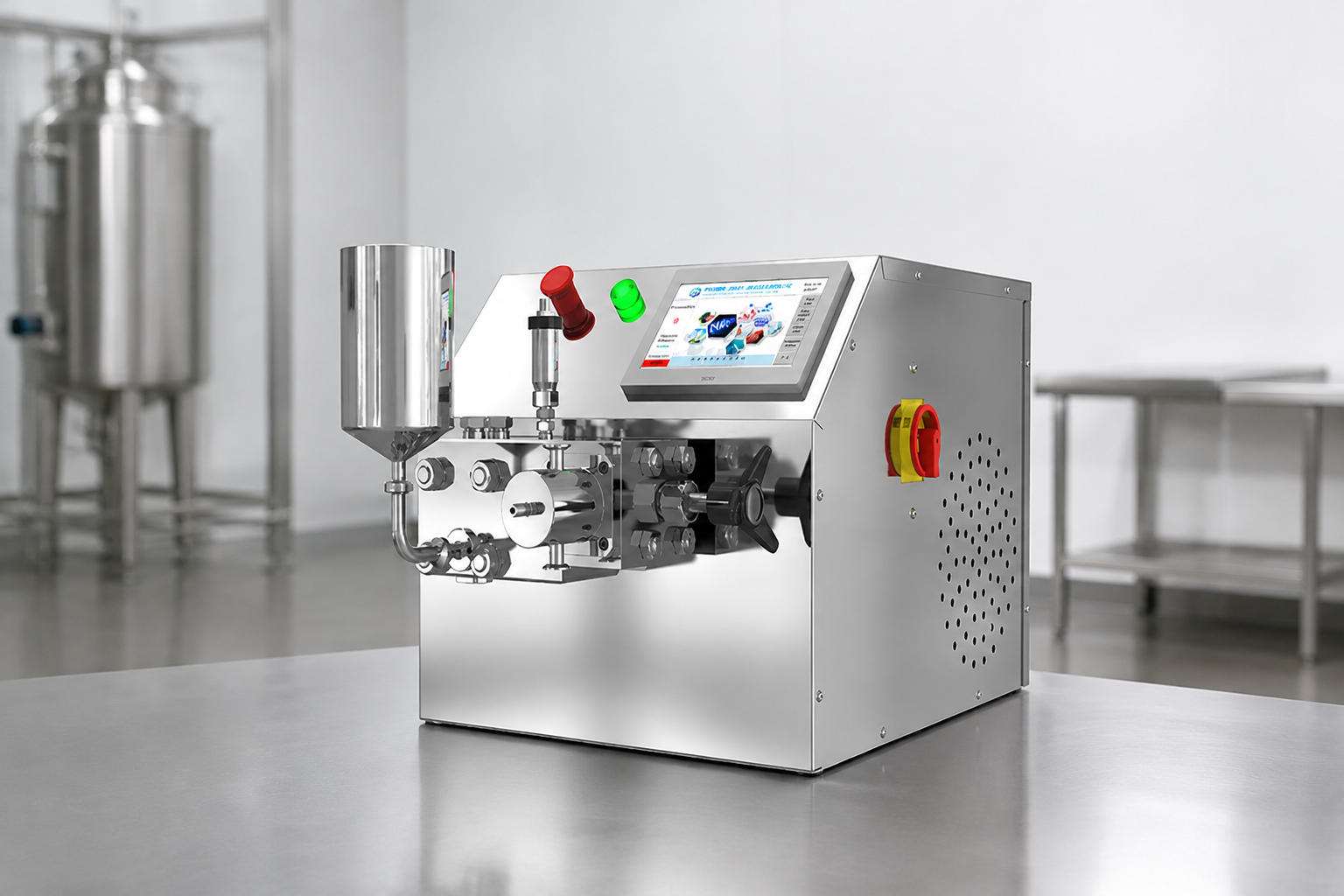
A small home milk homogenizer is not a substitute for a hygienic industrial validation platform: its flow stability, cleaning approach, controls, pressure delivery, and service design can be fundamentally different. Procurement teams should distinguish between a demonstration of a physical principle and evidence that a system will sustain the required product, sanitation routine, and campaign length.
Capacity planning should use saleable output rather than the largest figure printed on a data sheet. An illustrative one-day comparison includes startup, normal cleaning, changeovers, expected maintenance access, and quality holds as well as the run rate. The calculation is not a promise of savings; it is a way to expose exclusions before a quote is chosen. For broader mechanism context, see this explanation of how high-pressure homogenizers work.
| Ice cream mix condition | Questions for the trial | Evidence to retain |
|---|---|---|
| Standard dairy mix | What pressure-flow-temperature combination gives the required uniformity? | Operating record, defined sample result, and aged-mix observation. |
| Higher-fat or premium mix | What cooling margin and actual throughput remain at the product’s viscosity? | Worst-case run using agreed high-fat and low-inlet-temperature limits. |
| Stabilized or protein-enriched mix | How do hydration quality and shear response affect texture and flow? | Premix specification, viscosity check, and downstream product review. |
| Multiple recipes or allergens | Can the cleaning and verification sequence fit the production schedule? | CIP procedure, material compatibility review, and changeover record. |
Cleaning, maintenance, and compliance have separate roles
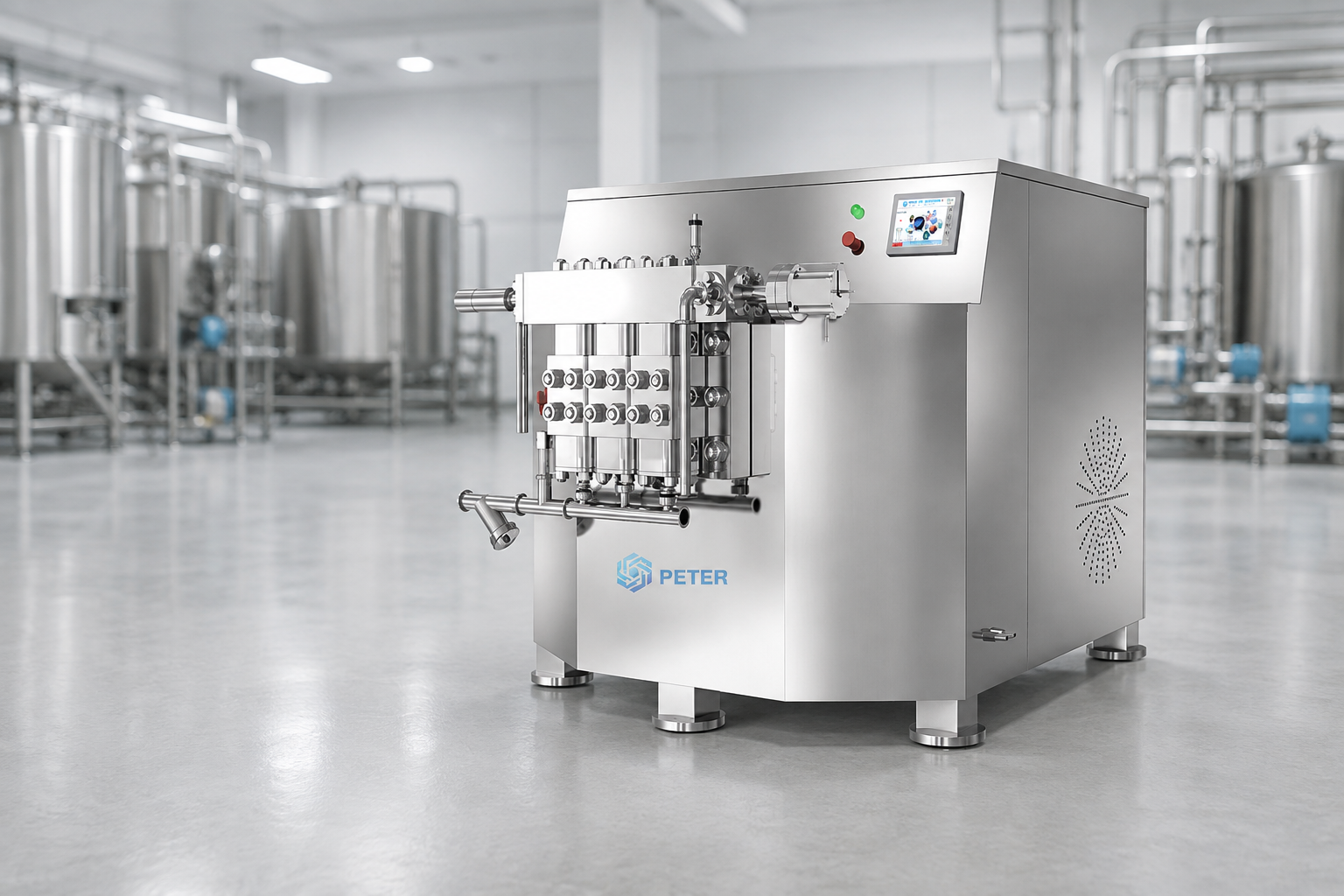
For an ice cream line, hygienic operation is as important as the pressure setting. Confirm product-contact materials, seals, valve components, and connections against the mix and the planned cleaning chemicals, concentrations, temperatures, and contact times. A configuration suited to one sanitation regime may not be suited to another. Cleaning validation, allergen controls, and microbial controls remain the processor’s responsibility within its own food-safety system.
In the United States, FDA requirements in 21 CFR Part 117 address current good manufacturing practice and preventive controls for covered food facilities. They do not certify a homogenizer or prove that a specific ice cream process is compliant. Codex General Principles of Food Hygiene provide an internationally recognized food-hygiene framework, while local legal and customer requirements still determine the applicable controls. Unsupported claims can delay approvals and create audit or market-access risk.
Maintenance planning should define inspection intervals from operating experience, supplier guidance, and the process risk assessment—not from a generic claim about service life. Trend pressure stability, temperature, flow, and finished-product observations. A gradual change can indicate feed variation, a restriction, or wear; raising pressure first can hide the cause and increase stress on the system.
Choose an ice cream homogenizer against a written duty point
- Write a short user requirement specification with mix composition range, target flow, pressure range, inlet temperature, utilities, cleaning method, and campaign duration.
- Agree acceptance criteria before testing, including sample points, a suitable test method, stability observations, and the downstream texture checks that matter to the product.
- Ask each supplier to state the delivered flow and homogenization pressure for milk at the actual product condition, together with any assumptions.
- Compare valve and seal access, recommended spares, cleaning compatibility, documentation, commissioning scope, and local service route as part of total cost.
- Confirm how pilot results will be transferred to production before committing to the final configuration.
CAS PETER can be included in this selection process when a buyer needs a configurable high-pressure system and a technical discussion around representative trials. A development team can begin by assessing a homogenizer machine for ice cream configuration around its documented duty; for larger process planning, evaluate a ice cream homogenizer machine configuration against the same written requirements. The equipment class should follow the validated process, not replace it.
Frequently asked questions
What does a milk homogenizer do to milk?
It applies controlled high-pressure processing to reduce and redistribute the dispersed fat phase, supporting a more uniform mix. The resulting stability and texture depend on the formulation, temperature, flow, pressure, and downstream thermal and freezing process. Confirm performance using the quality measures that the plant has defined.
What pressure is used for milk homogenizer processing?
There is no responsible single pressure for all milk or ice cream applications. The suitable condition depends on fat and solids, premix quality, temperature, target texture, flow, and equipment geometry. Establish a range by trial, then document the lowest condition that meets the agreed result during a representative run.
How does homogenization pressure for milk affect product stability?
It can change the dispersion and therefore influence visible uniformity, body, and the behavior of the mix after ageing and freezing. More pressure is not automatically better; excessive mechanical or thermal input can create a less desirable processing window. Assess it together with the formula, temperature control, and finished-product evaluation.
What should processors check before selecting a milk homogenizer?
Check the whole product and operating envelope: composition, target quality, actual flow, pressure range, inlet temperature, utilities, cleaning regime, campaign length, service access, and documentation needs. Ask for a representative test and comparable duty-point statement. A complementary selection guide is available for choosing a pressure homogenizer.
References and next step
- Tetra Pak, Dairy Processing Handbook: Ice Cream — public process guidance on mix composition, homogenization, ageing and freezing; use it as a starting point and validate the specific valve and formulation.
- ISO 13320, Particle size analysis — Laser diffraction methods — a test-method reference; confirm suitability for the intended material and reporting plan.
- U.S. FDA, 21 CFR Part 117 — current good manufacturing practice and preventive controls for covered food facilities.
- Codex Alimentarius, General Principles of Food Hygiene (CXC 1-1969).
The dependable pressure is the one that holds its product result across the real mix, real run length, and real cleaning routine. When the specification is ready, contact CAS PETER to discuss trials, configuration, and evidence for an ice cream processing duty point.