

Laboratory Homogenizers: Handheld vs Lab-Scale Comparison
When Luis, a sample-preparation manager in São Paulo, encountered inconsistent extracts while using a handheld homogeniser, one operator obtained a clear aliquot and another left visible fibers. The reversal came from application fit: immersion depth and residence time varied, and the sample needed pre-screening. The tool was useful, but the method—not the label—determined repeatability.
Summary: Choose among laboratory homogenizers, a hand held homogenizer and a lab-scale high-pressure unit by sample volume, viscosity, solids, shear sensitivity and the evidence needed for scale-up. Handheld systems are efficient for rapid, small-volume preparation; lab-scale systems offer tighter process control and more transferable data. ISO 13320 or another fit-for-purpose method should define how particle results are measured.
When a Handheld Homogenizer Is Sufficient and When It Is Not
| Scenario | Handheld fit | Lab-scale fit | Key evidence |
|---|---|---|---|
| Small tissue or botanical aliquot | Fast disruption in a disposable vessel | Useful for repeatability studies | Extraction yield, temperature and microscopy |
| Emulsion screening | Rapid ranking of formulas | Controlled pressure/flow comparison | Droplet size, viscosity and separation |
| High-solids suspension | Possible clogging or torque limits | Defined feed screen and valve path | Particle distribution and pressure trend |
| Scale-up preparation | Limited transferability | Pilot-relevant residence and cooling data | Comparability across scales |
Use a hand held homogenizer when speed and low sample consumption matter more than hydraulic similarity to production. Choose a lab-scale high-pressure unit when pressure, flow, temperature and pass count are critical variables. A comparison is only useful when the decision dimension—sample volume, analytical repeatability or production transfer—is explicit.
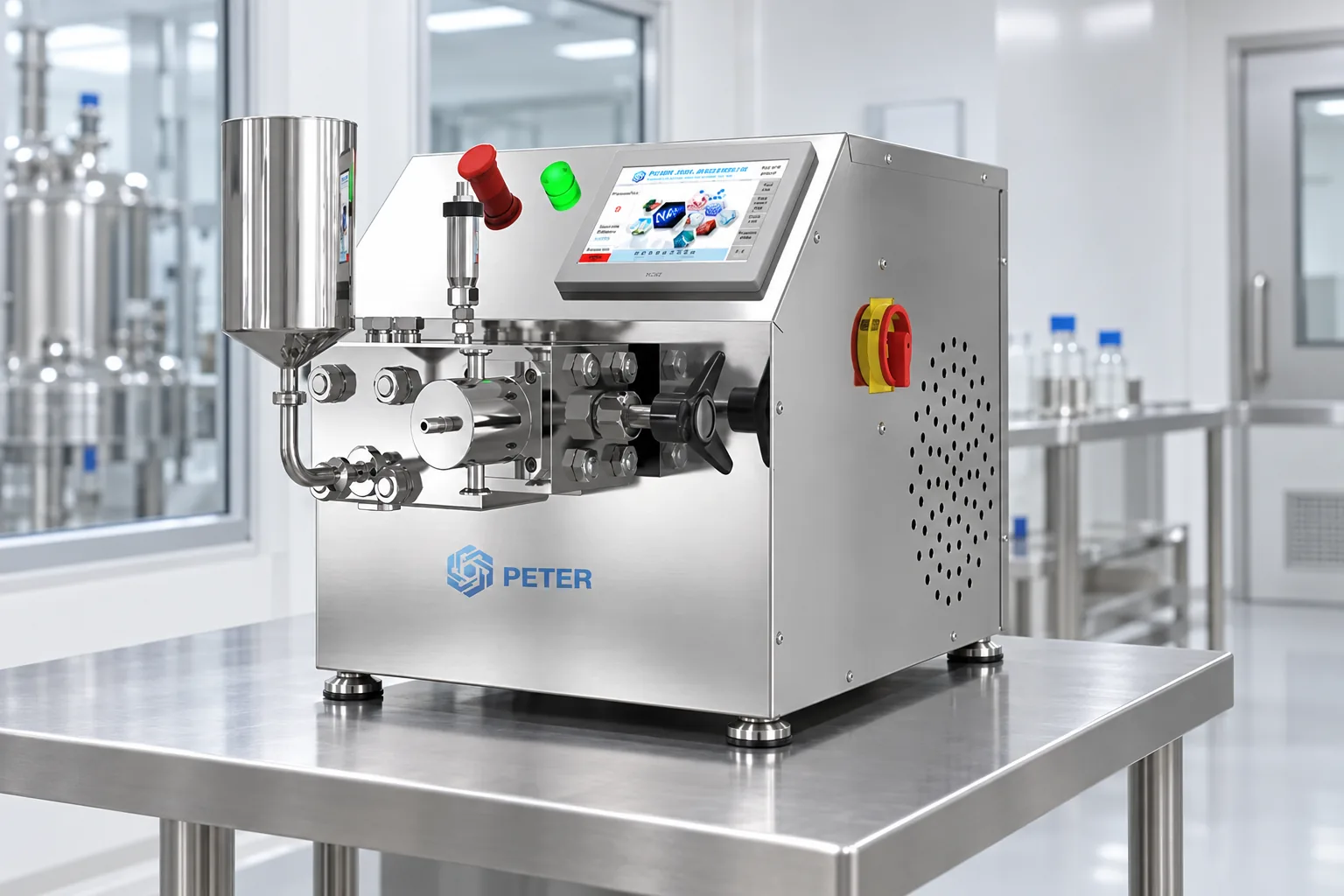
Which Settings Must Be Controlled for a Fair Device Comparison?
For handheld work, standardize head depth, vessel shape, speed ramp, treatment time, sample temperature and cleaning between samples. Avoid vortexing air into emulsions. For lab-scale pressure systems, record inlet particle size, pressure, flow, outlet temperature, number of passes and recirculation volume. The same sample can behave differently if its viscosity changes during warming.
Create a short method card and train all operators. Include a stop rule for torque, pressure or temperature excursions. Do not increase speed indefinitely to compensate for a poorly hydrated powder; fix feed preparation first.
How to Decide Whether Two Homogenization Mechanisms Are Comparable
A handheld or rotor-stator device applies localized shear through tool speed, head geometry, immersion depth and treatment time. A high-pressure system controls a flowing material through pressure, valve or interaction-zone geometry, flow, temperature and number of passes. Similar-looking samples do not make those mechanisms equivalent. Handheld results can rank formulations quickly, but they support scale-up only when the team demonstrates that the quality attributes respond in a comparable way.
Use a decision gate. If the next question is whether ingredients can form a premix or whether a tissue sample can be extracted reproducibly, standardized handheld processing may be enough. If the next question concerns pressure response, continuous flow, outlet temperature, recirculation or a production-scale path, move the leading formulation to a controlled high-pressure trial. Record the reason for the transition so later teams do not treat screening settings as manufacturing parameters.
How to Control Cross-Contamination Without Hiding Sample-Recovery Losses
Handheld heads can carry residue around shafts, seals and slots. Lab-scale pressure systems add valves, tubing and hold-up volume. Map every product-contact surface, then select cleaning chemistry compatible with both soil and materials. For potent, allergenic or biological samples, a qualified safety and quality review should set decontamination and disposal procedures.
Measure sample recovery when material is scarce. Weigh the vessel and collected fraction before and after processing, and record material retained in tubing or on the head. A method that improves dispersion but loses an unacceptable fraction is not operationally suitable. Disposable contact parts may reduce changeover risk, but they add consumable cost and material-compatibility questions.
What Evidence Shows That a Laboratory Method Is Ready for Scale-Up?
Scale-up should preserve energy density, residence time, temperature history and feed condition where those variables control the outcome. Hydraulic power is illustratively pressure times flow divided by efficiency; it is a planning relationship, not a guarantee of equivalent particle size. Compare pre- and post-process distributions and stability, not only machine settings.
ISO 13320 laser diffraction is useful when particles are dispersed consistently and optical assumptions are documented. For biological samples, microscopy, extraction-yield assays or biochemical markers may be more informative. Record sample preparation, instrument calibration, replicate count and uncertainty.
How to Compare Handheld and Lab-Scale Methods with Matched Aliquots
- Prepare a homogeneous master batch and reserve an untreated control.
- Process matched aliquots with standardized handheld and lab-scale settings.
- Measure temperature immediately, then test the target quality attribute with replicates.
- Repeat on another day and compare operator, day and device variation.
If the handheld tool wins on speed but loses on repeatability, quantify that trade-off rather than declaring a universal winner. If both methods meet the analytical need, select by cleaning time, sample recovery and total cost.
How to Test Repeatability Between Operators Without Inventing a Threshold
Randomize matched aliquots across at least two trained operators and, where material permits, repeat the sequence on another day. Preserve the same master batch, vessel, conditioning time, sampling position and analytical method. Review the spread attributable to preparation, operator, day and device alongside the size, yield or stability response. Do not choose an arbitrary universal acceptance percentage; set a justified limit from the intended analytical or product decision.
If operator variation is larger than the difference between devices, first tighten the method card and training, then repeat the comparison. If day-to-day drift dominates, examine sample age, room or feed temperature and instrument checks. Only after the measurement system is stable should a narrower device control range be treated as the solution. This sequence avoids purchasing equipment to compensate for an uncontrolled sample-preparation method.
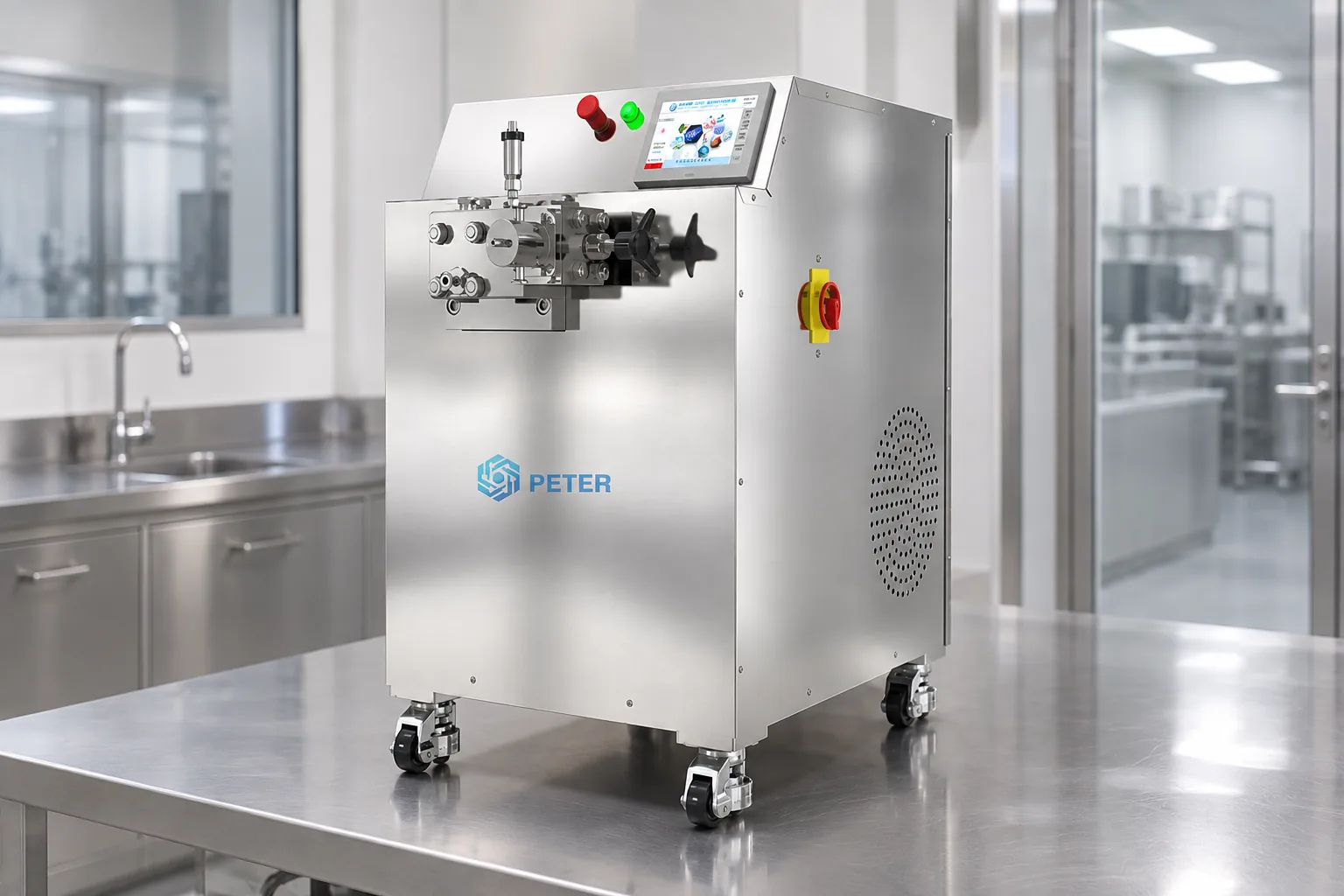
How Performance, Sample Recovery, and Total Cost Change the Device Decision
| Dimension | Handheld | Lab-scale high-pressure |
|---|---|---|
| Throughput | Small aliquots; operator-paced | Defined flow and batch plan |
| Process control | Speed/time and technique | Pressure, flow, temperature and pass count |
| Sample compatibility | Head and vessel limits | Feed-size, valve and seal specifications |
| Cleaning | Fast head cleaning or disposables | Documented flush and component access |
| TCO | Lower capital; higher operator variability | Higher capital; more transferable evidence |
CAS PETER’s PT-20 is a public laboratory reference for controlled high-pressure trials. For pilot scale, review the PT-40 listing and request conditions for your material. These are manufacturer pages, not independent performance certification.
Ask each supplier for a sample-volume range, maximum inlet particle size, allowable viscosity, wetted materials, cooling approach, noise information and consumables list. Require the test conditions behind throughput or particle claims. A video demonstration can show operation, but it cannot replace representative material data.
When shortlisting laboratory homogenizers, use the same sample and scoring sheet for every vendor; otherwise differences in preparation can appear to be machine performance.
Which Maintenance and Procurement Limits Belong in the Buying Decision?
For handheld systems, inspect bearings, cables, shafts and head clearances; replace worn tools before they damage repeatability. For pressure systems, inspect seals, plungers and valve seats and trend pressure stability. Set intervals from the manual, sample abrasiveness and observed wear. Keep spare parts traceable if data support regulated development.
Compare total cost across three years: equipment, heads or valve parts, disposable vessels, cleaning labor, utilities, calibration and downtime. Label the calculation illustrative and use local quotations. A low purchase price can be economical for occasional screening yet expensive for high-throughput sample preparation.
What Standards and Compliance Claims Can Laboratory Data Support?
ISO 13320 defines a measurement method; it does not certify laboratory homogenizers. If samples support food or pharmaceutical decisions, apply the relevant site safety, GMP or food-safety controls and qualified review. Cleaning validation and sterile claims require product-specific protocols. State whether data are exploratory, development, or release-supporting.
For biological or hazardous materials, also confirm containment and aerosol controls with the institutional safety officer. A benchtop enclosure or sealed flow path may be needed, but suitability depends on the organism, chemical and local risk assessment. Do not infer biosafety performance from a general machine guard.
Document the handoff from development to routine use. The method should name the sample volume, vessel, tool, settings, maximum temperature, sampling point, cleaning sequence and acceptance test. Review the method after a formulation or raw-material change; apparent equipment drift may actually be a changed feed.
Frequently Asked Questions About Handheld and Lab-Scale Homogenizers
What is a laboratory homogenizer used for in laboratory sample preparation?
It disrupts tissue or cells and disperses emulsions or suspensions so aliquots can be analyzed consistently. Match the head or valve to the sample and document temperature and treatment time.
How does a laboratory homogenizer work?
Depending on design, it applies rotor-stator shear or high-pressure turbulence, cavitation and impact to reduce droplets or break soft agglomerates. Material properties and settings determine the result.
What is the difference between a laboratory homogenizer and handheld homogeniser?
A handheld homogeniser is compact and operator-driven for small vessels; a laboratory homogenizer may provide controlled pressure, flow and temperature with more repeatable sampling. Use handheld results as screening evidence unless transferability is demonstrated.
Which factors affect laboratory homogenizer performance?
Sample volume, viscosity, solids, temperature, head depth, pressure, flow, pass count, wear and sampling method all affect performance. Trend these factors and use replicates.
Technical References for Laboratory Measurement and Safety Boundaries
- ISO 13320:2020.
- ISO 22000:2018 where food-safety management applies.
- IEC 61010-1:2010 with amendments for general laboratory electrical-equipment safety scope.
- CAS PETER PT-20 manufacturer information.
- CAS PETER selection framework.
The right homogenizer is the one whose evidence survives the next scale. Define your sample, method and transfer risk, then use the CAS PETER laboratory homogenizer page to request a configuration and trial plan.