

High Pressure Homogenizer: How It Works and Performs
When Mei, a process engineer in Suzhou, increased pressure during a pilot emulsion trial, she saw a briefly uniform outlet turn streaky within minutes. The team first suspected a defective high pressure homogenizer. A review of the feed vessel, inlet temperature, pressure trace, and sample handling reversed that conclusion: air entrainment and repeated warm recirculation had changed the process before the samples reached the analyzer. The lesson is practical for buyers and operators—pressure is only one part of a controlled system.
Summary: A high-pressure homogenizer separates pressure generation from energy release: a pump pressurizes the feed, while a restrictive interaction zone converts that pressure into velocity gradients, turbulence, impact, and cavitation-related effects. Because 1 MPa equals 10 bar, unit conversion is straightforward; predicting a product endpoint is not. Define one pass, condition and deaerate the feed, record the complete temperature history, and scale against a measured endpoint at the required throughput. ISO 13320 and ISO 22412 are analytical methods, not machine certifications.
How does pressure become a measurable homogenization result?
The pump supplies pressure and flow; the valve or interaction chamber is where much of the pressure drop and local energy dissipation occurs. Droplets, particles, or biological structures may experience interacting shear, turbulent eddies, acceleration and deceleration, impact, and cavitation-related stresses. No single mechanism should be presented as universally dominant because feed properties and interaction geometry change the balance. This separation also explains why two machines operated at the same gauge pressure can produce different results.
Hydraulic power is approximately pressure differential multiplied by volumetric flow, before efficiency losses. It informs utility and cooling estimates, not particle size or cell-disruption yield. Define the endpoint first: for example, D90 measured by ISO 13320 laser diffraction, hydrodynamic size measured under suitable conditions by ISO 22412 dynamic light scattering, viscosity at a stated temperature and shear history, or a validated biological assay. Record method settings, dilution, timing, and acceptance limits.
Why can identical pressure readings produce different samples?
In a high-pressure homogenizer, a pressure gauge reports the condition at its installation point, not the entire stress history of every volume element. Valve geometry, wear state, flow, viscosity, solids loading, inlet stability, and temperature can all alter energy transfer. Sampling introduces another layer: a sample drawn from a poorly mixed vessel, collected only at startup, allowed to age before analysis, or diluted differently may not represent the processed batch. A defensible trial therefore pairs the pressure record with time-stamped flow and temperature data, a fixed sampling location, a defined sample age, and the same analytical preparation.
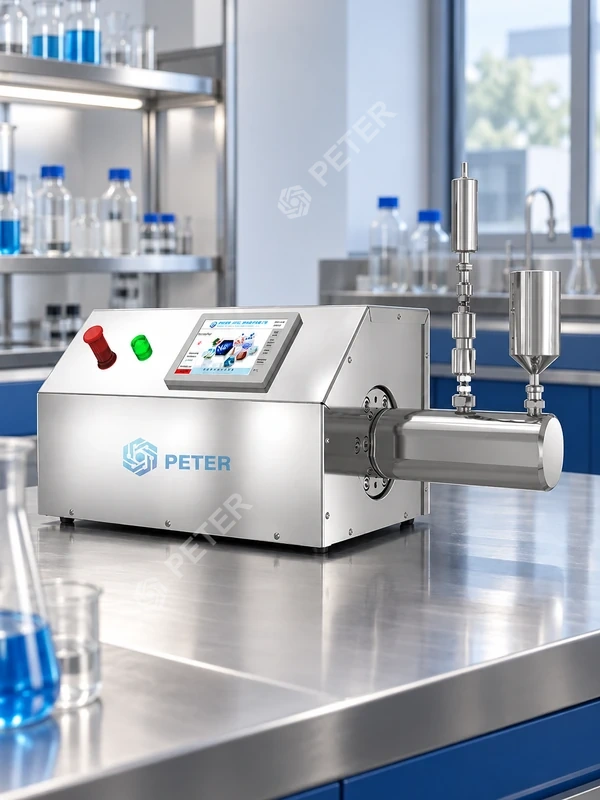
Feed conditioning and deaeration protect both repeatability and the pump inlet
Reliable high pressure homogenization begins upstream. A feed specification should describe viscosity across the expected temperature range, solids concentration, largest credible particle or fiber, chemical compatibility, biological sensitivity, and the condition created by premixing. Screening or pre-dispersion may be needed to keep oversized material away from a narrow interaction zone, but the allowable limit must come from the supplied configuration rather than a generic category rule.
Entrained or dissolved gas deserves explicit control. Foam, vessel vortexing, suction leaks, or inadequate inlet head can disturb pump filling and pressure stability. Deaeration may use quiet holding, vacuum treatment, low-shear transfer, or another formulation-appropriate method. Document vessel level, agitation, inlet temperature, and time between conditioning and processing; “deaerated” without a procedure is not reproducible.
Record feed-vessel, machine-inlet, post-exposure, and cooler-outlet temperatures plus hold time before the next exposure. One final reading can hide a peak or a viscosity change that made later passes look more effective. For a heat-sensitive product, establish an evidence-based upper limit and size cooling around real flow and duty cycle.
What exactly counts as one pass through the interaction zone?
One physical pass means a defined quantity crosses the interaction zone once. In discrete batch processing, pass two begins only after the once-processed material is segregated and fed again. In a recirculating vessel, elapsed time is not the same as pass count: some fluid elements can return several times while others have not yet returned at all. An average turnover estimate—processed volume divided by vessel volume—does not eliminate this residence-time distribution.
Trial records should state whether the route is single-pass, discrete multi-pass, or recirculating; identify batch volume and measured flow; describe return-vessel mixing; and define sampling time. For continuous operation, exposure also depends on staging and recycle. This definition makes high pressure homogenization scale-up defensible: a laboratory “three-pass” result is not automatically equivalent to three production vessel turnovers.
Scale-up should reproduce the endpoint and temperature history—not just pressure
Scale-up starts with an accepted sample and a documented process window. Preserve the formulation, feed conditioning, analytical method, sampling plan, and exposure definition; then evaluate whether the larger system can meet the endpoint at required throughput without exceeding temperature or utility limits. A larger high pressure homogenizer is not qualified merely because it reaches the pilot pressure. Flow distribution, interaction geometry, pressure stability, cooling residence time, and batch logistics can all change.
Use an endpoint-based study rather than chasing the highest setting. At each planned pressure and pass condition, measure the target quality attribute and record inlet-to-outlet temperature history, flow, pressure variation, and sample timing. If extra exposure no longer improves the endpoint within analytical uncertainty, it may only add heat, energy use, and component cycles. An ultra high pressure homogenizer is therefore justified by evidence of a process benefit at an acceptable throughput and temperature, not by pressure capability in isolation.
Which equipment class answers the next scale-up question?
Equipment class should follow the evidence gap. Experimental units establish formulation response and measurement repeatability; production units test sustained duty, plant integration, and line balance; microfluidizer-style equipment provides a different interaction architecture whose suitability must also be demonstrated. The table is a supplier-question framework, not a claim that one class always performs better.
| Decision dimension | Experimental high-pressure homogenizer | Production-type high-pressure homogenizer | High-pressure microfluidizer |
|---|---|---|---|
| Primary use | Method development and small batches | Repeatable plant processing and scale-up | Microchannel-oriented process development or production |
| Key question | Does the formulation respond to pressure-driven disruption? | Can the target quality be held at the planned flow and duty cycle? | Does the selected interaction architecture give the required distribution? |
| Typical integration focus | Flexible sampling, quick changeover, operator learning | Utilities, controls, cleaning, maintenance access, line balance | Feed conditioning, pressure stability, channel protection, sampling |
| Cost tendency | Lower capital exposure, but limited scale evidence | Higher installed scope; evaluate energy, spares, labor, and downtime | Evaluate the full interaction assembly and formulation compatibility |
| Evidence to request | Application protocol and repeatability data under agreed conditions | Throughput basis, duty-cycle assumptions, service plan, and acceptance test | Channel configuration, feed limits, cleaning method, and particle-size method |
How do pressure ripple, flow drift, and outlet-temperature drift narrow the diagnosis?
Trend direction is more informative than a single alarm. Pressure ripple with pulsing flow can point to unstable feed delivery, gas entrainment, or a pumping issue; confirm vessel level, inlet conditions, and synchronized pressure and flow traces before assigning a cause. Falling flow at similar commanded pressure can be consistent with increasing restriction, changing viscosity, feed starvation, or wear elsewhere in the hydraulic path. Inspection must follow the manufacturer’s safe procedure because a trend does not identify a failed part by itself.
A rising outlet temperature at otherwise stable settings can signal warmer feed, reduced cooling performance, lower heat-transfer effectiveness, or changed flow. Temperature drift accompanied by endpoint drift may reflect viscosity or formulation changes as well as energy input. Compare time-aligned inlet temperature, outlet temperature, coolant conditions, pressure, flow, and sample results. If the quality result changes without a process trend, audit sampling location, sample age, dilution, and instrument method before adjusting the machine.
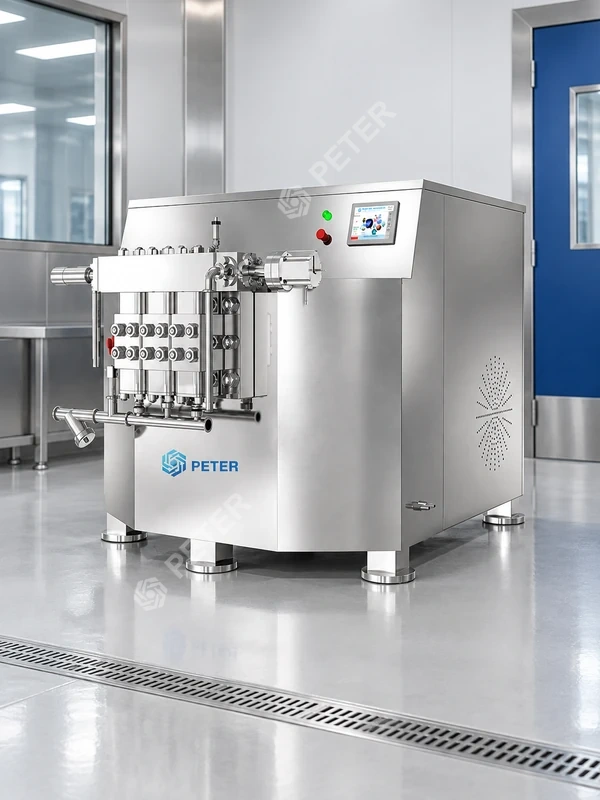
Which scale-up records reveal the real installed cost?
| Scale-up or cost driver | What changes as scale increases | What to verify before commitment |
|---|---|---|
| Throughput | Flow, batch duration, line balance, and buffer volume become linked | Mass balance, required operating hours, and realistic availability |
| Energy and cooling | Pressure work and heat removal can become material utility loads | Hydraulic-power estimate, outlet-temperature limit, and cooling duty |
| Wear parts | Valve, seal, and interaction components see more cycles | Service intervals, spare strategy, changeover time, and lead time |
| Quality control | More samples and tighter traceability are needed for release decisions | Sampling plan, ISO 13320 or ISO 22412 method, and acceptance limits |
| Installation | Utilities, guarding, noise, drainage, and operator access expand | Layout review, risk assessment, cleaning route, and commissioning tests |
Compare cost per accepted batch or kilogram, not purchase price alone. Include electrical and cooling utilities, labor, cleaning time, consumables, planned maintenance, critical spares, rejected material, and downtime. An ultra high pressure homogenizer may shift several of these drivers; use an illustrative calculation with disclosed assumptions rather than an unsupported payback claim.
Standards define evidence and compliance scope, not guaranteed performance
ISO 13320 laser diffraction and ISO 22412 dynamic light scattering define particle-size measurement methods within their respective scopes. They do not certify a homogenizer or guarantee an endpoint. A useful report identifies the method, instrument settings, sample preparation, replicate logic, and distribution statistic. Without those details, two laboratories can produce numbers that look comparable but are not method-equivalent.
Compliance depends on market and intended use. For U.S. food operations, 21 CFR Part 117 addresses current good manufacturing practice and preventive controls; it does not approve a specific machine. ISO 22000 concerns food-safety management systems, while EHEDG guidance supports hygienic-design decisions. Regulation (EU) 2023/1230 establishes a machinery framework for the European market, with applicability and timing requiring project-specific review. Buyers should request documentation for the supplied configuration, including risk information, materials evidence where relevant, cleaning provisions, and declarations required for the destination.
Google results and vendor explanations are useful for identifying common questions—how the valve works, why cooling matters, and what buyers compare—but they are vendor topic evidence, not authoritative proof of CAS PETER capabilities or universal pressure-performance relationships. This article therefore does not transfer another supplier’s ratings, certifications, warranties, or outcome claims.
What should buyers specify before requesting a machine trial?
- Write the endpoint and method first. State the distribution, viscosity, biological, or visual requirement; include sampling, sample age, preparation, and acceptance criteria.
- Define the feed at the inlet. Report formulation, solids, largest credible particle, viscosity range, gas-control method, temperature window, and premixing or screening.
- Define exposure precisely. Distinguish a physical pass from recirculation time or vessel turnovers, and state batch volume, measured flow, cooling, and hold time.
- Test the duty point. Require endpoint, temperature history, pressure stability, and throughput together rather than accepting separate maximum-pressure and maximum-flow values.
- Price the installed process. Include utilities, guarding, drainage, cleaning, spares, training, service access, documentation, and downtime assumptions.
CAS PETER is a China-based B2B supplier of experimental and production-type high-pressure homogenizers and high-pressure microfluidizers. Buyers can compare the experimental PT-20, PT-500 production-type configuration, and PT-1000 product page, then request evidence for the actual formulation and duty point. A model page is a starting point, not a complete high-pressure homogenizer process specification.
Which practical questions should a project team resolve before selection?
What is a high-pressure homogenizer used for?
It is used when a controlled pressure drop can help reduce or redistribute droplets and particles, improve emulsion or suspension uniformity, or disrupt cells and other structures. Suitability depends on the feed, heat sensitivity, target endpoint, and verification method; high pressure homogenization should be chosen because it meets that endpoint, not because the application name appears on a vendor list.
How does a high-pressure homogenizer work?
A pump raises feed pressure, and a restrictive valve or interaction zone releases much of that pressure through rapid energy dissipation. Shear, turbulence, impact, and cavitation-related effects may interact, while the result remains dependent on geometry, flow, exposure count, temperature, and feed conditioning.
What role does high-pressure homogenizer play in a high-pressure homogenizer system?
The machine supplies and releases process energy, but the system also includes feed conditioning, piping, cooling, controls, safety provisions, sampling, and cleaning. A high pressure homogenizer can reach its setpoint while the overall process misses the endpoint, temperature, hygiene, or throughput requirement.
Which process limits should you check for a high-pressure homogenizer?
Check inlet conditions, gas entrainment, viscosity, solids and particle size, chemical compatibility, allowable pressure, flow, temperature history, exposure definition, cleaning method, and wear-part strategy. Confirm limits against the supplied configuration and formulation trial; an ultra high pressure homogenizer category name does not establish compatibility.
Which authoritative sources support the test and compliance framework?
- ISO 13320: Particle size analysis—Laser diffraction methods.
- ISO 22412: Particle size analysis—Dynamic light scattering.
- U.S. eCFR, 21 CFR Part 117.
- European Hygienic Engineering & Design Group guidelines.
- Regulation (EU) 2023/1230 on machinery.
The dependable rule is simple: reproduce the feed, exposure, temperature history, sampling, and analytical method before comparing pressure ratings. Then size the interaction zone, cooling, utilities, maintenance, and evidence package as one process. CAS PETER can help buyers compare an experimental platform, production-type unit, or microfluidizer against that sequence; for an application discussion, use the PTH-20 high-pressure microfluidizer information and contact the CAS PETER team with the feed description, target quality attribute, and required throughput.