

High Pressure Homogenizer Machine: Manufacturer Guide
When a procurement manager in Ningbo encountered an unstable emulsion during a commissioning review, the team raised the setpoint, started a second pass and watched the outlet temperature climb while separation returned in the sample jar. The reversal came when the feed specification and duty cycle were checked: the trial had used a different viscosity and a finer pre-filter than the production line. This planning scenario shows why a machine-selection mismatch can look like a product failure.
Summary: Select high pressure homogenizers against the actual feed, throughput, temperature limit and cleaning regime, then verify the decision with a representative-material trial. ISO 13320 distinguishes a laser-diffraction test method from a product certification; particle-size data alone does not prove stability or regulatory compliance. Ask a supplier for a documented trial, traceable drawings and a service/spares plan before comparing quotations.
What a Manufacturer Must Prove Before a Quote Is Comparable
A credible high pressure homogenizer machine proposal starts with a process brief, not a preferred model. State feed composition, largest particle, solids, viscosity at inlet temperature, pH, batch or continuous operation, target flow, number of passes, allowable outlet temperature and cleaning chemicals. The same pump can behave differently when viscosity, entrained air or particle load changes, so a water-only capacity statement is not a process guarantee.
Ask the supplier to map each claim to evidence: a pressure-and-flow envelope, material compatibility statement, utility list, general arrangement drawing, instrument list and trial report. A useful trial record has at least three linked layers—operating conditions, analytical method and retained samples—so an engineer can reproduce the conclusion. For particle-size work, document dispersion, refractive-index assumptions, sampling point and repeatability; for emulsion stability, define storage time, temperature and the pass/fail observation in advance.
When evaluating high pressure homogenizer manufacturers, also ask how changes are controlled after the quotation: a revised valve, seal material or control component can alter qualification work. The supplier should identify what is fixed, what is configurable and what requires written approval before shipment.
Normalize every quotation to one declared duty point before comparing price: the same product or agreed surrogate, inlet temperature and viscosity range, required pressure, net flow at that pressure, pass definition, cooling boundary and operating hours. Maximum pressure and maximum flow listed separately may describe different operating points. Put utilities, upstream feed equipment, cooling, controls integration, commissioning, training, test material, travel and recommended start-up spares into the same bid sheet; mark each item as included, optional or excluded. This prevents a nominally cheaper offer from gaining an artificial advantage through a lighter duty or missing scope.
CAS PETER describes three relevant product lines—experimental high-pressure homogenizer, production-type high-pressure homogenizer and high-pressure microfluidizer. Treat those categories as a starting route for scoping, not as proof that a particular configuration will meet your formulation. A technical explanation of how a high-pressure homogenizer works can help align the process vocabulary before a request for quotation.
How Application Testing Separates Equipment Capability from Process Fit
A pressure homogenizer creates a high-pressure drop through a homogenizing device; the useful result depends on feed preparation, pressure stability, heat removal, residence time and the number of passes. During testing, log inlet temperature, outlet temperature, pressure, flow, energy where available and the condition of each sample. Keep the sampling location and sample age constant. A lower measured particle-size median is not automatically a better product if viscosity, flavor, cell viability or storage stability deteriorates.
Which trial matrix makes representative-material results transferable?
- Define three to five pressure points within the supplier’s documented operating range, plus a no-treatment or baseline sample.
- Use representative feed or an agreed surrogate whose solids, viscosity and particle range are recorded.
- Record a named method—such as ISO 13320 for laser diffraction where appropriate—and its sampling and repeatability limits.
- Set a thermal stop, cleaning boundary and pass/fail criterion before the first run; do not escalate simply because the maximum pressure is available.
Representative does not mean convenient. Record the lot, age, pre-treatment, solids, viscosity at a stated temperature, particle or droplet range and any temperature-sensitive attribute that affects processing. If safety, scarcity or stability requires a surrogate, document which physical properties it represents and which conclusions it cannot support. Keep enough retained sample for repeat analysis, and state whether sampling occurs after one physical pass, after recirculation for a defined time or after a measured batch turnover; those exposures are not interchangeable.
For cell, vaccine, cosmetic or food applications, the acceptance measure may be different: particle-size distribution, release of a target component, appearance, viscosity, microbial control or storage stability. The honest answer is that no single result transfers between formulations. A high-pressure microfluidizer configuration may be worth testing when a project needs a different flow path, but compatibility and outcome still need material-specific evidence.
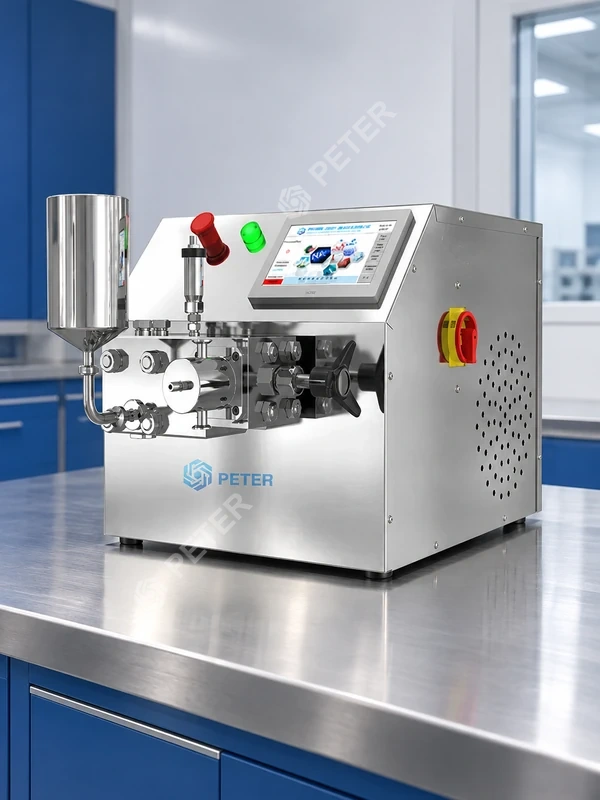
For buyers comparing high pressure homogenizers, the most useful output is a traceable process window: feed conditions, pressure, flow, temperature and the measured product response. That window is more transferable to scale-up than a single maximum-pressure number.
Which Supplier Evidence Reduces Technical and Commercial Risk?
| Qualification dimension | Evidence to request | Why procurement should care |
|---|---|---|
| Process capability | Representative trial report with pressure, flow, temperature and analytical method | Connects a catalogue claim to your feed and acceptance criteria |
| Engineering control | P&ID or flow schematic, GA drawing, utilities and instrument list | Exposes interfaces, installation work and missing safeguards |
| Traceability | Serialised component list, material declarations and revision-controlled manuals | Supports audits, change control and future replacement |
| Service readiness | Wear-parts list, recommended intervals, response route and training scope | Turns downtime exposure into a plan rather than an assumption |
| Commercial clarity | Itemised quotation with exclusions, delivery basis and acceptance terms | Makes total cost of ownership and scope gaps visible |
Which Equipment Route Matches the Project’s Current Maturity?
| Project situation | Useful equipment route | Qualification checkpoint |
|---|---|---|
| Uncertain formulation or early R&D | Experimental high-pressure homogenizer | Repeatable small-batch trial and sample-handling protocol |
| Pilot recipe with defined targets | Pilot-scale pressure homogenizer configuration | Scale-up assumptions, heat balance and cleaning sequence |
| Continuous production duty | Production-type high-pressure homogenizer | Factory/site acceptance test, utilities and spare-parts inventory |
| Fine dispersion or microfluidic process question | High-pressure microfluidizer route | Flow-path compatibility, recovery and product-specific performance test |
Why Should FAT and Site Acceptance Use Different Evidence?
Factory acceptance testing occurs before shipment and should verify the approved configuration, basic mechanical operation, safety functions, document set and agreed duty points under the supplier’s available utilities. Record whether water, representative material or a surrogate is used; a water FAT cannot establish production throughput or product endpoint. Site acceptance follows installation and should verify actual utilities, interfaces, controls, cooling, operator procedures, cleaning and the defined product duty. For all high pressure homogenizer manufacturers, assign instruments, witnesses, raw-data ownership, deviation handling, retest rules and closure responsibility separately for each stage. FAT release permits shipment; it should not be treated as automatic site or process acceptance.
How Do Controlled Documents, Spares and Service Protect Uptime?
Before purchase, require a document index covering drawings, manuals, electrical information, wetted-material declarations, calibration records where applicable, recommended cleaning procedure, hazard information, spare-parts catalogue and inspection points. The requested package should identify the serial number and revision for each controlled document. If the machine enters a regulated workflow, agree which records are supplier deliverables and which are generated by the operating site.
Set a document baseline at purchase order, design approval, FAT and shipment. Each transmittal should show document number, revision, issue date, approval status and a change summary; superseded copies should be identifiable rather than silently overwritten. Require written impact review when a component or setting changes after approval, including whether drawings, parts lists, software records, maintenance instructions or acceptance tests must be revised.
Service planning is more than asking for a warranty period. Rank seals, valves, gaskets and other wear items by whether failure stops production, degrades product or can wait for planned maintenance. Record quoted lead time, minimum order quantity, shelf life and storage conditions, required tools, the supplier’s change-interval assumptions and the operating evidence that should shorten or extend an interval. Separate commissioning stock, routine stock and insurance spares so buyers do not confuse a start-up kit with an uptime plan. The lifecycle cost of a high pressure homogenizer machine includes utilities, cooling, cleaning chemicals, operator time, planned maintenance, unplanned downtime, qualification and off-spec material. Calculate each cost from site hours, rates and observed trial data rather than an invented savings percentage.
The operating envelope of a pressure homogenizer should be reflected in the service plan: higher load, abrasive feed or frequent cleaning can change wear-part demand. Ask the supplier to state which assumptions support the recommended interval and what evidence would trigger an earlier inspection.
Which diagnostic evidence helps service teams resolve common problems?
Agree a named first contact, response channel and escalation path from operator to service engineer and responsible technical manager, including the information required at each handoff. For unstable pressure, reduced flow, temperature rise, leakage, abnormal vibration or an inconsistent endpoint, capture time-stamped pressure and flow trends, inlet and outlet temperatures, feed lot and condition, pass history, alarms, recent maintenance, wear-part hours, leak location and clear photos or video. This evidence does not diagnose the cause by itself; it helps distinguish feed starvation, air entrainment, cooling limits, restriction, measurement error and wear without promising a remote fix.
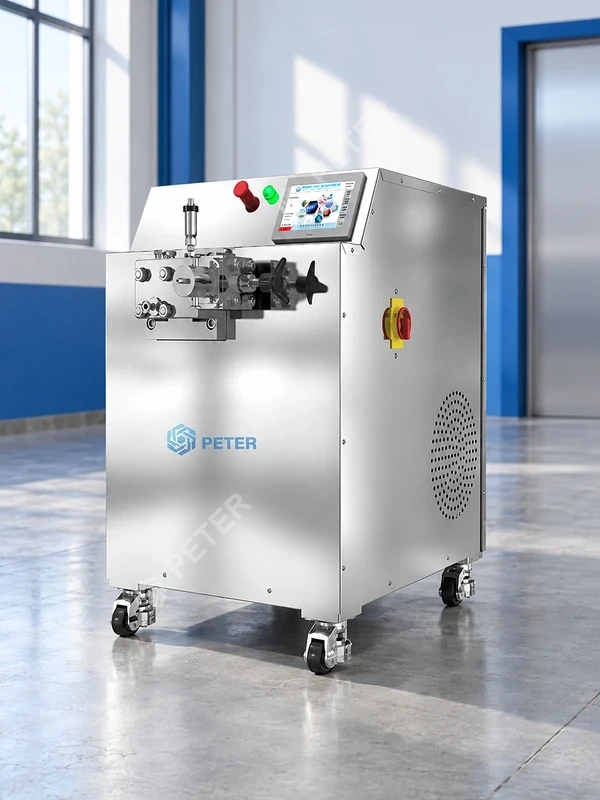
Use a simple TCO worksheet with five columns: purchase scope, installation and utilities, routine operating cost, service/spares and production-risk exposure. Ask each bidder to populate the same assumptions. A low initial quotation can become expensive when a chiller, special seals, controls integration or validation work is excluded.
Which Standards Apply, and What Do They Actually Demonstrate?
ISO 13320 addresses laser-diffraction particle-size analysis; it is a test method, not a homogenizer certificate. ISO 12100 provides machinery-safety risk-assessment principles. In the United States, 21 CFR Part 117 sets current good manufacturing practice and preventive-control requirements for human food, while 21 CFR Parts 210–211 address drug manufacturing. Their applicability depends on destination market, product category and the site’s quality system.
These references do not, by themselves, prove sanitary design, product safety, performance or acceptance. A buyer should ask the high pressure homogenizer manufacturers to state the scope of every declaration and then have the responsible engineering and quality teams review it. Unsupported claims such as “FDA approved machine” can create commercial and regulatory exposure when the underlying evidence only covers a material, a component or a test method.
Which Five Procurement Actions Make Shortlisted Bids Auditable?
- Send a one-page feed and duty specification, including ranges rather than a single nominal value.
- Request a representative trial with a locked sampling plan, named analytical method and raw operating records.
- Compare pressure, flow, temperature, cleaning and wear-parts assumptions in a common quotation template.
- Review drawings, material traceability, change control and document revisions before releasing a purchase order.
- Agree acceptance criteria, training, spares, service contacts and the evidence needed for site qualification.
Include the high pressure homogenizer machine in the same approval workflow as the surrounding feed, cooling and cleaning systems; an isolated equipment sign-off can miss an interface that determines the actual result.
CAS PETER is a China-based B2B provider of experimental, production-type and microfluidizer solutions. Buyers can review the experimental high-pressure homogenizer route, the production-type high-pressure homogenizer route and then request a material-specific scope. Published product pages are useful for orientation; the final selection should rest on written conditions and test evidence.
Which Questions Should Buyers Resolve Before Selecting a Supplier?
How do I choose a high-pressure homogenizer manufacturer?
Shortlist suppliers that can connect a representative-material trial to controlled drawings, traceable materials, service coverage and clear acceptance terms. Compare the evidence package and lifecycle assumptions, not only the headline pressure or flow. Ask for references to the test method and for a written list of exclusions.
What should a manufacturer provide with a high-pressure homogenizer machine?
Request an operating manual, flow or piping schematic, general arrangement, utility and instrument list, material declarations, safety information, cleaning guidance, spare-parts catalogue and acceptance records. The exact package depends on your industry and market; agree revision control and serial-number traceability in the purchase specification.
How do pressure homogenizers differ from high-shear mixers?
A pressure homogenizer drives material through a specialised high-pressure restriction, while a high-shear mixer applies intense local shear from a rotating tool in a vessel or inline head. They can solve overlapping dispersion problems but have different feed, residence-time, heat and scale-up constraints. Test the actual formulation before treating one as a drop-in substitute for the other.
What documents should be requested before purchase?
Ask for the quotation with exclusions, process and utility assumptions, drawings, wetted-material declarations, manuals, risk information, inspection or test plan, acceptance criteria, calibration records where relevant and a spare-parts/service plan. For regulated work, have quality and engineering identify which records must be retained as controlled evidence.
What should be included in a high-pressure homogenizer machine acceptance test?
Define the feed or surrogate, inlet condition, pressure and flow points, outlet-temperature limit, sampling locations, analytical method, cleaning sequence, repeatability and deviation process. A water run can demonstrate basic mechanical operation, but it cannot establish formulation stability or real-feed throughput.
Which Authoritative Sources Define the Test, Safety and Compliance Boundaries?
- ISO 13320: Particle size analysis—Laser diffraction methods.
- ISO 12100: Safety of machinery—Risk assessment and risk reduction.
- U.S. 21 CFR Part 117: Human food preventive controls.
- U.S. 21 CFR Parts 210–211: Drug manufacturing requirements.
The durable principle is simple: pressure is a process variable, not a purchasing shortcut. When feed data, test method, documentation and duty cycle are explicit, high pressure homogenizers can be compared on evidence rather than promises. Contact CAS PETER with your formulation, target throughput and acceptance criteria to discuss a defensible scope.