

Ball Mill Homogenizer vs Hand Homogenizer: Which Is Best?
When a lab manager moves a difficult dispersion from a hand homogenizer to a ball mill homogenizer, the first failed run can look like a bad machine: the slurry warms, the recovered mass is low, and particle-size results vary between operators. The root cause is often the selection boundary. A hand tool may be appropriate for a quick tissue or powder pre-treatment, while a ball mill adds bead impact and a closed-vessel sample history; neither automatically supplies the controlled pressure, cooling or reproducible flow needed for every emulsion, cell suspension or nanomaterial. This guide compares those routes with high-pressure processing, shows how to manage heat and recovery, and gives procurement teams a validation path that turns a sample result into a defensible equipment choice.
Summary: The best choice follows the sample and the acceptance test, not the word “homogenizer.” A hand homogenizer is useful for small, rapid, operator-led work; a ball mill homogenizer is useful when bead-mediated impact and sealed processing suit the material; a high-pressure homogenizer is generally better when a repeatable flow path, defined pressure differential, cooling and scale-up evidence matter. ISO 13320 (laser diffraction) and ISO 22412 (dynamic light scattering) describe different particle-size methods, so buyers should select the method before comparing results. Start with sample volume, viscosity, solids, temperature limit, contamination tolerance, target endpoint and recovery requirement, then run a representative trial with an agreed sampling plan.
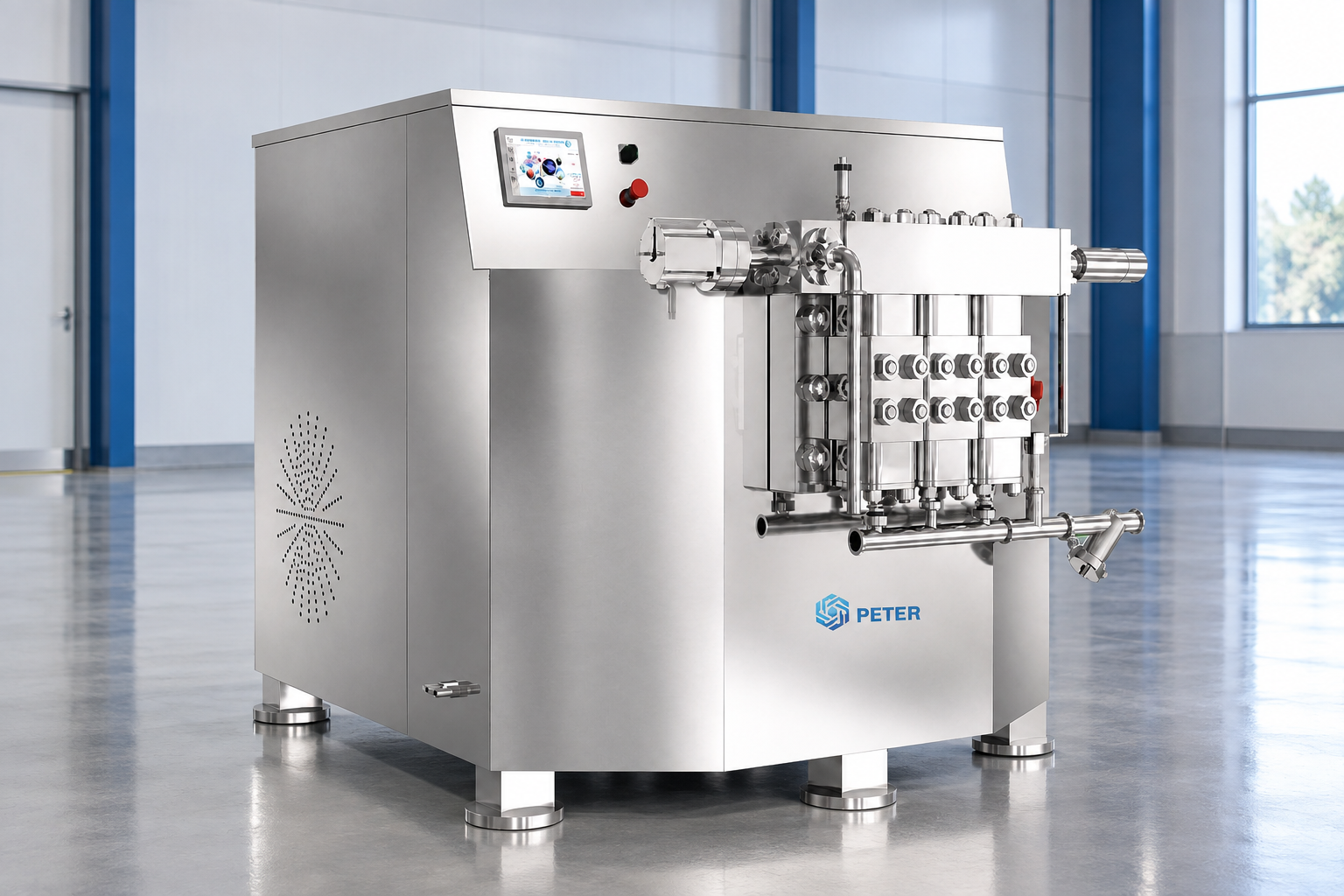
What is the real difference between ball-mill, hand and high-pressure homogenization?
These devices expose a sample to different energy fields and different levels of process control. A hand homogenizer transfers local mechanical energy through a probe, pestle or rotor-stator head while the operator controls immersion, motion and time. A ball mill uses beads or balls inside a vessel; collisions, friction and shear act on the loaded sample. A high-pressure homogenizer pumps a fluid through a defined interaction zone, where pressure drop, turbulence, shear, impact and downstream decompression can contribute to dispersion or disruption. The machine name is therefore a starting category, not a performance specification.
Searches for homogenizer machine traditional often describe a conventional, operator-led mixer rather than a single technical standard. That phrase should be translated into measurable questions: Is the sample free-flowing or pumpable? Is a disposable probe, vessel or bead charge acceptable? Must every batch receive a comparable exposure history? Is the output judged by microscopy, particle-size distribution, extraction yield, viscosity, stability or another property? A quotation that answers only “motor power” or “maximum pressure” leaves the critical process variables undefined.
| Decision dimension | Ball mill homogenizer | Hand homogenizer | High-pressure homogenizer |
|---|---|---|---|
| Energy delivery | Bead impact, friction and shear in a vessel | Local probe or manual mechanical action | Pump-driven pressure drop through an interaction zone |
| Sample state | Usually a contained batch that can tolerate bead contact | Small batch, paste, tissue or liquid depending on head | Pumpable liquid or suspension within the supplied configuration |
| Repeatability | Depends on bead charge, fill, speed, time and vessel history | Sensitive to operator motion, depth and timing | Can be defined by pressure, flow, passes, temperature and sampling |
| Heat and recovery | Heat can build in a closed vessel; beads and walls can retain material | Short runs may limit heat; splashing and open transfers can reduce recovery | Pressure work creates heat; cooling and hold-up must be measured |
| Typical selection signal | Need for impact-assisted milling or sealed small-batch processing | Fast exploratory preparation or low sample count | Need for documented, transferable fluid processing |
| Main hidden cost | Bead replacement, cleaning and material retained in the vessel | Labor variation, rework and inconsistent endpoint | Cooling, wear parts, utilities and planned service |
How should material and sample compatibility be assessed?
Compatibility starts with the formulation rather than the equipment brochure. Record solids loading, viscosity as a function of temperature, particle or agglomerate size, pH, solvent, abrasiveness, volatility, sensitivity to oxygen and sensitivity to temperature. Confirm that wetted materials, seals, vessels, beads and disposable components are compatible with the chemistry. For biological samples, include the required cell or tissue integrity, buffer conditions and downstream assay; for powders and nanomaterials, include wetting behavior, agglomeration and contamination limits.
A ball mill can be effective when collisions are part of the intended mechanism, but bead contact can introduce wear debris or create a recovery problem if the sample coats the vessel. A hand tool can avoid a bead charge, yet a probe may warm a small volume quickly or aerate a viscous formulation. High-pressure processing requires a pumpable feed and a stable inlet; large particles, gas, fibers or unfiltered agglomerates can damage a narrow interaction zone or create pressure pulsation. The acceptable feed envelope must be verified in a trial, not inferred from a general product label.
The term homogenizer emulsifier can refer to a device used to create or stabilize an emulsion, but emulsification success also depends on phase ratio, surfactant system, viscosity, temperature and residence history. A machine that reduces droplet size in one formulation may not provide the same result in another. Define whether the endpoint is a distribution, stability after a specified hold, viscosity, microscopy score or another measurable attribute.
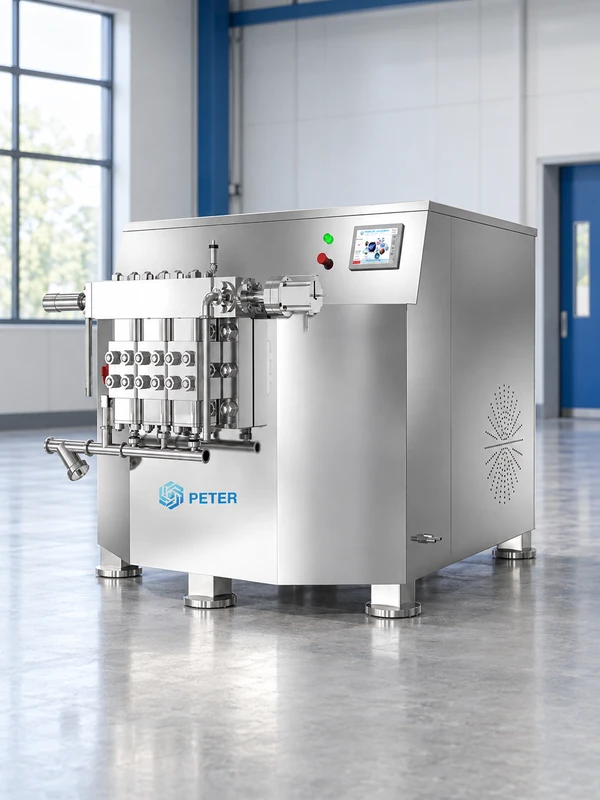
How do heat, recovery and process history change the decision?
Heat is a trade-off rather than a simple pass-or-fail specification. Ball-mill energy is released inside a vessel, so wall temperature may understate the local sample peak. A hand run may be short but can still overheat a small, concentrated sample around the probe. In high-pressure processing, pressure work and flow resistance raise outlet temperature; a cooler can recover the bulk temperature while the sample has already experienced a higher transient. Record feed temperature, immediate outlet temperature, cooled temperature, hold time and pass count.
Recovery has the same systems character. For a ball mill, weigh the loaded and discharged material and inspect bead, lid and wall retention. For a hand homogenizer, include transfer loss, splash, foam and residue on the shaft. For a high-pressure route, include line hold-up, start-up and shutdown waste, sample port volume and any material required to flush the system. A lower purchase price can disappear when the process loses a meaningful fraction of a scarce or high-value sample.
Process history should be expressed in terms that another operator can reproduce. “Two minutes at medium speed” is incomplete if the vessel fill, probe depth and sample temperature are unknown. “Two passes” is incomplete if the batch was recirculated and the sampling point was not fixed. Record the route, actual flow where available, exposure count, energy setting or pressure, vessel volume, cooling method and sample age at measurement.
What troubleshooting pattern separates equipment faults from selection faults?
Start by classifying the symptom. If a hand-homogenized sample changes with the operator, lock probe depth, timing, vessel geometry and sampling. If a ball-mill result changes between runs, check bead size and charge, fill level, speed, cycle time, seal condition, wall coating and cleaning. If a high-pressure unit pulses, check gas entrainment, inlet head, feed viscosity, suction leaks, filter condition, valve wear and actual flow before increasing pressure.
Temperature drift often points to cooling capacity, batch hold time or a change in viscosity rather than a defective drive alone. A recovery shortfall points to dead volume, retained solids, foaming, transfers or an unsuitable vessel. A particle-size result that disagrees with microscopy may reflect dilution, optical assumptions, agglomerate break-up during preparation or a different measurement method. ISO 13320 and ISO 22412 can guide method selection, but they do not make two preparation routes analytically equivalent.
Escalate when a pressure-containing part leaks, a safety interlock fails, a vessel or shaft shows damage, contamination cannot be excluded, or the accepted endpoint cannot be restored after basic checks. Maintenance should be performed against the supplier’s instructions and the site’s safety procedures; do not improvise a pressure-boundary repair or change a process limit solely to recover a schedule.
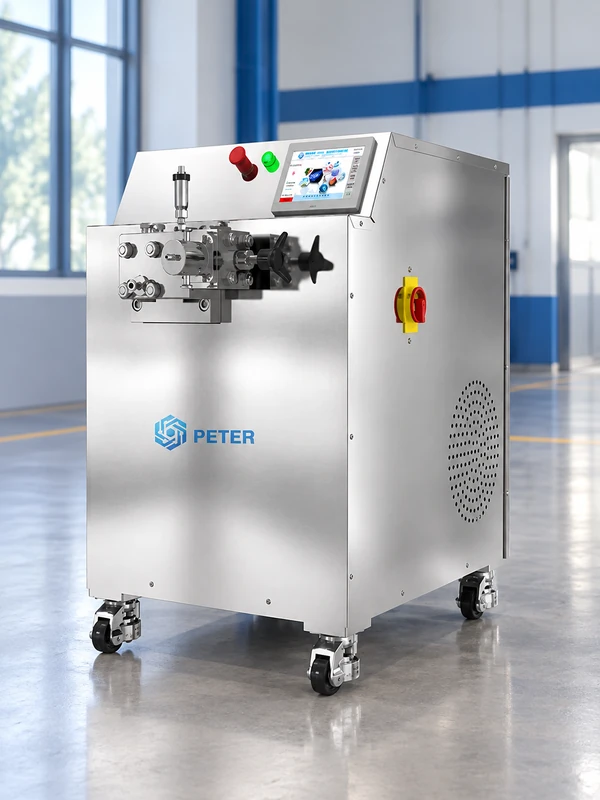
Which practical selection checklist should procurement use?
The checklist below keeps a small trial from becoming an ambiguous purchase request. It also helps compare a conventional homogenizer machine traditional setup with a ball mill, hand tool or high-pressure system on the same evidence.
| Question to answer | Evidence to request | Why it changes the choice |
|---|---|---|
| What is the sample envelope? | Volume, viscosity, solids, particle size, chemistry and temperature ceiling | Rules out incompatible flow paths, vessels, seals or bead materials |
| What is the acceptance endpoint? | Named method, sample preparation, replicates, limit and measurement timing | Prevents “looks uniform” from replacing a decision criterion |
| How much heat is acceptable? | Inlet, immediate outlet, cooled value and hold-time record | Identifies the need for cooling, shorter runs or a different route |
| How much sample must be recovered? | Mass balance including vessel, line, bead, shaft and transfer losses | Makes scarce samples and high-value formulations economically visible |
| What must scale? | Throughput, exposure history, cooling, cleaning and sampling plan | Avoids assuming that a manual or batch result transfers directly to flow processing |
| What service evidence is needed? | Wear parts, inspection points, spare lead times, training and acceptance test | Converts maintenance risk into a planned ownership cost |
For buyers evaluating a fluid process, the high-pressure homogenizer working-principle guide explains why pressure, valve geometry, passes and cooling must be considered together. For cell disruption, the cell-lysis guide provides a useful reminder to define biological endpoint and temperature control before choosing hardware. CAS PETER’s PT-20 product page and PT-40 pilot product page can support a configuration discussion; ratings and options should be confirmed in the quotation and trial protocol.
What type of homogenizer machine is best for homogenizer selection and operation?
The best machine is the one whose energy mechanism, sample path and controls match the verified endpoint. Use a hand homogenizer for quick, small-volume work when operator variation is acceptable and the sample tolerates open handling. Use a ball mill when bead impact or sealed batch treatment is central and contamination, heat and recovery have been measured. Use high-pressure equipment when a pumpable feed, repeatable exposure history, cooling and scale-up evidence are required.
Before buying, run the same sample through the shortlisted route using the same analytical method and acceptance rule. Record heat and recovery; otherwise a visually attractive result can hide a yield or stability penalty.
How do you choose a homogenizer machine?
Define sample envelope, target quality attribute, throughput, temperature limit, recovery requirement, cleaning route and future scale first. Then compare the energy mechanism, wetted materials, controls, measurement plan, utilities, wear parts and service support at the intended duty point. A representative trial with a written acceptance protocol is stronger evidence than a maximum pressure, speed or power number in isolation.
When should homogenizer machine traditional be considered?
A homogenizer machine traditional approach should be considered when the process is low volume, exploratory, operator-led and does not require a tightly controlled flow history. It can be a sensible pre-treatment or screening step when the sample is compatible with the probe or vessel and the endpoint is measured consistently. Move to a controlled batch or high-pressure route when variability, heat, recovery, throughput or scale-up becomes the decision risk.
What maintenance does a homogenizer machine need?
Maintenance depends on the route. Inspect hand-tool shafts, probes, seals and electrical safety; inspect ball-mill vessels, closures, beads, liners and drive components; and inspect high-pressure pumps, valves, seals, gauges, cooling circuits, filters and pressure-boundary parts according to the supplier’s instructions. Clean and document the sample path, trend pressure or torque, and keep critical spares identified. If wear changes the endpoint, record the before-and-after condition and re-run the defined acceptance check.
How should a homogenizer emulsifier be validated for a new formulation?
A homogenizer emulsifier should be validated against a formulation-specific endpoint: for example, a particle or droplet-size method, stability after a defined hold, viscosity window or microscopy criterion. Fix phase ratio, solids, temperature, pressure or speed, passes, cooling and sampling time; include replicates and a baseline. ICH Q8(R2) is useful for linking material attributes and process parameters to critical quality attributes, while ISO 13320 or ISO 22412 can define the selected particle-size method.
References
- ISO 13320:2020, Particle size analysis — Laser diffraction methods.
- ISO 22412:2017, Particle size analysis — Dynamic light scattering.
- U.S. FDA, Process Validation: General Principles and Practices (2011).
- ICH Q8(R2), Pharmaceutical Development.
Conclusion
Ball mill, hand and high-pressure homogenizers solve different process problems. The reliable decision sequence is to define the material and endpoint, match the energy mechanism and sample path, quantify heat and recovery, and confirm the result with a named analytical method and repeatable sampling plan. Do not treat “traditional” equipment, a maximum speed or a pressure setpoint as proof of suitability; do not skip contamination, cleaning or wear evidence when the sample is valuable. When a controlled fluid route is justified, CAS PETER’s homogenizer product range gives procurement teams a starting point for configuration and trial discussion. The right machine is the one that preserves the sample, meets the measured endpoint and remains supportable at the next scale.