

High Pressure Homogenizer for Nanoparticles: Buyer Checklist
When a process-development manager in Chicago encountered an emulsion project that needed a narrower nanoparticle distribution, she compared several machines and ran a high-pressure trial. The first sample looked successful, but its size profile shifted during stability checks. The reversal was useful: the machine was not simply a bad fit; the missing element was a test plan that tied feed condition, cooling, pass count, and measurement to a target distribution.
Summary: The best purchasing decision starts with a repeatable development plan, not a pressure number. ISO 13320:2020 provides a laser-diffraction test-method framework for particle-size analysis; buyers should agree on sample preparation, reporting of D10, D50, and D90, and stability checkpoints before comparing equipment. Select a system only after it demonstrates the target distribution under the real formulation, temperature limits, and cleaning routine.
Nanoparticle processing is a controlled dispersion problem. A pressurized stream passes through a designed interaction zone, where shear, turbulence, cavitation, and collision forces can break droplets or agglomerates and improve mixing. The useful outcome is not merely a smaller average; it is a distribution that remains suitable for the intended product after storage, handling, and downstream processing. NIST notes that nanotechnology spans materials and measurement questions, which is why buyers should treat sizing data and method control as part of the equipment specification.
Turn the product brief into measurable selection requirements
A request for the best high pressure homogenizer for nanoparticles is incomplete until the buyer defines the material, desired distribution, batch or flow requirement, allowable temperature exposure, and release method. A dispersion containing heat-sensitive actives needs a different cooling strategy from a robust pigment slurry. A viscous pre-mix, abrasive solids, or a formulation with a narrow acceptable distribution can also change the preferred valve, wetted materials, and feed arrangement.
Specify the outcome before the machine
Write the acceptance target as a small set of linked measurements: D10, D50, D90, appearance, viscosity where relevant, and a stability result at defined timepoints. ISO 13320:2020 is a particle-size-analysis test method, not a certificate for a homogenizer. It helps a team align the laser-diffraction procedure, but the buyer must still establish formulation-specific dispersion, refractive-index, sampling, and cleaning controls. If another method such as microscopy or dynamic light scattering is needed for the material, document how it will complement rather than contradict the release decision.
Build a trial around interactions, not one setting
For a high pressure homogenizer for nanoparticles, plan a compact design of experiments that changes feed state, cooling, number of passes, and pressure range deliberately. Record inlet and outlet temperature, recirculation exposure, hold time, and the exact sampling point. The same nominal setting can produce different results when the pre-emulsion changes, when feed temperature drifts, or when a later pass adds heat without materially improving the distribution. A trial that includes a before-and-after stability check has more purchasing value than a one-time size reading.
Understand the performance limits and operating differences
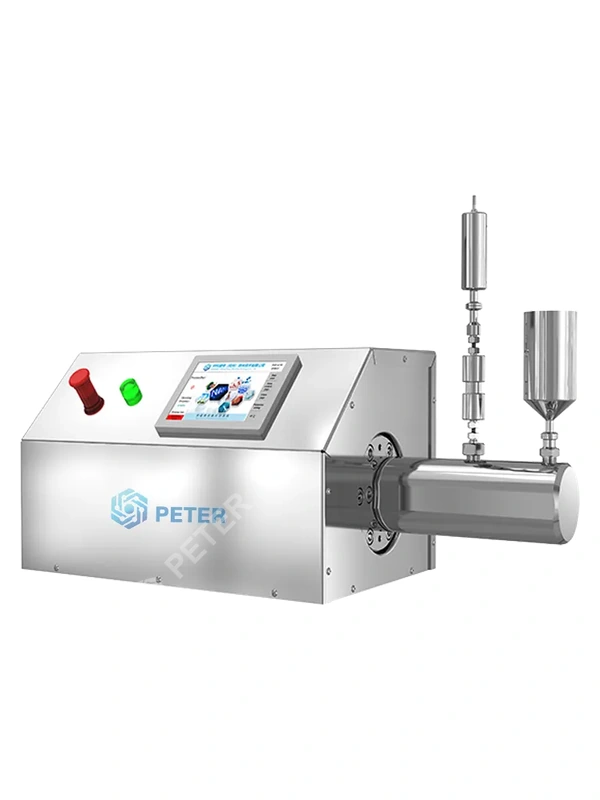
high-pressure homogenization techniques for nanoparticles are often compared with rotor-stator mixing, ultrasonication, membrane emulsification, and bead milling. Each method has a role. Homogenization can be a practical continuous route when the formulation can be fed consistently and the interaction zone can be cleaned and maintained. It does not automatically replace a different technology for every particle chemistry or target structure.
| Method | Useful operating strength | Key limitation to test | Buyer evidence to request |
|---|---|---|---|
| High-pressure homogenization | Repeatable interaction under controlled flow; suitable for scale-up studies | Heat rise, pass-to-pass change, valve wear, and feed consistency | Size distribution after defined passes and a cooling record |
| Rotor-stator mixing | Simple pre-dispersion and coarse emulsion preparation | May not achieve the final distribution or stability target alone | Pre-mix viscosity and comparison with the final method |
| Ultrasonication | Convenient small-volume screening | Energy delivery, temperature, and scale transfer need close control | Temperature log and probe or vessel cleaning procedure |
| Bead milling | Useful for some solid-particle size-reduction applications | Media contamination, separation, and wear require review | Contamination assessment and media-management plan |
The hidden cost is usually not the purchase price alone. It may be engineering time spent chasing an unstable result, lost material during repeated trials, extended cleaning, replacement wear parts, or a delayed scale-up decision. An illustrative total-cost comparison therefore includes sample consumption, operator hours, utilities, planned maintenance, downtime risk, and the cost of rejecting a batch. Ask suppliers to separate what the equipment can demonstrate from what the formulation still needs to prove.
Why a milk homogenizer is not a nanoparticle benchmark
A milk homogenizer is designed around a dairy duty and its sanitation, feed, and process expectations. It may show the familiar principle of pressure-driven droplet disruption, but it is not a proxy for nanoparticle processing. Nanoparticle formulations can bring different viscosity, solvent compatibility, solids loading, temperature sensitivity, analytical requirements, and cleaning validation needs. Compare the actual fluid path and trial data, not the product label or a dairy reference alone.
Make cleaning, maintenance, and documentation part of the buying decision
Cleaning has to restore the intended wetted surfaces without leaving residues that distort the next sample. Review the disassembly points, flush route, gasket and seal access, cleaning-agent compatibility, and the evidence available after a changeover. For regulated manufacture, United States current good manufacturing practice requirements include 21 CFR Parts 210 and 211; their applicability depends on the product, market, and intended use. A development machine is not made compliant simply by association, and a process claim needs supporting documentation.
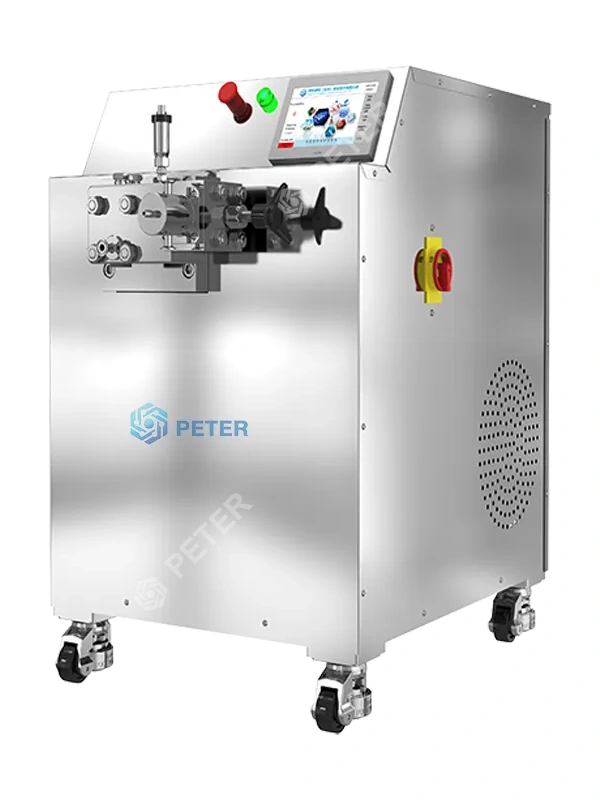
Maintenance planning should name the wear components, inspection triggers, spare-parts availability, service response path, and the data needed after a repair to confirm comparable operation. The process team should also ask how pressure is monitored, what alarms or interlocks are provided, and whether operating records can support its own batch or development documentation. These questions prevent an otherwise capable unit from becoming a bottleneck after the pilot work succeeds.
Use a buyer matrix before requesting final quotations
Evaluate each candidate against the same formulation and evidence package. A machine that produces a promising initial result but cannot meet the temperature, cleaning, or documentation requirements should not rank above a more controllable alternative.
| Decision area | Questions for the supplier and internal team | Evidence or decision gate |
|---|---|---|
| Formulation fit | What are the viscosity, solids, solvent, and material-compatibility boundaries? | Written fluid-path review and representative feed test |
| Distribution target | Which D10, D50, D90 and stability criteria define success? | Agreed test method and retained sample plan |
| Thermal control | How are inlet, outlet, and recirculation temperatures managed? | Logged temperatures across the planned pass sequence |
| Throughput and scale | What sample volume and process flow are required now and later? | Development-to-production scale rationale |
| Cleaning and service | How are wetted parts cleaned, inspected, and replaced? | Cleaning procedure, maintenance schedule, and spare-parts list |
| Quality context | Which market, intended use, and claims govern the documentation? | Quality and regulatory review before purchase order |
Selection checklist for formulation and procurement teams
- Define the feed specification and the target distribution before the trial.
- Agree on ISO 13320 laser-diffraction handling, or another justified method, before comparing data.
- Test cooling, pass count, and hold time as linked variables; retain samples for stability checks.
- Review cleaning access, consumables, material compatibility, and the maintenance plan with operations.
- Match documentation to the destination market, intended use, and claims rather than assuming a generic compliance status.
CAS PETER can support a structured equipment review with configurable high-pressure homogenizer options, including the PT-10 high pressure homogenizer and the PT-20 high pressure homogenizer. For background before a supplier discussion, see its guidance on how high-pressure homogenizers work. The right configuration should be selected from trial evidence and the buyer’s own technical, cleaning, and documentation requirements.
Frequently asked questions
What does a nanoparticle homogenizer do to milk?
It can reduce and redistribute fat droplets in milk or a dairy-like emulsion through a pressure-driven interaction zone. That can affect apparent uniformity and separation behavior, but it does not establish that the same unit or settings suit nanoparticle formulations. Dairy processing has its own sanitation, ingredient, and quality controls.
What pressure is used for nanoparticle homogenizer processing?
There is no universal pressure for nanoparticle processing. The useful range depends on formulation chemistry, viscosity, target distribution, heat sensitivity, valve design, flow requirement, and number of passes. Establish it through a controlled trial that measures the distribution and stability rather than adopting another product’s setting.
How does high pressure homogenizer for nanoparticles affect product stability?
It may improve stability when it creates a suitable and repeatable droplet or particle distribution, but it can also add heat or change the material in ways that reduce stability. Measure both the initial distribution and later samples under defined storage conditions. Compare results against agreed acceptance criteria, not appearance alone.
What should processors check before selecting a nanoparticle homogenizer?
Check formulation compatibility, target distribution, cooling, pass control, throughput, cleaning access, wear parts, analytical method, and documentation needs. Ask for a test plan that names the sampling point and stability timeline. Then compare suppliers against the same matrix so a persuasive demonstration does not replace evidence.
References
- ISO 13320:2020, Particle size analysis – Laser diffraction methods.
- National Institute of Standards and Technology, Nanotechnology.
- U.S. Food and Drug Administration, Current Good Manufacturing Practice Regulations.
- National Library of Medicine, peer-reviewed article on nanoparticle formulation and characterization.
A successful nanoparticle trial is a decision system, not a dramatic first pass. When your team is ready to turn that system into an equipment comparison, contact CAS PETER to discuss the formulation, trial plan, and applicable sourcing requirements.