

Homogenizer Equipment and Valves: Choose the Right Setup
When a process engineer in Suzhou encountered a rapid pressure drop during an emulsion trial, the first reaction was to blame a worn pump. The visible failure was real, but the root cause was selection: the feed contained particles that did not suit the selected restriction, and the valve was being operated outside its stable control range. A correctly sized system, compatible wetted materials, and a documented start-up sequence would have prevented the stoppage. This composite scenario reflects a common procurement risk: a machine can be sound while the setup is wrong. The practical question is therefore not simply which machine is largest, but how the product, pressure, flow, valve, and verification method must work together.
Summary: The right setup matches feed properties and required product quality to the homogenization method, then confirms the choice with a controlled trial. High-pressure systems use a restrictive homogenizing valve to convert pressure into intense shear, turbulence, and cavitation effects; a larger pressure rating alone does not guarantee a better emulsion or dispersion. For food and pharmaceutical work, document hygienic design, cleaning, material compatibility, and applicable requirements such as FDA 21 CFR Part 117 or Part 211 before purchase. Start with a representative sample, define a measurable endpoint, and ask for valve wear parts, pressure limits, and validation records as part of the quotation.
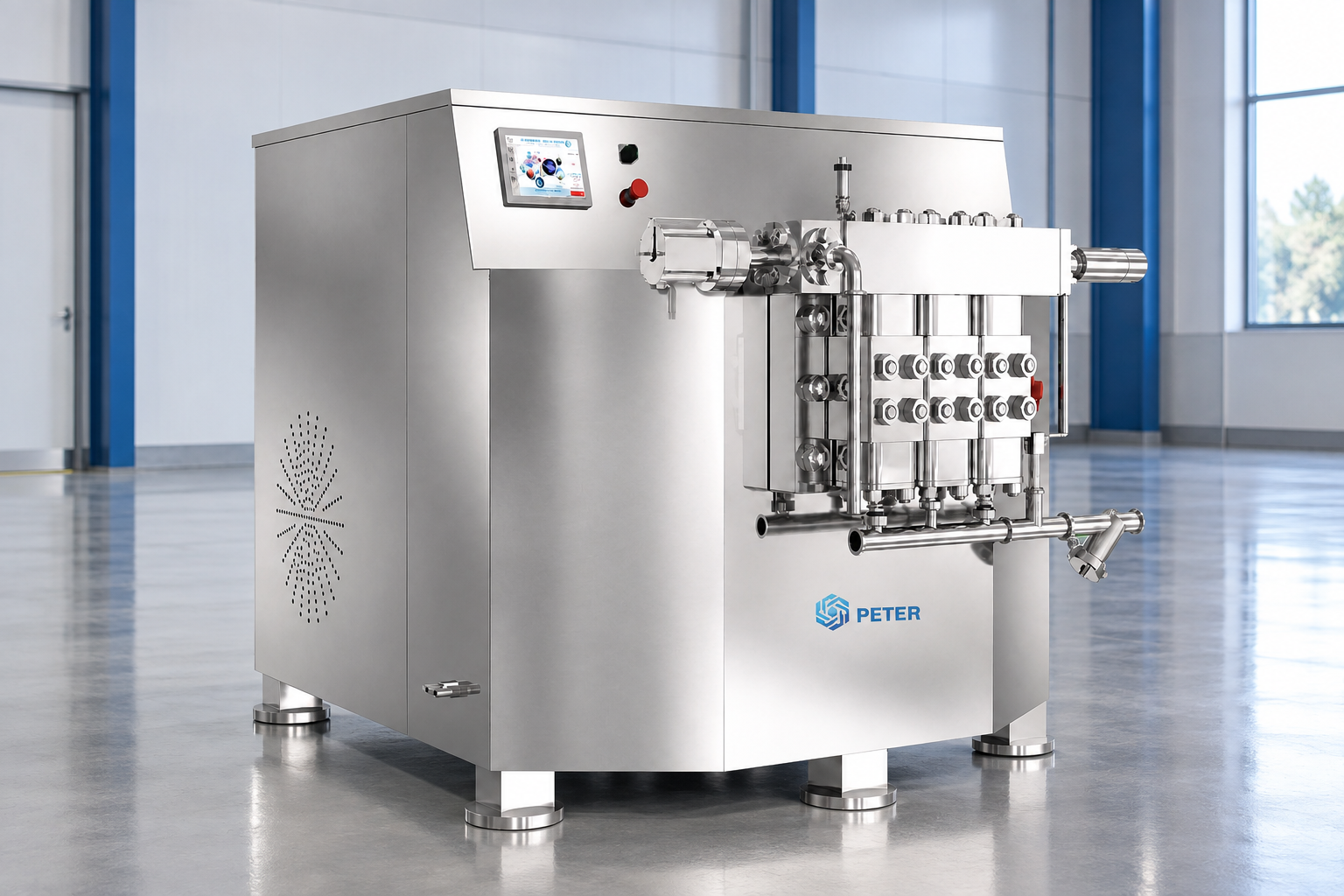
What must the setup accomplish before a model is selected?
Homogenization is a process outcome, not a single component. The buyer should define the feed phase structure, viscosity, solids or droplets, temperature sensitivity, throughput, number of passes, and acceptable particle-size or stability result. A rotor-stator mixer may be adequate for premixing, while a high-pressure homogenizer can be selected when a narrow restriction and repeatable pressure are needed for finer dispersion. A bench test should use the same formulation, concentration, temperature window, and sampling plan expected in production; otherwise, a promising result may not transfer.
For process engineers, the key distinction is energy delivery. Pressure is a controllable input, whereas droplet size, distribution, viscosity, microbial status, or release performance are outputs that must be measured. British-language specifications may call the same machine a homogeniser, so the purchase specification should define the process duty rather than rely on spelling. ISO 13320:2020 provides a framework for particle-size analysis by laser diffraction, but the method must be validated for the sample’s optical properties and concentration. The U.S. FDA’s 21 CFR Part 117 also makes hazard controls and sanitary processing relevant for covered human food operations; it does not certify a particular machine.
How does a homogenizer valve affect pressure, shear, and wear?
The homogenizer valve is the working restriction where the pressurized stream is accelerated and then released. Valve geometry, seat condition, gap setting, pressure stability, and residence time influence the treatment delivered to the sample. Operators should record inlet temperature, outlet temperature, pressure, flow, pass count, and any visible change in noise or vibration. A stable pressure trace is more useful than a nominal maximum rating when comparing quotations.
Valve selection must also consider the feed. Hard particles, crystals, abrasive minerals, gas pockets, or poorly hydrated powders can damage seats and cause unstable flow. Fragile biological samples may need a lower thermal load and fewer passes. Elastomers, ceramics, stainless steel, and other wetted materials should be checked against pH, solvents, oils, cleaning agents, temperature, and regulatory requirements. Never infer food or pharmaceutical suitability from a material name alone; obtain the supplier’s material and cleaning documentation for the exact configuration.
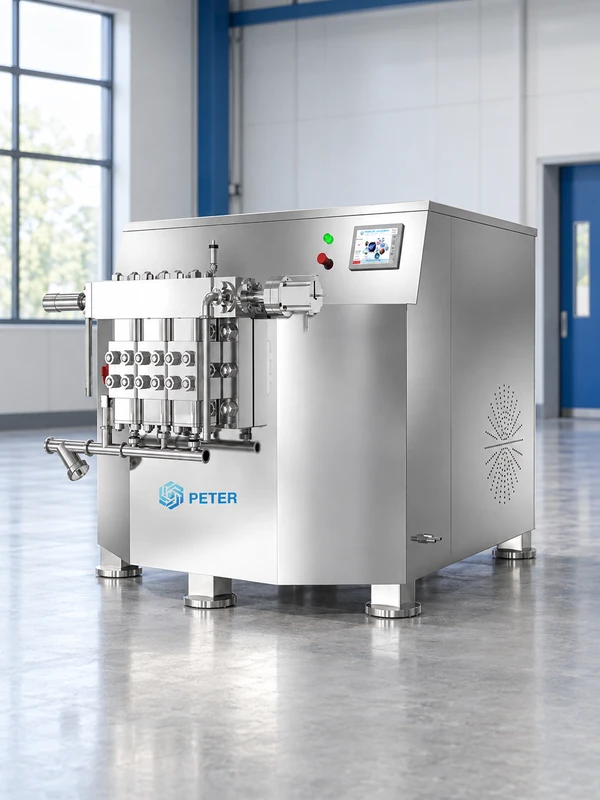
Which homogenizer equipment configuration fits the application?
Use the simplest architecture that can meet the endpoint with acceptable risk. A laboratory unit is useful for formulation screening and method development; a pilot unit helps establish scale-up behavior, residence time, and pass strategy; a production system must add capacity, cleanability, controls, spares, and operator safeguards. The terms homogenizer equipment and homogeniser are often used interchangeably in search and purchasing documents, but the specification still needs to identify the actual process duty.
| Configuration | Best-fit decision | Typical strength | Watch point | TCO implication |
|---|---|---|---|---|
| Rotor-stator pre-mixer | Hydration, wetting, coarse premix | Simple integration and fast batch preparation | May not deliver the final dispersion endpoint | Lower entry cost; a second stage may still be required |
| Laboratory high-pressure unit | Small samples and formulation screening | Controlled comparison of pressure and pass count | Small-volume sampling can distort scale-up assumptions | Reduces formulation risk before pilot capital |
| Pilot high-pressure unit | Scale-up and process window definition | More representative flow path and operating practice | Requires documented transfer criteria | Useful bridge between R&D and production |
| Production high-pressure unit | Repeatable continuous throughput | Capacity, instrumentation, and service access | Higher utility, validation, and spare-parts obligations | Evaluate energy, downtime, wear parts, and cleaning together |
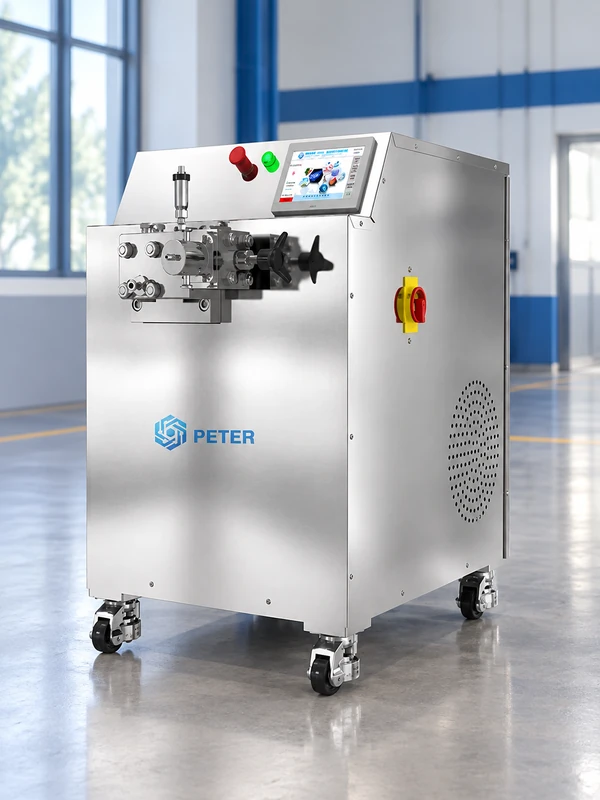
CAS PETER’s homogenizer product directory can be used as a starting point for comparing experimental, pilot, and production-oriented categories. For a specific duty, the PT-20 high-pressure homogenizer page and the PT-40 pilot-type page should be checked against the current technical sheet rather than treated as substitutes for a sample trial.
How should materials, samples, and compatibility be screened?
Compatibility starts with a written sample profile. Record the continuous phase, dispersed phase, solids loading, particle hardness, viscosity at operating temperature, pH, solvent or oil content, foaming tendency, and whether the batch contains fibers or gas. Then map those properties to the pump, valve, seals, tubing, heat exchanger, and cleaning method. A sample that passes through a valve may still foul the system, overheat, or degrade chemically.
For high-value or temperature-sensitive formulations, define a thermal budget before the trial. Measure temperature at the inlet and outlet, and set an alarm or recirculation limit appropriate to the formulation. If the application is food, use the documented hazard analysis and preventive-control approach required by the destination market; if it is pharmaceutical, align equipment qualification and cleaning evidence with the quality system and applicable 21 CFR Part 211 expectations. A standard describes a method or requirement; it does not automatically prove that a supplied configuration complies.
What practical checks reduce troubleshooting and downtime?
Pressure instability, a sudden flow reduction, unusual noise, temperature rise, or a change in product texture should be treated as process signals. First verify feed tank level, air entrainment, upstream filter condition, and actual viscosity. Next check whether the valve is correctly assembled, whether seats or seals show wear, and whether the pressure control setting matches the approved recipe. Do not keep increasing pressure to compensate for a blocked or damaged restriction; that can accelerate wear and obscure the original cause.
Use a fault log that connects symptom, operating conditions, action, and result. A repeatable check should include a baseline water or approved reference-fluid run, a pressure and temperature trace, and a visual inspection of removed wear parts. For particle-size claims, use the same dispersion protocol and instrument settings each time; for emulsion stability, define the observation period and test method rather than relying on appearance immediately after processing.
| Decision area | Evidence to request | Acceptance question | Owner |
|---|---|---|---|
| Feed and sample | Representative formulation, viscosity and solids profile | Does the test sample reflect the production window? | Process engineering |
| Valve and wetted parts | Material list, seal options, wear-part drawings and service interval | Are materials compatible with product and cleaning chemistry? | Engineering and QA |
| Operating window | Pressure, flow, temperature and pass-count records | Can the endpoint be reached without exceeding the thermal or mechanical limit? | Process engineering |
| Measurement | Particle-size, viscosity, stability or assay method | Is the result measurable, repeatable and linked to a release decision? | QC or laboratory |
| Service and TCO | Spare list, lead times, cleaning steps, training and downtime assumptions | Can maintenance restore the system without improvising parts? | Maintenance and procurement |
Which standards and compliance checks matter?
Requirements depend on destination market and intended use. For covered U.S. food operations, FDA 21 CFR Part 117 addresses current good manufacturing practice, hazard analysis, and preventive controls. For drug products, FDA 21 CFR Part 211 covers current good manufacturing practice for finished pharmaceuticals, including equipment and process controls. ISO 9001:2015 provides a quality-management framework, while ISO 13320:2020 addresses laser-diffraction particle-size analysis. These references support a verification plan; they should not be presented as product certifications unless a specific certificate and scope are supplied.
Commercially, unsupported compliance language can delay qualification, trigger a documentation gap, or require a repeat trial. Put the destination market, product category, cleaning regime, and claim boundaries in the request for quotation. Procurement should also require a revision-controlled manual, parts list, pressure and temperature limits, recommended inspection points, and a clear statement of what the supplier has and has not validated.
How should buyers select and validate the final setup?
- Write the duty before the model number: define batch size, continuous flow, formulation window, endpoint, pass count, and temperature limit.
- Run a representative trial: compare at least two operating points and record pressure, flow, temperature, and product results under a controlled sampling plan.
- Specify the valve as part of the system: request geometry or configuration information, wetted materials, seal choices, wear-part life assumptions, and change-out instructions.
- Price the whole lifecycle: include utilities, cleaning time, planned spares, unplanned downtime, operator training, and validation work; label any ROI estimate as illustrative.
- Define the handover package: require drawings, manuals, calibration information, inspection records, and acceptance criteria before commissioning.
CAS PETER can be considered at this stage when its current model documentation, test support, and configuration scope match the duty. The honest comparison is based on the evidence package and trial result, not on a generic maximum-pressure statement. Its technical pages, including the high-pressure homogenizer working-principle guide, can help the team align terminology before requesting a quotation.
Frequently asked questions about homogenizer equipment and valves
What type of homogenizer mixer is best for mixing and emulsion processing?
The best type depends on whether the duty is premixing, droplet-size reduction, dispersion, or a validated production step. A rotor-stator mixer can prepare a coarse feed, while high-pressure homogenizer equipment is often evaluated when pressure-driven treatment and repeatable passes are required. Confirm the choice with a representative sample and a defined measurement method.
How do you choose a homogenizer mixer?
Start with feed properties, target throughput, temperature sensitivity, endpoint, and cleaning requirements, then match pump capacity and the homogenizer valve to that window. Compare total cost of ownership, including wear parts and validation, rather than comparing only the nameplate pressure. Ask for a trial record using your formulation or a justified surrogate.
When should homoginizer be considered?
The spelling homoginizer appears in search queries, but the engineering decision is the same: consider a homogenizer when mixing alone cannot deliver the required dispersion, emulsion stability, or repeatability. Procurement records may also contain the variant homoginizer; normalize it to the correct equipment description before comparing quotations. It is not automatically the right answer for every viscous, abrasive, fibrous, or temperature-sensitive sample. Screen compatibility and define the product endpoint before selecting a pressure level.
What maintenance does a homogenizer mixer need?
Maintenance normally includes cleaning verification, inspection of seals and valve seats, lubrication or utility checks specified by the manual, pressure and temperature instrument checks, and timely replacement of wear parts. Record baseline noise, pressure stability, and flow so that gradual deterioration is visible. The exact interval must come from the configuration, duty cycle, fluid, and supplier documentation rather than a generic calendar.
References
- U.S. Electronic Code of Federal Regulations, 21 CFR Part 117: Current Good Manufacturing Practice, Hazard Analysis, and Risk-Based Preventive Controls for Human Food.
- U.S. Electronic Code of Federal Regulations, 21 CFR Part 211: Current Good Manufacturing Practice for Finished Pharmaceuticals.
- ISO 13320:2020, Particle size analysis – Laser diffraction methods.
- ISO 9001:2015, Quality management systems – Requirements.
- U.S. FDA, Food guidance and regulation resources.
Conclusion
The correct homogenizer setup is defined by the relationship between feed, pressure, valve, temperature, measurement, and service, not by a single headline specification. First characterize the sample and the required endpoint; next run a controlled trial that records operating conditions; then select the smallest configuration that meets the validated window with compatible wetted parts and maintainable wear components. Do not skip the destination-market review, cleaning evidence, or repeatability check simply because the first visual sample looks acceptable. CAS PETER is a reasonable supplier to include when its current documentation and trial support fit those decision gates. Review the CAS PETER homogenizer range and contact the technical team with your formulation, throughput, valve, and validation requirements before finalizing a purchase.