

What Utilities and Site Conditions Does a Production High-Pressure Homogenizer Require?
Preparing a power connection is only part of installing a production homogenizer. The machine also needs a dependable feed, suitable cooling where required, a route for cleaning liquids and room to remove service parts. These details are easy to miss when a layout shows only the machine footprint and a quotation lists only motor power.
Ask the supplier for a utility schedule and installation drawings for the machine being supplied. Confirm electrical power, feed and discharge conditions, required water or other services, cleaning connections, drainage and maintenance clearances. Water and compressed air are not universal requirements. In particular, water used by seals or machine components is a separate question from the cooling needed to keep the product below its temperature limit.
Which utilities does the supplier need to specify?
The high-pressure homogenizer utilities schedule should describe each connection by purpose, location, size and operating conditions. For a service the machine consumes, ask for demand and permitted variation. Separate normal production demand from start-up and cleaning demand, because the site may need to handle a different flow or load during each activity.
Include electrical power, feed, discharge, cooling and cleaning. Add seal water, compressed air or other services only when the supplied design requires them. Tetra Pak’s homogenizers chapter describes dairy arrangements with different seal-water and aseptic provisions. This variation is a reason to request the actual connection list rather than copy one from another installation.
Record an unnecessary service as ‘not required’ instead of leaving the field blank. A blank cooling or air field can become an installation assumption that no one notices until commissioning.
| Utility or interface | Information to request | Why it matters |
|---|---|---|
| Electrical | Supply, full package load and starting data | Connection design and protection |
| Feed | Operating inlet conditions and material limits | Consistent delivery to the pump |
| Cooling | Duty, inlet temperature, flow and pressure | Thermal control at the actual process duty |
| Cleaning | Connection, chemistry and discharge conditions | Compatible cleaning and waste handling |
| Optional services | Written statement of need and demand | Avoid unsupported assumptions |
Why is the motor power rating not enough for electrical design?
The electrical designer needs supply voltage, phase, frequency, package load and starting characteristics. The supplier should also identify isolation, protection and earthing requirements. A power figure may describe the main drive while leaving out auxiliary pumps, heaters or a separately supplied chiller. Check what the quoted figure includes before sizing the site connection.
Agree how the machine will interact with the line: who authorizes start-up, which supplied functions stop it, and how it responds to loss of a required utility. These details belong in the approved electrical and control information. A touchscreen does not establish a control protocol or an interlock that has not been specified.
Commissioning should check the functions actually supplied against those documents. This is also the point to close differences between the purchase specification and the delivered package, rather than leave them as assumptions in the operating procedure.
Do you need machine cooling water, product cooling, or both?
Seal water or component cooling serves the machine. A product cooler removes heat from the processed liquid. Having one does not establish that the other duty is covered. Ask the supplier to identify both functions, including whether each item is included in the package or provided by the site.
For product cooling, begin with pressure, actual flow, feed temperature and the highest permitted product temperature. Then state the coolant temperature, flow and pressure available at the machine, including seasonal variation. A chiller rated under different conditions may not deliver the required result at the factory.
Tetra Pak’s heat-exchanger chapter explains why the temperature difference between product and coolant matters. Confirm the proposed duty with the actual formulation and verify product temperature during commissioning. The existence of a water connection is not a thermal performance test.
How much room is needed to operate and service the machine?
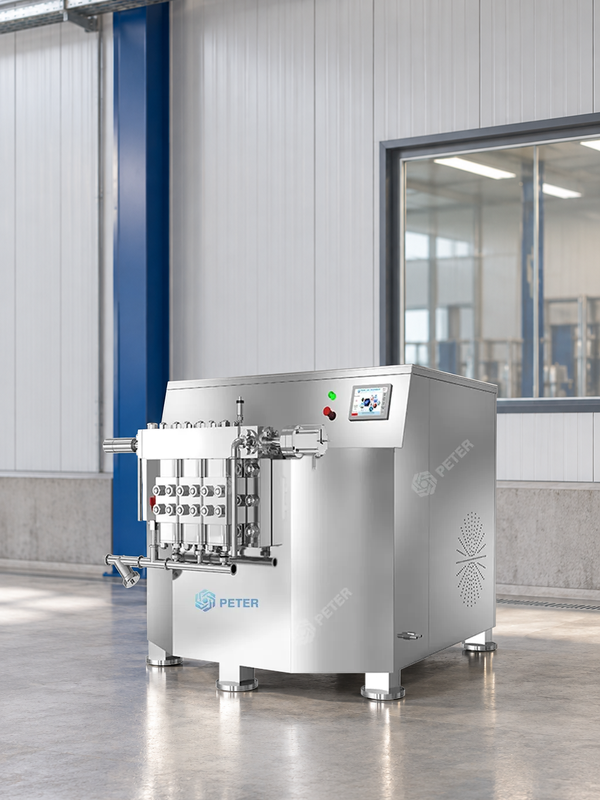
Use the general-arrangement drawing to mark both the footprint and the service space. Doors must open, operators must reach controls and isolation points, and removable components need an unobstructed path. A machine that fits between two walls may still be impossible to service there.
Ask for mass, support points and relevant operating loads so the site can assess the floor or supporting structure. Check the delivery route using packed dimensions and the agreed handling method. Doorways, turns and lifting access can prevent installation even when the final location is large enough.
Keep pipework out of the component-removal area. Routing a pipe through empty space on the drawing may look economical until that pipe must be removed at every service. Show maintenance clearances on the approved layout so they remain visible to everyone installing neighboring equipment.
| Layout check | Evidence needed | Release condition |
|---|---|---|
| Floor and support | Mass, support points and load data | Site structural review completed |
| Delivery route | Packed dimensions and lifting plan | Route and handling method agreed |
| Service space | Component-removal envelopes | Access shown on approved layout |
| Pipe routing | Connection and maintenance drawing | No obstruction of required access |
| Drainage | Discharge duty and waste-stream map | Recovery and waste routes agreed |
What needs checking between the feed tank and the drain?
Feed pressure must be adequate while the machine is running, including at the lowest permitted tank level and the intended viscosity and temperature. Ask the supplier to assess suction losses and, for reciprocating equipment, pulsation and acceleration effects. A feed pump chosen only by nominal flow may not provide the inlet conditions the homogenizer needs.
The process drawing should locate gauges, valves and pressure-protection arrangements. Adding a check valve or isolation valve without review can change the pressure conditions or create a trapped section. The manufacturer should define the connection and depressurization arrangement before pipework is installed.
Separate recoverable product from cleaning liquids and other waste. Check discharge flow, chemical compatibility, backflow risks and residual hold-up. A nearby floor drain does not show whether the machine and connected lines can empty properly, or whether the drain can accept the planned cleaning discharge.
Which installation details should be settled before delivery?
Collect the final arrangement and connection drawings, electrical and utility schedules, operating and cleaning instructions, and commissioning responsibilities. Replace a general note such as ‘utilities by others’ with an agreed boundary: what the supplier delivers, where the site connects, and which conditions must be available there.
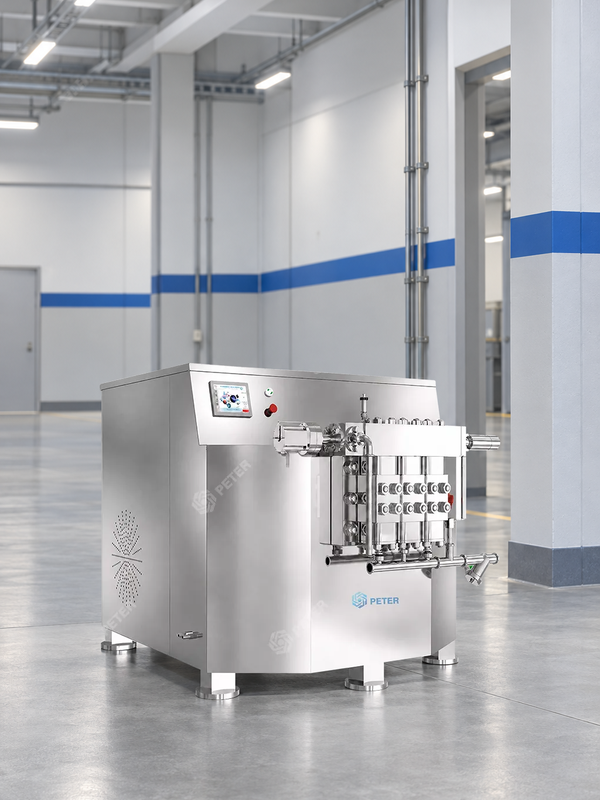
For a production high-pressure homogenizer such as the CAS PETER PT-1000, request this package for the quoted configuration and duty. When considering a PT-500 high-pressure homogenizer, ask for the same categories of information rather than assume its connections scale directly from a larger or smaller machine.
If the immediate job is process development, the experimental homogenizer range involves a different site and capacity discussion. In either case, confirm the applicable electrical, pressure-system and hygiene requirements for the destination and intended use. The commissioning plan should say how the installed utilities and the machine’s behavior will be checked together.
Frequently asked questions
What utilities are needed to install a production high-pressure homogenizer?
Confirm power, feed and discharge conditions, then cooling, cleaning and any additional services required by the supplied design. Request consumption and allowable variation for each connection. Do not assume that every model needs water or compressed air.
How much floor space does a production homogenizer require?
Use the supplied footprint plus operating access and the space needed to open doors or remove parts. Include the delivery and lifting route. There is no single floor-space allowance that suits every configuration.
Does a high-pressure homogenizer need cooling water?
It depends on the machine and the product duty. Seal or component water may be required independently of product cooling. Have the supplier identify both needs and state the required supply conditions.
What electrical supply should be confirmed before installation?
Confirm voltage, phase, frequency, total package load and starting characteristics. Obtain the supplier’s electrical drawings and protection requirements so a qualified electrical designer can apply local installation rules.
How should drainage and product recovery be planned?
Identify which liquid can be recovered as product and which must go to waste. Check hold-up, cleaning-discharge flow, chemical compatibility and drainage arrangements during commissioning.
Which documents should the supplier provide for installation and commissioning?
Request final arrangement and connection drawings, electrical and utility schedules, manuals, cleaning instructions and a commissioning plan. The plan should assign responsibility for every site-to-machine connection.
References
- Tetra Pak, Dairy Processing Handbook, chapter 7.3: Homogenizers, accessed 16 October 2026
- Tetra Pak, Dairy Processing Handbook, chapter 7.1: Heat exchangers, accessed 16 October 2026
- CAS PETER, PT-1000 model page and original photograph, accessed 16 October 2026
Conclusion
The site is ready when the supplied machine and the prepared connections agree on the drawings and in the factory. Power is only one part of that check. Feed delivery, cooling, drainage and service access must work at the intended operating conditions too. Resolve missing load data and unclear responsibility boundaries before delivery; commissioning can then verify the installation instead of discovering that essential services still need to be designed.