

Single-Stage vs Two-Stage Homogenizers: Which Configuration Should You Choose?
A two-stage homogenizer does not simply perform the same treatment twice. In a conventional arrangement, the second stage helps control backpressure and breaks clusters formed after the first treatment. That can be useful, but it also changes how pressure is divided between the two devices. A quotation showing two stages is therefore not enough to predict smaller droplets or better stability.
One stage can be sufficient when a trial meets the required size distribution, texture and storage performance. A second stage is worth considering when cluster breakup or controlled backpressure improves those results. Compare the actual pressure drops as well as the gauge readings: with an upstream pressure P1 and interstage pressure P2, the first-stage drop is P1 minus P2. Holding total inlet pressure constant and holding first-stage pressure drop constant are different comparisons.
What does the second homogenizing stage actually do?
In conventional two-stage homogenization, the second device provides backpressure to the first and can break clusters formed during the initial treatment. It gives the operator another adjustable condition. Its value depends on whether those functions improve the product, rather than on the extra stage alone.
Tetra Pak’s Dairy Processing Handbook describes these functions for dairy emulsions. It also discusses single-stage use in some high-fat products where clustering contributes to the intended viscosity. That does not make one stage a universal choice for viscous products. It shows why the desired texture matters when deciding whether clusters should be retained or broken.
If the current problem is unsuitable emulsifier, poorly prepared feed or excessive heating, adding a stage may leave the cause untouched. Identify the product defect before specifying the hardware intended to correct it.
How much pressure drop does each stage receive?
Identify the gauge positions first. In a conventional series arrangement, P1 is the pressure upstream of the first stage, P2 is the pressure between stages, and Pout is the pressure after the second stage. The drops are P1 − P2 across the first device and P2 − Pout across the second. Record the manufacturer’s display convention, because a screen label may refer to a setpoint differently.
For example, suppose P1 is 200 bar, P2 is 30 bar and outlet pressure is negligible. The first-stage drop is about 170 bar, and the second-stage drop is about 30 bar. These are illustrative values, not recommended settings. The first gauge reading of 200 bar does not mean that the first device experiences a 200-bar drop.
Increasing P2 while keeping P1 at the same value reduces the drop across the first stage. If particle size changes during that adjustment, the result cannot be attributed to the second stage without also considering the changed first-stage treatment.
| Recorded quantity | Meaning in a series arrangement | Comparison risk |
|---|---|---|
| P1 | Upstream product pressure | Not necessarily the first-stage drop |
| P2 | Interstage product pressure | Its increase reduces P1 minus P2 at fixed P1 |
| Pout | Pressure after the second device | Cannot always be assumed zero |
| P1 minus P2 | First-stage pressure drop | Compare using the same gauge definitions |
When is one stage enough for the product?
One stage is enough when representative runs produce the required distribution, texture and stored stability at an acceptable temperature and output. The trial should include normal feed variation. Meeting the target once with an unusually favorable sample gives little confidence about the next batch.
A single device may also simplify the wetted path and reduce the number of parts needing inspection. Actual cleaning and maintenance effort still depends on the design. Those practical benefits deserve attention when one stage already produces an acceptable product.
Consider a second stage when unwanted clusters or inconsistent backpressure remain a demonstrated problem. Its benefit should appear in measurements that matter to the product: a reduced coarse fraction, improved storage behavior or an appropriate change in texture. The additional parts and cleaning work then have a specific purpose.
Does a smaller size reading mean smaller primary droplets?
Not necessarily. The second stage may separate a cluster into its existing droplets rather than break each droplet further. Both can change a reported distribution, but they describe different physical changes. Decide whether the analytical method needs to distinguish primary droplets from aggregates.
Keep sample dilution and dispersion consistent. If laboratory preparation already breaks weak clusters, it can conceal a difference between the two machine arrangements. Microscopy can help explain what a size measurement is seeing. Also check the product after storage: an attractive fresh-sample average does not establish that the emulsion will stay uniform.
| Decision criterion | What one stage can offer | What a second stage may add |
|---|---|---|
| Required distribution | Adequate breakup where the trial confirms it | Cluster breakup and controlled backpressure |
| Texture | May retain clustering where desired | May change clustering and viscosity |
| Cleaning scope | One device to assess | Additional device and interfaces to assess |
| Trial evidence | Size, stability, temperature and flow | Same endpoints with pressure allocation recorded |
How can a trial compare one and two stages fairly?
Agree what stays constant. Holding total inlet pressure constant tests how redistributing the available pressure affects the result. Holding the first-stage drop constant while adding a second stage tests the effect of added backpressure at a different total pressure demand. Both comparisons can be useful, but they should be reported separately.
Use the same prepared feed, inlet temperature, sampling point and analytical method. Record upstream, interstage and outlet pressure, actual flow, outlet temperature, passes and product recovery. Include repeat runs and the relevant storage test. Measure energy consumption if it is part of the purchase decision; stage count alone does not provide it.
This comparison uses the cited dairy handbook as its technical basis, reviewed on 16 October 2026. It is not a measured comparison between named machines. CAS PETER product links below identify equipment for a quotation discussion on this supplier-operated site.
What should the quotation confirm about the stage arrangement?
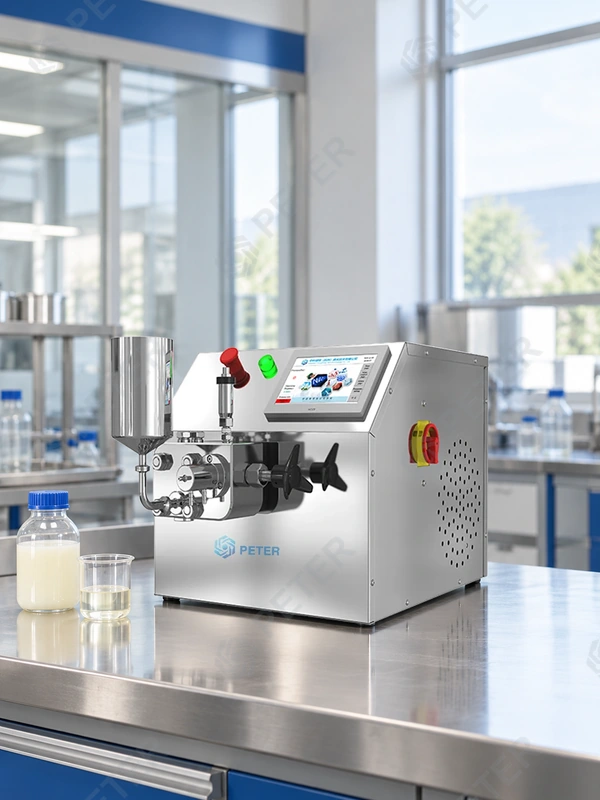
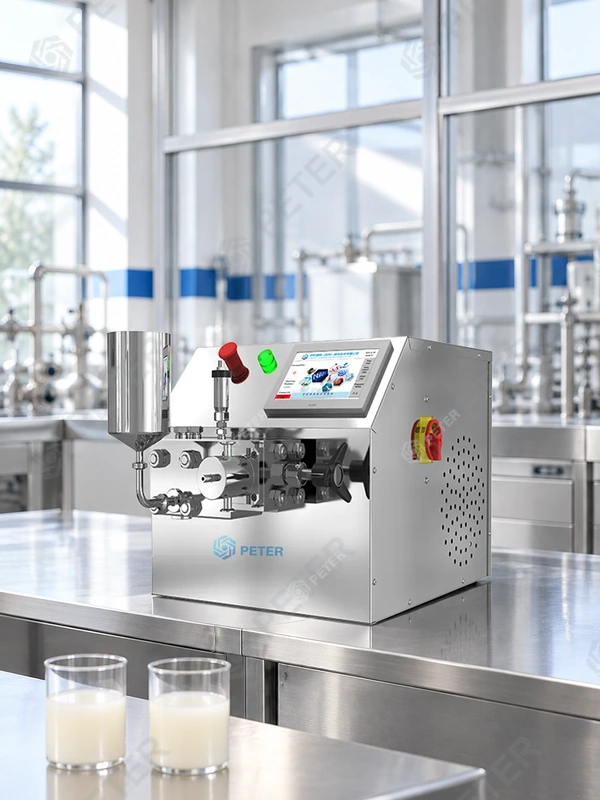
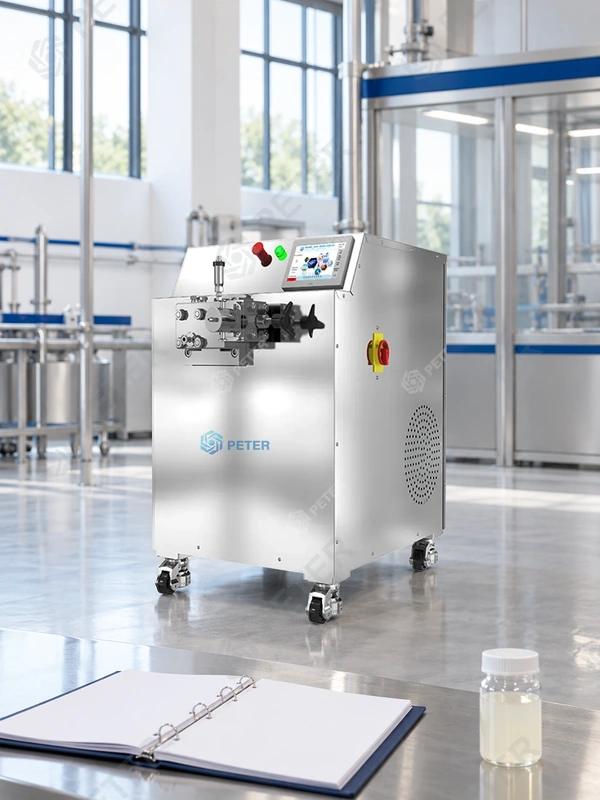
Specify the required arrangement, gauge definitions, working limits and cleaning access. For a production high-pressure homogenizer such as the PT-500, have CAS PETER state the supplied stage configuration in writing. The model name or external appearance does not establish how many independently adjustable stages are included.
A laboratory high-pressure homogenizer trial can help define whether another stage is useful before production equipment is selected. Check how the proposed arrangement will be cleaned and inspected, and which parts require routine replacement. For a broader explanation of equipment terminology, see the guide to high-speed and pressure-driven homogenizers.
Where regulated use is intended, include the actual stage assembly in the cleaning and qualification scope. Choosing two stages does not by itself establish hygienic suitability or complete a pharmaceutical qualification.
Frequently asked questions
What is the difference between a single-stage and two-stage homogenizer?
A single-stage arrangement has one homogenizing device; a two-stage arrangement has two in series. In conventional dairy use, the second supplies backpressure and breaks clusters formed after the first stage. Confirm those functions for the proposed equipment.
When is a two-stage homogenizer better for emulsions?
Consider it when unwanted clustering or poorly controlled backpressure prevents the required texture, distribution or storage behavior. A trial should show the improvement with the intended formulation before the additional stage is specified.
Does a two-stage valve always produce a smaller particle size?
No. A smaller reading may show cluster breakup rather than smaller primary droplets. Pressure allocation also matters: raising interstage pressure at constant inlet pressure reduces the drop across the first device.
How should first-stage and second-stage pressure be recorded?
Record the gauge locations and the manufacturer’s definitions. If P1 is upstream and P2 is between stages, the first-stage drop is P1 − P2. Subtract outlet pressure from P2 to calculate the second-stage drop.
Which products can be processed with a single-stage homogenizer?
Compatible pumpable formulations can use one stage when trials meet the required quality and throughput. Some dairy products also retain clustering for texture. Suitability depends on the formulation and intended result.
How should the two configurations be compared in a factory trial?
State whether total inlet pressure or first-stage drop is held constant. Keep feed preparation, temperature, sampling and analysis comparable, then assess distribution, stored stability, flow and recovery.
References
- Tetra Pak, Dairy Processing Handbook, chapter 7.3: Homogenizers, accessed 16 October 2026
- Tetra Pak, Dairy Processing Handbook, chapter 7.5: Mixers, accessed 16 October 2026
- CAS PETER, PT-500 product page and original photograph, accessed 16 October 2026
Conclusion
A second stage earns its place when controlled backpressure or cluster breakup makes a useful, repeatable difference to the product. If one stage already meets the required quality at the intended output, the additional hardware needs another clear justification. Compare the two arrangements with defined pressure drops and the same sampling method, then weigh stored performance against temperature, cleaning and maintenance. This gives the purchase decision a firmer basis than stage count or a single fresh-sample average.