

Tissue Homogenizer Beads: Choosing the Right Bead Size
When a sample-preparation lead in Toronto encountered slow processing of tougher tissue, she switched to a larger bead size to accelerate the run. The first visible result was uneven lysate; then the rotor noise increased. The reversal came after checking the full setup: bead material and diameter no longer matched the sample mass, vessel fill and cycle. The problem was not bead quality alone, but a process mismatch that amplified impact while reducing repeatability.
Summary: Select tissue homogenizer beads as part of a defined system: tissue type, starting mass, tube geometry, bead material, bead diameter and cycle settings. A practical starting distinction is sub-millimetre beads for fine, many-contact disruption and 1.4-2.8 mm beads for more forceful impact on tougher pieces; validate recovery and temperature with the actual vessel and load. If samples need closed, scalable, continuous processing rather than impact milling, evaluate high-pressure disruption separately.
Tissue bead milling breaks material through repeated collisions and shear in a sealed vessel. It is useful for modest batch sizes and mixed tissue handling, but its output depends on the energy delivered to each tube, not on diameter in isolation. A review of mechanical cell-disruption methods notes that process conditions and organism or tissue properties influence yield and product quality; that principle carries directly into tissue workflows.
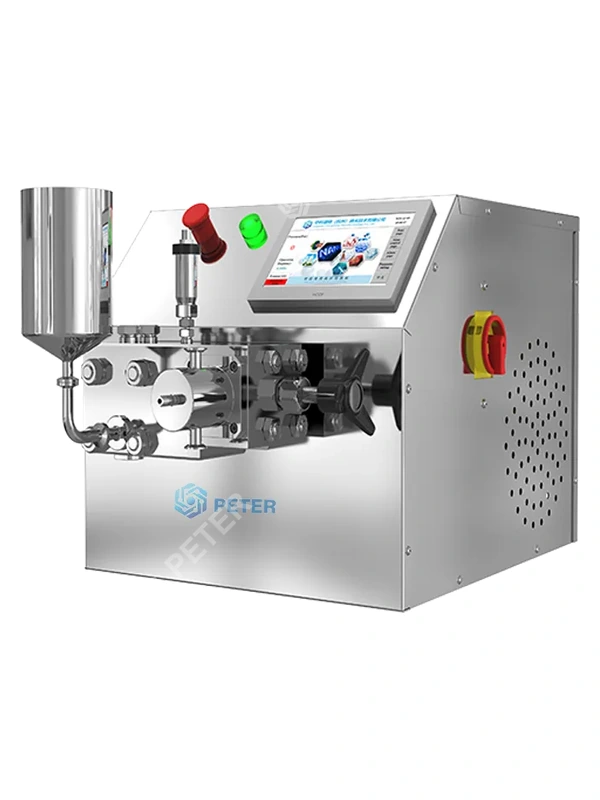
Process design around Tissue Homogenizer Beads
Start with the analyte, not the bead catalogue. DNA extraction can tolerate a different force profile from RNA work, enzyme recovery or intact-organelle preparation. Soft animal tissue often benefits from a higher number of small contact points, while fibrous, woody or mineral-containing samples may need more impact per collision. The aim is enough disruption to release the target without unnecessary heat, foaming or fragmentation.
Match diameter, material and vessel loading
Small beads, commonly around 0.1-1.0 mm, create many collisions and can reach fine fragments. Mid-size beads around 1.0-2.0 mm are often a practical screening range for ordinary tissue pieces. Larger beads around 1.4-2.8 mm deliver stronger impacts but leave fewer beads in the same volume, so they can perform poorly when a small, irregular specimen is under-loaded. These are starting ranges, not universal specifications.
Material changes both density and chemistry. Zirconia or ceramic media can provide durable, high-density impact; stainless steel offers high mass but needs compatibility and corrosion review; glass is lower density and may suit gentler applications. Confirm that the bead, lysis buffer and tube do not introduce contaminants that compromise downstream analysis. Record bead-to-sample ratio by mass and volume, then preserve it during method transfer.
| Setup dimension | Smaller beads | Mid-size beads | Larger beads |
|---|---|---|---|
| Typical diameter band | 0.1-1.0 mm | 1.0-2.0 mm | 1.4-2.8 mm |
| Dominant action | Frequent fine contacts | Balanced impact and coverage | Higher impact per collision |
| Useful starting applications | Fine or soft tissue; small particles | Routine tissue screening | Tough, fibrous or larger pieces |
| Key control | Heat and over-processing | Loading consistency | Tube stress and incomplete coverage |
| TCO consideration | More media handling | Method-development time | Potential vessel wear and rework |
Optimizing Tissue Homogenizer Beads for consistent output
Consistency comes from a controlled experiment. Hold the tissue source, buffer volume and vessel model constant; test two or three bead sizes with the same total cycle time; then measure recovery, particle appearance, temperature and replicate variation. A useful cycle begins with 20-60 seconds of agitation followed by cooling, but the correct setting is equipment- and sample-specific. Temperature after every cycle is more informative than a nominal programme name.
Vessel fill is a hidden variable. Too much liquid cushions collisions; too little liquid can concentrate heat and leave material stranded above the bead bed. Tubes must be rated for the device and securely closed. For samples with aerosol or biohazard potential, choose sealed primary containment, follow local biosafety assessment, and clean exterior surfaces before removal. The CDC’s Biosafety in Microbiological and Biomedical Laboratories (BMBL) provides the risk-assessment framework; it does not certify a bead mill or a bead type.
Set an acceptance window before scaling: for example, a defined yield range, no visible residual fragments above the laboratory’s stated threshold, and a maximum sample temperature. This creates a cycle energy window that operators can reproduce. If a method needs repeated interventions or frequent failed tubes, its apparent low consumable cost will usually be outweighed by labour, reruns and sample loss.
When to use High Pressure Homogenization Cell Disruption
Bead milling and high pressure homogenization cell disruption are not interchangeable. Beads are often the direct route for small, discrete tissue samples in individual vessels. A high pressure cell homogenizer forces a prepared suspension through a controlled high-pressure zone; pressure drop, shear, turbulence and impact contribute to disruption. It is generally evaluated when a workflow calls for closed processing, repeatable flow conditions, larger batch transfer or scale-up from development to production.
For high-pressure work, validate inlet solids handling, temperature rise, passes, pressure range, recovery and cleaning. A suspension with large unprocessed tissue pieces may require pre-cutting, enzymatic preparation or another front-end step before it can pass reliably. Conversely, forcing a bead-mill protocol into a continuous process can make cleaning, cross-contamination control and containment harder than necessary. A technical overview of how high-pressure homogenizers work can help teams frame the operating questions before vendor trials.
Particle-size language needs care. ISO 13320 specifies laser diffraction methods for particle-size analysis; it is a measurement standard, not a certification that a homogenizer, bead or lysate is compliant. Use a fit-for-purpose analytical method, document sampling and report the fraction or size distribution relevant to the process. For cell-disruption performance, recovery, viability where relevant, and downstream assay results normally matter more than a single particle-size number.
Cost and capacity planning for Tissue Homogenizer Beads
A tissue homogenizer price cannot be responsibly reduced to the instrument purchase figure. Compare throughput per shift, vessel format, bead consumption, tube and seal replacement, cooling time, cleaning labour, validation runs and lost-sample exposure. Qualitative bands are more useful than invented numbers: compact research bead systems tend to be lower initial-capital purchases; higher-throughput, automated or refrigerated systems move upward; pilot and production high-pressure systems are generally evaluated as a larger capital and integration decision.
| Application pattern | Likely method focus | Cost band tendency | Planning question |
|---|---|---|---|
| Variable, small tissue batches | Individual bead-mill vessels | Lower to mid initial capital | Can tubes, cooling and bead lots be standardized? |
| Routine laboratory throughput | Repeatable multi-vessel bead workflow | Mid capital plus consumables | What is the cost per accepted lysate? |
| Prepared suspensions at pilot scale | High-pressure processing | Higher capital and validation scope | Are flow, cleaning and transfer requirements defined? |
| Regulated commercial process | Qualified, documented equipment path | Integration-led investment | What documentation supports the intended claims and controls? |
Selection actions before ordering
- Classify samples by toughness, mass range, target analyte and biosafety risk rather than using one bead size for all tissues.
- Run a small designed trial with fixed tube, buffer and sample loading; compare yield, temperature and repeatability across bead options.
- Map cleaning and containment: disposable vessel workflows avoid one set of carryover concerns, while reusable flow paths require validated cleaning controls.
- For scale-up, ask for operating ranges, materials-of-construction information, trial documentation and service expectations. CAS PETER can support this discussion with configurable PT-10 high-pressure homogenizer options for development-stage requirements.
Standards, compliance and purchasing discipline
BMBL is a biosafety guidance resource for risk assessment and containment practices. ISO 13320 concerns particle-size analysis by laser diffraction only. FDA current good manufacturing practice (CGMP) regulations matter when equipment is used within a regulated drug-manufacturing quality system; applicability depends on intended use, destination market and the claims made for the process. None of these sources independently certifies tissue homogenizer beads, a high pressure cell homogenizer or a finished lysate.
Commercially, unsupported performance or compliance claims create procurement and audit risk. Buyers should request only documentation relevant to their intended use, establish their own qualification plan, and avoid treating a test report as universal process validation. The practical rule is containment-first workflow: decide what must stay closed, what must be cleaned, and what must be documented before selecting capacity.
Frequently asked questions
How much does a tissue homogenizer cost?
The tissue homogenizer price depends on method, throughput, temperature control, vessel format and support scope. Compact research bead systems generally occupy a lower capital band than automated or refrigerated laboratory systems, while high-pressure pilot or production equipment is assessed as a larger process investment. Request a configuration-specific quotation and compare total cost per accepted sample or batch.
What affects the price of a tissue homogenizer?
Capacity, automation, cooling, pressure capability, wetted materials, controls, cleaning requirements and documentation all affect price. Consumables, spare parts, validation trials, operator time and downtime are also material costs. Define samples and acceptance criteria before comparing quotations.
How do new and used tissue homogenizers compare?
Used equipment may reduce initial spending, but condition, traceable maintenance, parts availability, safety guarding and documentation should be checked. New equipment can simplify warranty, support and configuration matching, especially when a method is still being developed. Evaluate either option against cleaning history, containment needs and reproducibility targets.
How should buyers assess high pressure homogenization cell disruption before choosing a tissue homogenizer?
First confirm that the feed is a pumpable suspension and that continuous or closed processing is genuinely needed. Then trial pressure, number of passes, temperature, recovery, cleaning and downstream assay performance; do not judge suitability by pressure alone. For a pilot-to-production discussion, review the PT-20 high-pressure homogenizer against your specified flow and documentation needs.
References
- NCBI: review of cell-disruption approaches and process considerations
- ISO 13320: particle size analysis by laser diffraction
- CDC: Biosafety in Microbiological and Biomedical Laboratories (BMBL)
- FDA: Current Good Manufacturing Practice regulations
The right bead size is the one that fits the whole process – not simply the one that hits hardest. When tissue samples are ready to move from vessels to a controlled flow process, CAS PETER can help buyers assess a PT-20 high-pressure homogenizer configuration and contact the team with their feed, capacity and documentation requirements.