

Inclusion Body Recovery After High-Pressure Homogenization
Inclusion body isolation after high-pressure homogenization should be optimized around the target protein recovered in an acceptable fraction, rather than cell disruption alone. Define the intended product, preserve representative samples of the feed and downstream fractions, and compare the amount and quality of the target after a consistent separation method. More pressure or additional passes may open more cells while changing inclusion-body size, target distribution or the burden on the next step. The useful endpoint is the recovery that survives the intended workflow, with a clear accounting of losses.
This guide addresses the interface between mechanical disruption and inclusion-body recovery. For the broader equipment and lysis background, see the high-pressure cell-lysis guide. The framework below supports process development; it is not a universal preparation, washing or refolding recipe.
Define what the insoluble fraction must become
Start with the intended downstream route. A process recovering an aggregated target for later solubilization has different acceptance needs from one seeking a functional particulate preparation. Record the protein identity, expression system and the required form of the recovered material before choosing a disruption endpoint.
Do not assume that all inclusion bodies behave identically. Their response can depend on the target and its production history. A visually substantial pellet may contain target protein, cell debris and other material. Pellet appearance or mass alone is therefore an incomplete measure of product recovery.
Set the acceptance attributes for the particular intermediate: target amount, composition, a relevant functional or structural assessment and suitability for the next operation. If those attributes have not been defined, an increase in disruption can be reported as a mechanical observation but cannot establish an improved recovery process.
Keep cell opening separate from product isolation
Mechanical disruption makes intracellular material accessible. Isolation then partitions that material between collected and discarded streams. These operations can interact, but success in the first does not prove success in the second. Measure the target through the combined sequence before selecting a processing condition.
The scholarly protocol Preparation and Extraction of Insoluble Proteins from Escherichia coli describes recovery and further treatment of an insoluble fraction after lysis. It makes the distinction between releasing material and processing the recovered fraction clear. Its specified conditions belong to that protocol and must not be copied as a universal CAS PETER operating method.
The site’s E. coli process reference provides application context, but does not establish recovery of your target or a transferable pressure-and-pass combination. A new protein and its downstream route require their own representative evidence.
Collect fractions before discarding them
Build a sampling map that includes the starting suspension, crude homogenate, initial collected solids, corresponding supernatant and any later wash or transfer stream relevant to the study. Identify each fraction and its relation to a specific processing condition. Preserve samples according to an appropriate controlled handling method.
The first purpose is accountability. If target protein disappears from the intended pellet, inspect the other streams before concluding that the protein was destroyed. It may have changed its partitioning, remained in a vessel or been lost through an analytical preparation. The experiments needed to distinguish these possibilities depend on the material.
| Sample or record | Question it answers | Common interpretation error |
|---|---|---|
| Starting feed and crude homogenate | What target entered the recovery sequence? | Using total biomass as though it were measured target protein |
| Collected solids and matching supernatant | Where did the target partition under the defined separation? | Calling every supernatant signal useful soluble product |
| Wash fractions and final intermediate | What purity improvement and target loss accompanied washing? | Assuming a cleaner pellet necessarily means higher accepted recovery |
| Volume and transfer records | Can changes in concentration be distinguished from losses? | Comparing concentration alone while recovered quantities differ |
| Functional or structural evidence | Does the recovered material retain the required attribute? | Treating a target band as proof of correct folding or activity |
| Temperature and treatment history | What exposure accompanied the recovery result? | Recording only a final cooled-bottle temperature |
The table is a proposed development checklist. It supplies no universal separation conditions, purity limit or required pressure setting.
Recognize that additional homogenization can change the target fraction
A primary study on isolating biologically active inclusion-body material examined effects of mechanical disruption on its studied preparations. The investigators observed changes to inclusion-body surfaces and target distribution. Their work supports evaluating the recovered material itself, rather than assuming the particulate target remains unchanged while cells are opened.
Do not generalize its behavior to every protein or claim that all inclusion bodies lose activity under pressure. Use it to frame a testable question for your material: does an additional pass increase accepted target in the intended fraction, move it elsewhere or change an important attribute?
Where feasible, compare samples collected after clearly defined separate passes. Keep the subsequent separation and analysis consistent. Otherwise, a changed centrifugation or sample-preparation method can be mistaken for a direct effect of the homogenizer.
Report target amount alongside concentration and apparent purity
For a valid comparison, connect the target concentration to the quantity of the recovered fraction. A denser sample can contain less total target if its recovered volume is smaller. Likewise, a purity estimate describes composition within a fraction; it does not by itself describe the amount recovered from the starting feed.
Consider an illustrative analytical comparison. After a validated preparation and assay, condition A gives 100 mL of a fraction at 2.0 mg/mL target, or 200 mg. Condition B gives 60 mL at 2.5 mg/mL, or 150 mg. Condition B is more concentrated but contains less recovered target. These are hypothetical numbers, not measured machine performance.
If the starting target amount is uncertain, do not invent an absolute recovery percentage. Report the measured amount per defined feed quantity and state the denominator. When comparing electrophoresis bands, preserve the loading and preparation basis; equal liquid volumes do not necessarily represent equal original biomass or equal total protein.
Check how the analytical method handles an insoluble sample
An assay-ready preparation may require steps that differ from the process stream itself. Document what was sampled, how the sample was brought into the measurable state and whether the method captures the target consistently. An apparent loss may originate in sample preparation rather than in the production operation.
Use appropriate controls and assess whether buffer components or preparation reagents affect the measurement. Distinguish an estimate of total protein from a method capable of identifying the target. When the product decision depends on function or identity, a general protein result cannot replace that evidence.
A target-sized band in a supernatant is also not enough to establish useful native protein. It may justify an investigation of identity, aggregation or function, depending on the process objective. Keep the observation and the conclusion separate in the development record.
Keep the separation method fixed during the first comparison
Describe the separation conditions sufficiently to reproduce the test. For centrifugation, include relative centrifugal force, duration, temperature and the relevant rotor or geometry information. Revolutions per minute alone do not define an equivalent condition across different rotors.
When the separation method changes, label that as a separate experimental factor. A finer or differently structured particulate fraction may behave differently in downstream recovery. Assess the combined process deliberately instead of silently compensating for a changed lysate with a different separation and calling the homogenization result improved.
Record what is retained and what is discarded at each stage. If a wash improves composition while removing target, quantify both effects using a suitable method. The preferred condition depends on the acceptance requirements of the next step, not on a universal rule that maximum washing or maximum disruption is best.
Control feed, pass arrangement and thermal history
Use representative biomass and record its preparation, concentration basis and holding history. A change in feed condition can change pumping, disruption and the resulting homogenate. The recently published feed-property and homogenizer-capacity guide explains why the actual feed matters to the operating assessment.
Record feed temperature and the relevant discharge and cooling conditions. A final cold container does not describe every exposure the material experienced. Agree the product limits and the equipment operating window before the trial, then preserve the temperature record alongside target recovery.
Also distinguish complete separate passes from tank recirculation. The comparison of processing arrangements explains why nominal turnovers do not prove an equal number of treatments for every portion. Use an unambiguous exposure history when assessing changes to an insoluble target.
Optimize the combined workflow rather than one percentage
Compare accepted target after the relevant isolation steps, processing time, material consumption and any quality changes. A condition with excellent apparent lysis but a difficult downstream recovery can be a poor overall choice. Conversely, a modest increase in upstream effort may be justified if it produces a more useful intermediate consistently.
Keep formulation or wash changes explicit. If several changes are introduced together, the experiment may compare complete workflows, but it cannot identify the separate contribution of each change. Choose the design according to the decision being made and document that limitation.
For the initial screen, define stop criteria from the product and equipment limits and the observed benefit of additional treatment. Once a candidate condition is chosen, confirm repeatability with representative runs. One favorable small aliquot does not establish a robust production method.
Turn the recovery evidence into a useful scale-up request
When discussing the CAS PETER PT-10 laboratory homogenizer, provide the target, feed condition, available batch amount and intended separation route. Ask the supplier to confirm the permitted feed and operating configuration rather than transferring a literature pressure value directly.
Request a trial report containing the pressure and actual flow records, thermal history, pass arrangement, recovered fractions and analytical methods. For later scale-up, reassess the flow path, cooling, collection and downstream separation together. A published maximum rating does not establish accepted inclusion-body output.
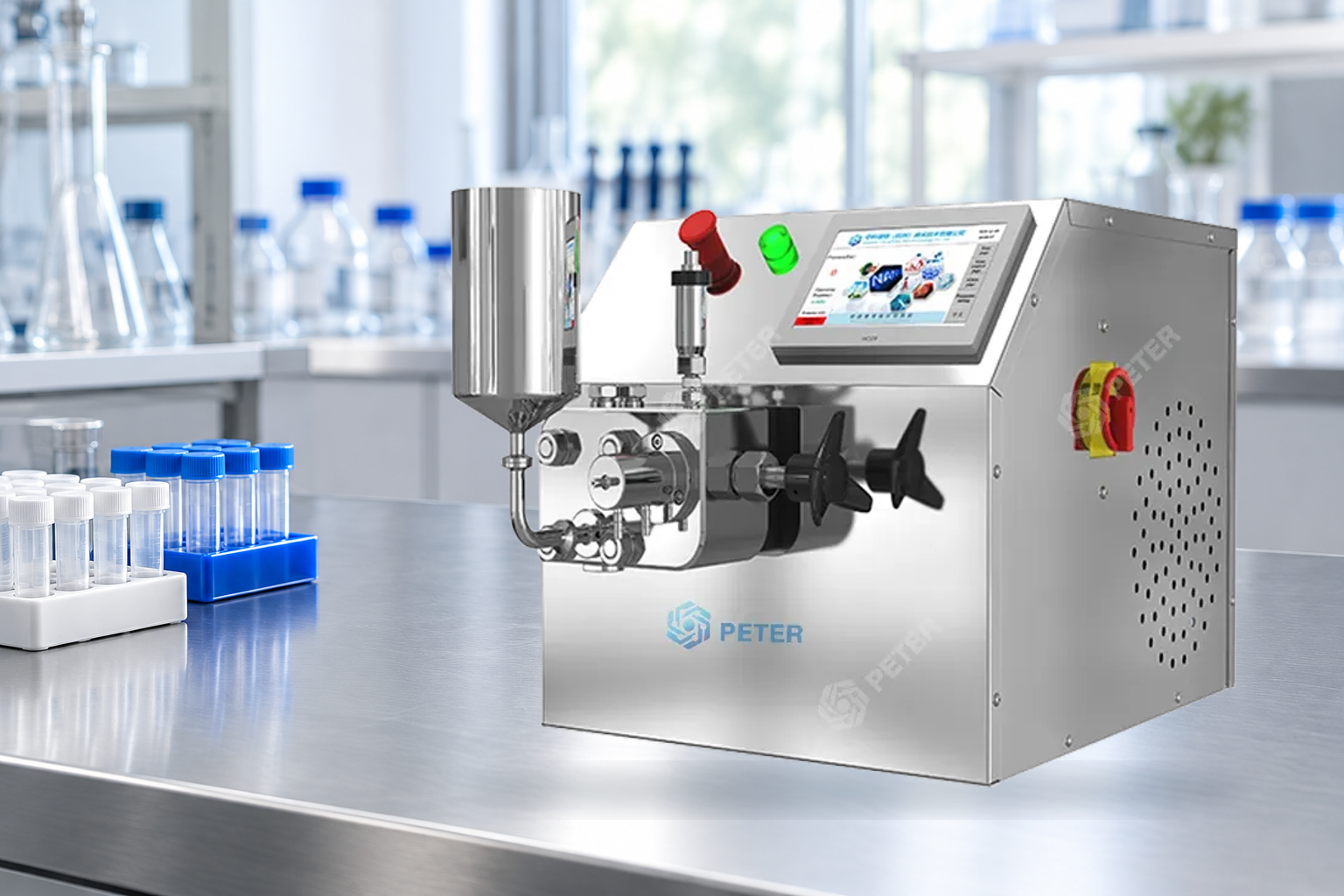
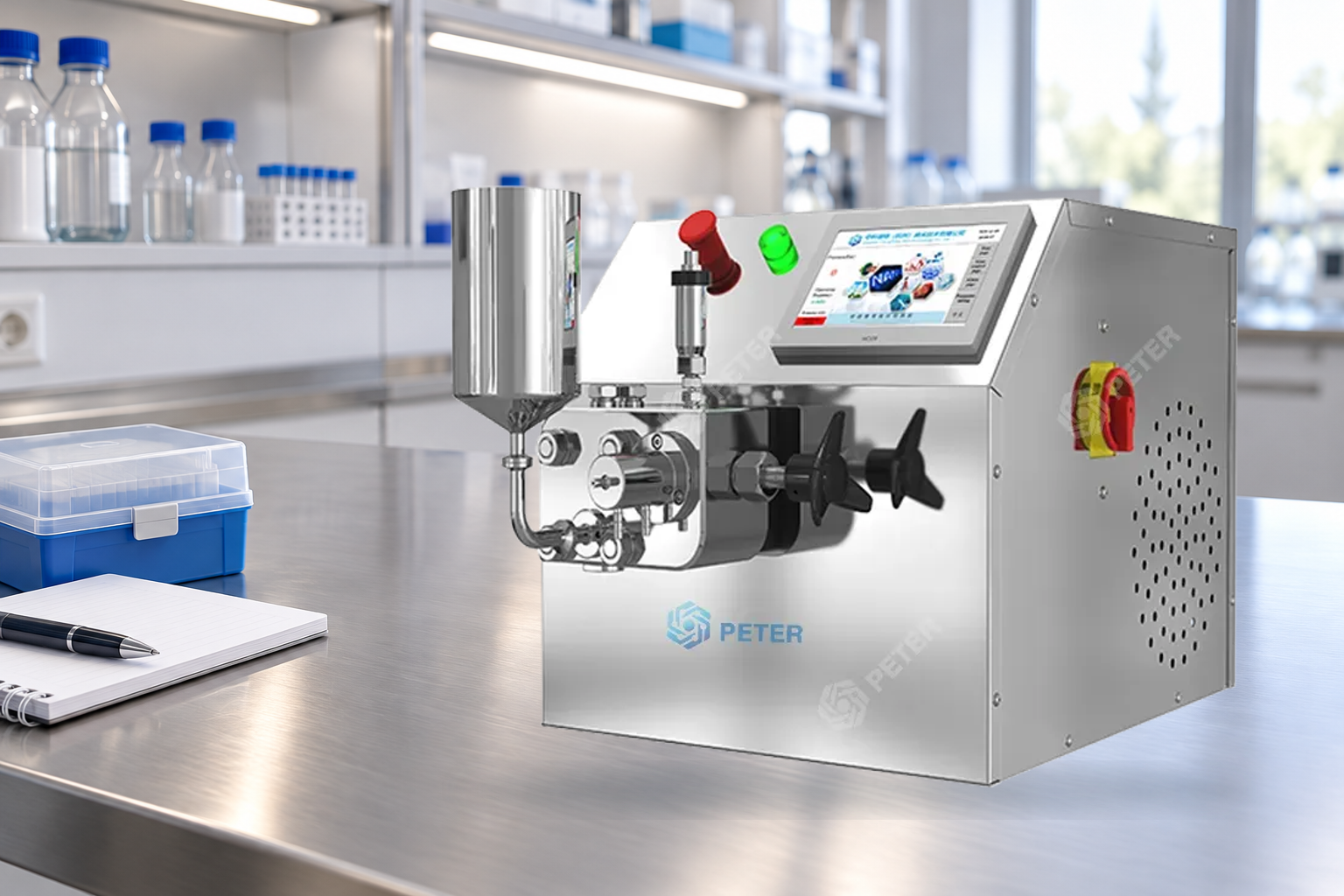
Keep the product and experiment identities connected through the records. The equipment photograph in this article retains the website product’s structure and shows an illustrative environment; it is not evidence of an actual inclusion-body run, recovery percentage or validated purification process.
Learn the downstream-protein context
The NPTEL IIT Kharagpur lecture below introduces protein isolation and purification. It provides background for understanding why disruption is only one part of recovery, and does not supply a universal inclusion-body protocol or validate the equipment discussed here.

Watch the NPTEL protein-isolation lecture.
Frequently asked questions
Does complete cell disruption guarantee high inclusion-body recovery?
No. Recovery also depends on target partitioning, separation, washing, transfer and analytical preparation. Measure the accepted target through the intended sequence.
Should a supernatant containing target protein be discarded immediately?
During development, retain a representative sample and investigate its target amount and relevant attributes. A signal in that fraction does not automatically establish useful soluble protein or an acceptable loss.
Can pellet mass be used as the target-protein yield?
Not without a suitable composition assessment. The pellet can contain cell debris and other material, so total pellet mass is different from measured target amount.
How many homogenizer passes should an inclusion-body process use?
Establish the choice experimentally within approved limits, comparing accepted recovery and quality after consistent separation. There is no universal pass count for every protein and feed.