

Vacuum Homogenizer vs Blender: Choose for Your Formula
A process-based comparison for formulation engineers and procurement teams working with creams, emulsions, suspensions, and other shear-sensitive or air-sensitive formulas.
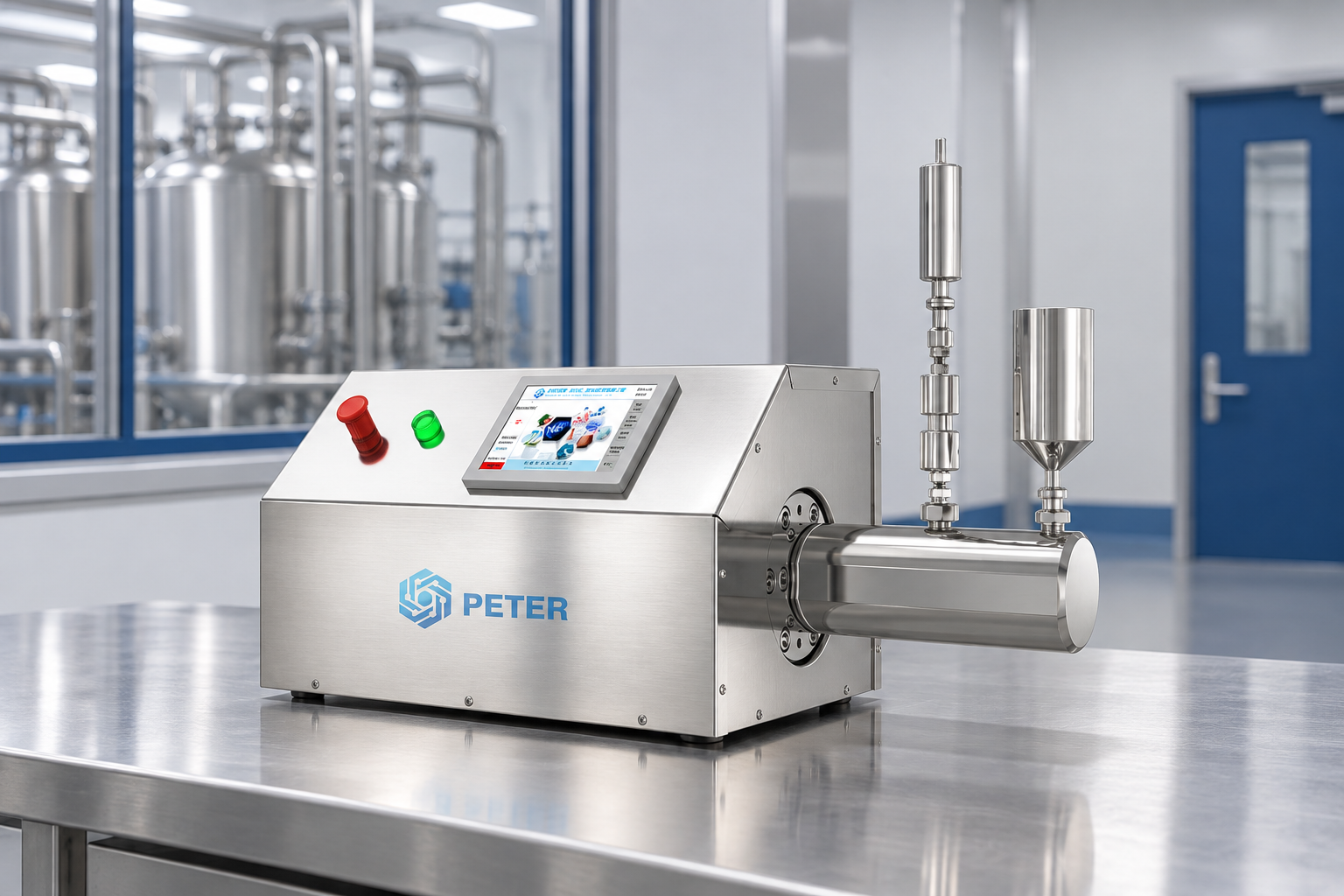
When a formulation engineer in Singapore encounters a batch that looks smooth at the end of blending but separates after filling, the fastest response is often to increase mixing time. If the visible failure returns, the more useful diagnosis is equipment selection: the blender may have incorporated the phases without creating the same droplet-size distribution as a controlled homogenization step. The lesson for a procurement team is practical: choose the process function first, then verify pressure, shear, vacuum, residence time, cleaning, and measurement. This article explains when a vacuum homogenizer or blender homogenizer is appropriate, when a shear homogenizer is a better fit, and when a high-pressure homogenizer with a defined homogenizing valve deserves evaluation.
Summary: A vacuum homogenizer is useful when air control, closed processing, and simultaneous mixing are central to the formula; a blender homogenizer is generally better for bulk incorporation and gentle turnover; a shear homogenizer is selected when localized rotor-stator energy can solve a dispersion or emulsification problem. None of these labels, by themselves, defines droplet size or stability. Specify the acceptance test, such as laser diffraction under ISO 13320, and compare samples at the same temperature, solids content, and measurement protocol before selecting equipment. For pressure-driven scale-up, review the PT-20 high-pressure homogenizer information alongside your own product data.
What problem does each machine actually solve?
Mixing, dispersion, emulsification, de-aeration, and particle-size reduction are related but different process jobs. A vessel mixer can wet powders and move a batch; a rotor-stator head can impose high local shear; a pressure-driven system can force a stream through a restricted geometry for repeatable disruption. A vacuum homogenizer combines a closed vessel, controlled pressure above the product, and an internal mixing or homogenizing assembly. Its value is often process integration and air management rather than a guaranteed particle-size result.
The phrase vacuum homogenizer therefore describes a machine architecture, not a universal performance class. Vacuum may reduce entrained air, improve wetting of selected powders, and help protect an air-sensitive formula, but it does not remove the need to define the shear history and the finished-product test. A blender homogenizer can produce a uniform visual batch while leaving a broad droplet distribution that becomes obvious during storage, dilution, or pumping.
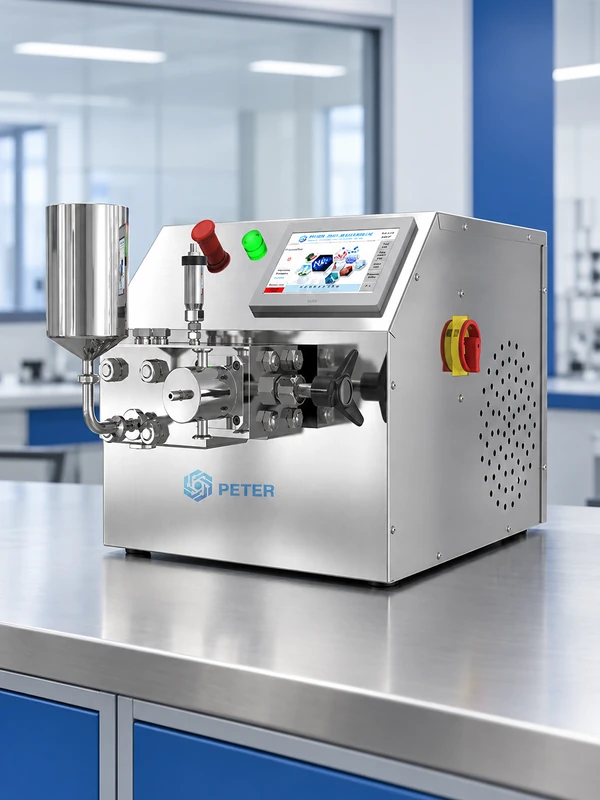
How do vacuum, blender, shear, and pressure systems compare?
The comparison below is functional rather than a promise of a particular model’s output. Actual performance depends on formulation viscosity, phase ratio, solids loading, temperature, valve or head geometry, flow path, and the number of passes. The same product may need a vessel step for bulk mixing and a separate pressure step for final droplet-size control.
| Equipment approach | Best-fit process job | Main control variables | Typical limitation to verify | Scale-up question |
|---|---|---|---|---|
| Vacuum homogenizer | Closed-vessel mixing with air reduction and integrated homogenizing action | Vacuum level, temperature, batch fill, mixing speed, homogenizer time | Vacuum does not automatically establish a narrow droplet or particle distribution | Can the same air level and shear history be reproduced at working volume? |
| Blender homogenizer | Bulk incorporation, turnover, powder wetting, and formula uniformity | Impeller geometry, speed, fill level, addition order, mixing time | Lower local energy may leave agglomerates or coarse droplets | Does the vessel preserve the same tip speed, circulation, and addition zone? |
| Shear homogenizer | Localized rotor-stator dispersion or emulsification | Rotor-stator gap, speed, residence time, recirculation, temperature | High local shear can heat or aerate some formulas and may not scale by rpm alone | What geometric and flow similarity will be held constant? |
| High-pressure homogenizer | Continuous disruption of droplets or particles under a controlled pressure drop | Pressure, flow, valve geometry, number of passes, inlet temperature | Requires a pumpable feed and a defined test method; pressure is not a stand-alone quality claim | Will the pilot result transfer at the target flow, heat load, and pass count? |
A shear homogenizer is often the pragmatic middle option for a lab or small production batch when the problem is a localized dispersion step. It becomes less attractive when the formula is highly viscous, must remain under vacuum, or needs a documented continuous pass history. Conversely, a pressure system may be excessive for a simple premix that only needs reliable turnover and wetting.
Which settings control emulsion quality and repeatability?
Start with the formula’s failure mode. If microscopy or particle-size data shows coarse droplets, investigate energy input, phase addition, temperature, and residence time. If the batch contains visible air, investigate vortexing, powder addition, vacuum sequence, and leakage before increasing shear. If viscosity rises during processing, record temperature with each sample because rheology can change the apparent result even when the machine settings are unchanged.
For pressure-driven work, the homogenizing valve is a process component that shapes the pressure drop and flow path. Its geometry, wear state, and compatibility with the feed affect the result; a pressure reading alone cannot confirm that the target dispersion has been achieved. For vessel systems, record impeller or head geometry, working fill, speed, mixing time, vacuum set point, and product temperature. These records support a meaningful scale-up more reliably than a single rpm or motor-power number.
Use a defined measurement plan. ISO 13320 describes laser diffraction for particle-size analysis, while USP General Chapter <729> addresses globule-size distribution for lipid injectable emulsions. These are different contexts, so the test method must match the product and intended claim. A method should specify sample preparation, dilution, instrument settings, temperature, and reporting statistic; otherwise two teams can report different results for the same batch.
How should teams scale from a lab batch to production?
Scale-up should preserve the mechanism that created the result, not merely the vessel volume. For a blender homogenizer, compare circulation pattern, tip speed, power per unit volume where available, addition location, and fill range. For a vacuum homogenizer, add the vacuum ramp, leak rate, condenser or vapor-handling conditions, and the point at which the homogenizing head is engaged. For a pressure system, compare feed temperature, pressure, flow, pass count, and valve condition.
| Observed requirement | First equipment path to evaluate | Evidence to request | Procurement caution |
|---|---|---|---|
| Air-sensitive or foam-prone formula | Vacuum-capable vessel process, possibly followed by a separate finishing step | Vacuum control sequence, working-volume range, sample records, cleaning approach | Do not treat a vacuum label as proof of de-aeration performance for every viscosity |
| Simple bulk blend or powder wetting | Blender homogenizer with validated addition order and circulation | Mixing map, fill range, wetting observations, batch-to-batch test results | Shorter cycle time is not useful if undispersed material remains |
| Localized agglomerates or coarse emulsion droplets | Shear homogenizer trial or pressure-driven pilot comparison | Particle or droplet-size distribution, temperature profile, pass history | Do not scale rotor speed or pressure without matching geometry and feed conditions |
| Repeatable continuous finishing step | High-pressure homogenizer evaluation | Pressure-flow window, valve or interaction-chamber details, maintenance parts, test method | Confirm pumpability, heat removal, sanitation, and service support before purchase |
What standards and compliance checks matter?
Standards apply to the product, process, market, and claim; there is no single global “homogenizer certification” that replaces application review. ISO 13320 is a particle-size test method, not a certificate for a machine. For medicinal products, FDA 21 CFR 211.94 addresses drug product containers and closures, including suitability for intended use and protection against contamination; the equipment and product-contact materials should be assessed within the site’s quality system. USP <729> is relevant to the globule-size measurement of lipid injectable emulsions, not to every cosmetic or food emulsion.
For hygienic applications, request a documented materials and cleanability review against the destination market’s requirements. If the buyer uses an FDA, EU, or customer-specific claim, confirm that the equipment configuration, elastomers, surface finish, cleaning method, and validation package support that claim. A test method or guideline is not the same thing as a product certification; unsupported wording can delay release, trigger customer audits, or force re-testing.
What should a buyer verify before selecting a supplier?
- Write the process acceptance criterion first. Define droplet or particle-size distribution, viscosity range, temperature limit, air content, and storage stability using a repeatable method.
- Ask for a comparable trial. Supply the actual or representative formulation, phase ratio, solids, viscosity, and batch size. Request raw test conditions, not only a headline result.
- Check the complete operating window. Confirm minimum and maximum working volume, feed pumpability, vacuum range where relevant, heat removal, pass count, and cleaning constraints.
- Price total ownership. Include utilities, seals, valves, wear parts, cleaning time, qualification samples, service response, and downtime risk. A lower purchase price can be offset by a narrow process window.
- Review documentation before the purchase order. Require drawings, product-contact material information, manuals, maintenance intervals, and a clear statement of which tests are supplied by the buyer and which by the supplier.
CAS PETER’s product range includes laboratory, pilot, and production-oriented high-pressure homogenization options. Buyers can start with the CAS PETER homogenizer product directory, then compare the configuration and application fit of the PT-40 pilot-type page with their validated process window.
Frequently asked questions
What is a homogenizer mixer used for in mixing and emulsion processing?
A homogenizer mixer is used to disperse, emulsify, or reduce the size of droplets and particles while also helping the batch reach compositional uniformity. The right configuration depends on whether the main job is bulk turnover, localized shear, air control, or continuous pressure-driven disruption. Define the finished-product test before choosing the machine label.
How does a homogenizer mixer work?
It applies controlled mechanical energy through an impeller, rotor-stator head, or pressure-driven valve or interaction chamber. The local flow field and residence time create deformation, breakup, and mixing; the final result also depends on temperature, viscosity, phase ratio, and pass history. A supplier trial should reproduce those conditions rather than report speed alone.
What is the difference between a homogenizer mixer and homogenizing valve?
A homogenizer mixer is the complete processing machine or assembly that moves and treats the formula. A homogenizing valve is a pressure-drop component inside some continuous high-pressure systems, where its geometry helps create the required flow and disruption. They are related parts of a process, not interchangeable names for the same equipment.
Which factors affect homogenizer mixer performance?
Key factors include formulation viscosity, phase ratio, solids loading, temperature, fill level, addition sequence, head or valve geometry, pressure or speed, residence time, and number of passes. Wear, leakage, and measurement conditions also matter. Use a controlled test plan and record these variables whenever comparing batches or suppliers.
Is a vacuum homogenizer always better for an emulsion?
No. Vacuum can help with air management and closed processing, but it does not automatically produce the required droplet-size distribution or long-term stability. A vacuum vessel may be the right first step for a foam-prone formula, while a separate shear or high-pressure finishing step may be needed for the target dispersion.
References
- ISO 13320:2020, Particle size analysis – Laser diffraction methods, International Organization for Standardization. Test-method scope should be matched to the product and sample preparation.
- USP General Chapter <729>, Globule Size Distribution in Lipid Injectable Emulsions, United States Pharmacopeia.
- 21 CFR 211.94, Drug product containers and closures, U.S. Electronic Code of Federal Regulations.
- Process Validation: General Principles and Practices, U.S. Food and Drug Administration, January 2011.
- EHEDG Guideline resources for hygienic design, European Hygienic Engineering & Design Group.
Conclusion
The useful distinction is not vacuum versus blender as a brand-like contest; it is which mechanism creates the quality attribute your formula must hold. Confirm whether the batch needs air control, bulk turnover, localized shear, or a repeatable pressure-driven finishing step. Then match the machine’s geometry and operating window to the feed, temperature, pass history, cleaning plan, and measurement method. Do not skip a comparable pilot trial or substitute a nominal pressure, rpm, or vacuum value for a defined product test. CAS PETER can be part of that evaluation when a laboratory, pilot, or production high-pressure option fits the validated process window; use the emulsion homogenization support guide and contact the technical team with your formulation conditions and acceptance criteria.