

High Shear Homogenizer Machine: Powder-to-Liquid Mixing
A practical guide for formulation engineers, plant managers, and procurement teams comparing wet-out, deagglomeration, dispersion, and final homogenization duties.
When a process engineer in Rotterdam encountered powder floating back onto the surface after a rotor-stator mixer had run for several minutes, the operator increased speed and saw a rapid amperage rise without a uniform batch. This representative plant scenario is common when the powder is added faster than it can be wetted, or when a machine selected for final droplet reduction is asked to perform bulk powder induction. The visible failure is not necessarily a defective mixer: it can be a mismatch between powder wetting, liquid viscosity, solids loading, and the chosen shear zone. A practical specification starts by separating wet-out from deagglomeration and final homogenization, then verifies each step with a defined measurement method such as laser diffraction under ISO 13320.
Summary: A powder homogenizer is useful when a controlled high-shear zone must break agglomerates after the powder has entered the liquid, but it should not be treated as a universal substitute for a powder-induction or premix stage. The right high shear homogenizer machine depends on powder wetting rate, solids concentration, viscosity, temperature, shear sensitivity, and the target particle or droplet-size distribution. Start with a two-stage process concept – controlled powder addition followed by high-shear finishing – then confirm the result with an agreed test method, cleaning validation, and a realistic duty cycle before buying.
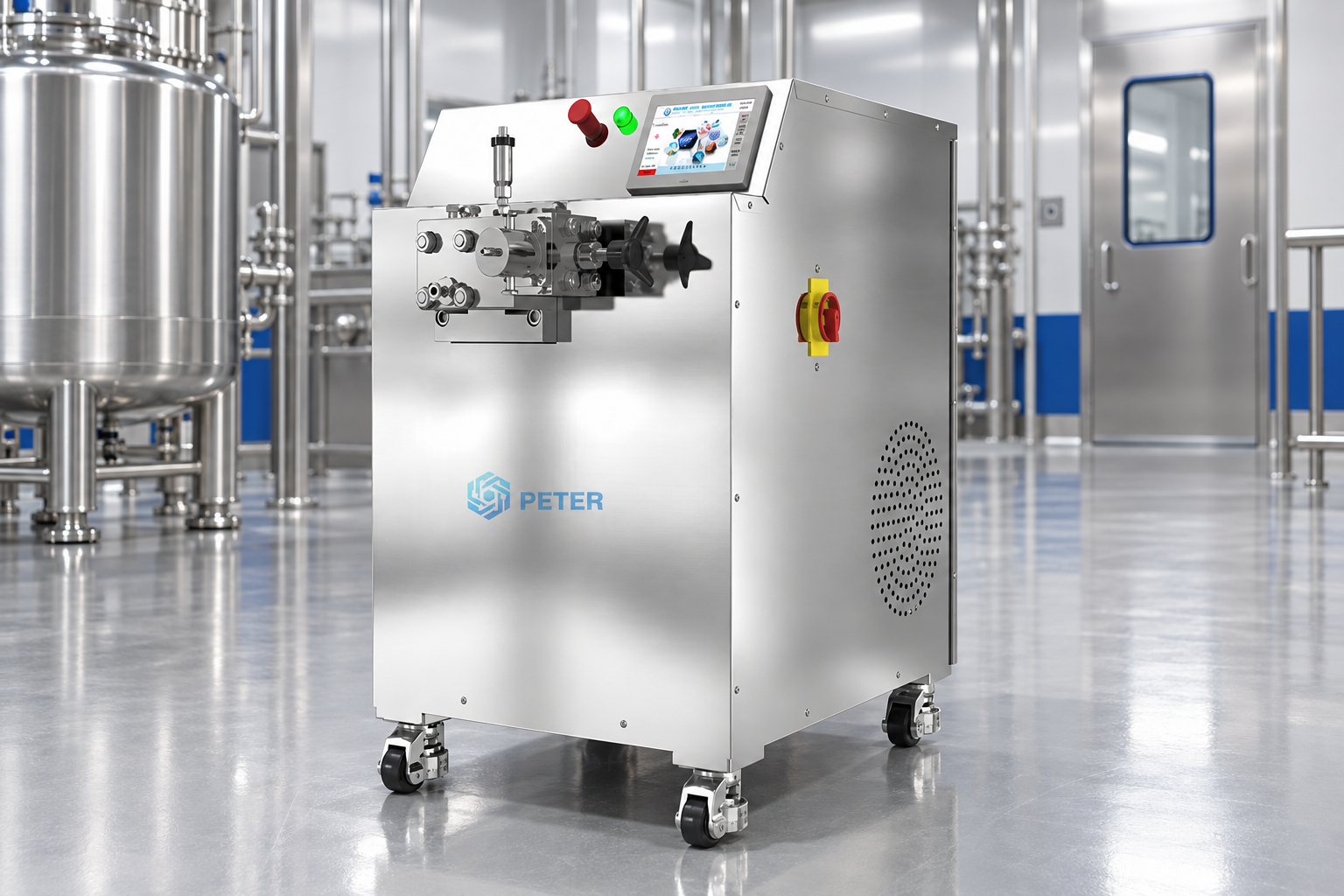
Why does powder-to-liquid mixing fail even when the mixer is running?
Powder-to-liquid mixing is a sequence of physical events rather than one generic “mixing” action. Liquid must contact the powder surface, displace trapped air, wet the particles, break agglomerates, and distribute the dispersed material through the batch. A vortex can improve circulation while still leaving dry cores inside agglomerates. Likewise, a high-speed rotor can reduce visible lumps at the vessel wall while producing excessive heat, foam, or air entrainment.
The critical variables are powder feed rate, liquid viscosity, surface tension, temperature, solids loading, and the residence time in the high-shear zone. If the formulation contains a volatile, shear-sensitive, or temperature-sensitive component, more speed is not automatically better. A useful process-development record logs the order of addition, mixing time, temperature, observed torque or power trend, and the sampling point; these details make a later scale-up decision defensible.
How do rotor-stator and pressure systems differ?
Rotor-stator systems create intense local shear in a narrow gap and are commonly used for wet-out, deagglomeration, and premix preparation. Pressure homogenizers use a pump and a restrictive homogenizing valve or interaction zone to apply pressure-driven disruption to a liquid stream. The latter can be valuable after the powder has already been dispersed, especially when the acceptance criterion is a reproducible droplet or particle-size distribution rather than simply the disappearance of visible lumps.
The phrase homogenizer mixer machine is used broadly in procurement documents, so the buyer should ask which mechanism is actually included, where powder enters, how the machine is cleaned, and whether the supplier will test the customer’s formulation. In the same way, liquid homogenization equipment can describe very different pressure, rotor-stator, and recirculation arrangements; the mechanism and duty must be written into the request for quotation. A mixing head that is effective in a low-viscosity premix may not provide the same result when solids loading or viscosity increases. The high-pressure homogenizer working-principle guide is useful background for distinguishing pressure-driven finishing from vessel-side mixing.
| Option | Primary action | Best fit | Typical limitation to verify | Cost and maintenance tendency |
|---|---|---|---|---|
| Rotor-stator high shear | Local shear, circulation, and agglomerate breakup | Wet-out and deagglomeration after controlled feeding | Foam, heat, air entrainment, and limited bulk induction | Moderate mechanical wear; inspect seals, bearings, and the head |
| Pressure homogenizer | Pressure-driven disruption in a flowing stream | Final dispersion or emulsion refinement after premixing | Feed must be pumpable; abrasive or oversized solids can accelerate wear | Higher utility and wear-part planning; valve and seal condition matter |
| Anchor or propeller premix | Bulk circulation and gentle blending | Viscous liquids and initial powder incorporation | May leave agglomerates that require a separate high-shear step | Usually simpler access; motor load rises with viscosity |
| Inline powder induction | Controlled powder entrainment into a liquid stream | Repeatable feed and reduced surface dusting | Still needs a downstream dispersion or finishing step for some powders | More instrumentation and piping to clean and validate |
What performance limits and hidden costs should be checked?
Performance should be stated as a tested process window, not as a motor-speed promise. Ask the supplier to define the feed viscosity, temperature, solids loading, batch volume, sampling location, number of passes, and acceptance criterion. For emulsions or fine dispersions, specify how size will be measured; ISO 13320 describes laser-diffraction particle-size analysis, but the method does not by itself certify a product or guarantee stability. A powder homogenizer should be judged against that measured result, not against a generic speed rating.
Hidden costs often sit outside the purchase order. A system can require a premix tank, powder feeder, transfer pump, heat removal, dust control, spare seals, valve parts, and additional cleaning time. If the batch requires two passes instead of one, throughput and utilities change even when the nameplate capacity appears adequate. An illustrative total-cost check can compare annual batches multiplied by cycle time, labor, utilities, consumables, planned wear parts, and the cost of rejected or reworked batches; label the assumptions and replace them with plant data before approval.
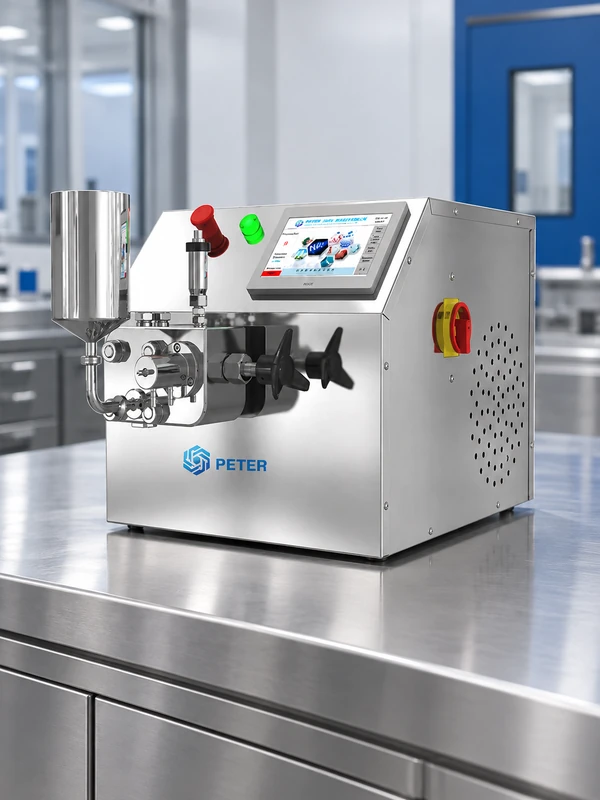
Which process route fits the formulation?
Selection should follow the formulation’s limiting step. A free-flowing powder in a thin liquid may need controlled induction and a short high-shear finish; a viscous binder may need bulk circulation before any high-shear head can operate effectively. Abrasive powders require a wear review, while shear-sensitive actives may need a gentler premix, temperature control, and a narrower exposure time. For buyers comparing liquid homogenization equipment, the useful question is which step controls the acceptance result and how that result will be verified.
| Formulation condition | Suggested sequence to test | What to measure | Decision boundary |
|---|---|---|---|
| Low-viscosity liquid and free-flowing powder | Controlled feed, circulation, then short high shear | Unwetted residue, agglomerate count, particle-size distribution | Escalate to pressure finishing only if the target distribution is not reached |
| Viscous liquid or fast-thickening binder | Charge liquid, establish bulk movement, feed slowly, then shear | Torque or power trend, temperature, batch uniformity | Confirm the mixer can circulate the worst-case viscosity before sizing the head |
| Abrasive mineral or pigment powder | Premix with controlled solids loading and inspect wear points | Wear-part condition, contamination risk, size distribution | Use supplier wear data and a replacement plan; do not infer service life from speed |
| Shear- or heat-sensitive formulation | Gentle wet-out, temperature control, limited high-shear exposure | Temperature profile, assay or quality attribute, dispersion result | Stop increasing shear when the quality attribute begins to move out of specification |
How should cleaning, maintenance, and compliance be specified?
Cleaning requirements should be written before equipment selection. Define whether the system is cleaned in place or opened for manual cleaning, which product residues are hardest to remove, how dead legs and seals are accessed, and how rinse or swab samples will be evaluated. For food operations, sanitary practices fall under the applicable requirements of 21 CFR 117.35; for drug manufacturing, in-process controls are addressed in 21 CFR 211.110. These are regulatory requirements, not proof that a particular machine is certified.
For cosmetics, ISO 22716 provides GMP guidance covering production, control, storage, and shipment; the relevant commercial consequence is the need for documented procedures and evidence that the process remains controlled. Hygienic design guidance from the European Hygienic Engineering & Design Group can help teams review cleanability, drainage, and product-contact design. Applicability depends on the product, destination market, and claims made on the label, so a buyer should obtain a site-specific regulatory review.
At minimum, a maintenance plan should cover inspection of seals and bearings, tightening or alignment checks where applicable, cleaning of the mixing head or valve, lubrication according to the manual, and documented replacement of wear parts. Record the symptom that triggered service, the batch condition, the part changed, and the post-maintenance verification; this makes recurring failures easier to distinguish from formulation changes.
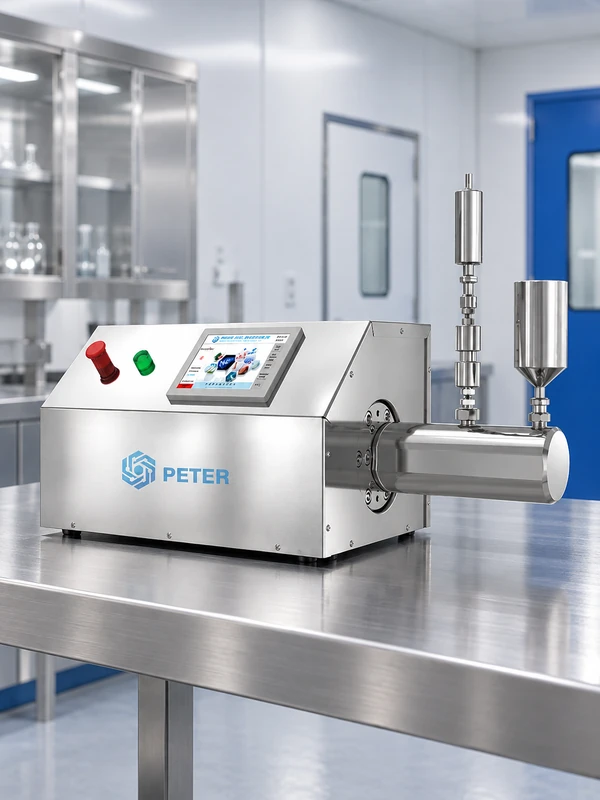
What should a procurement team verify before ordering?
- Define the duty: list batch size, powder feed rate, viscosity at operating temperature, solids loading, shear sensitivity, and the required quality attribute.
- Separate process steps: decide whether powder induction, bulk blending, deagglomeration, and final droplet or particle-size reduction are separate duties.
- Request a formulation test: provide representative powder and liquid, record the sequence and test conditions, and agree on the measurement method before interpreting a result.
- Price the whole system: include feeder, tank, pump, heat removal, controls, cleaning tools, spare seals, wear parts, installation, and operator training.
- Check documentation: request manuals, product-contact material information, cleaning guidance, drawings, utility requirements, and a clear list of what is and is not included.
CAS PETER is one supplier to evaluate when a process needs high-pressure finishing after powder wet-out. Its PT-20 model page and pilot-type PT-40 page should be reviewed for the published configuration and application details relevant to the formulation; a process test remains the appropriate way to confirm fit.
Frequently asked questions
What type of homogenizer mixer is best for mixing and emulsion processing?
There is no universal best type. A rotor-stator unit is often a practical first step for powder wet-out and deagglomeration, while a pressure homogenizer may be considered for a pumpable premix that needs further droplet or particle-size refinement. The choice should be based on the formulation, target distribution, heat and shear limits, and a documented test rather than the word “homogenizer” alone.
How do you choose a homogenizer mixer?
Start with the hardest operating condition: maximum viscosity, solids loading, temperature, feed rate, and required batch time. Then specify the measurement method, cleaning approach, and wear-part plan; ask the supplier to demonstrate the duty with representative materials. A homogenizer mixer machine should be purchased as a process system, not sized only by vessel volume or motor power.
When should high shear homogenizer machine be considered?
Consider a high shear homogenizer machine when the process needs controlled local shear to wet, disperse, or break agglomerates after liquid circulation is established. It is less suitable as the sole answer when powder must be inducted at a high rate, when the feed is not pumpable, or when heat and air entrainment would compromise the formulation. Confirm the exposure time and temperature window before increasing speed.
What maintenance does a homogenizer mixer need?
Maintenance normally includes cleaning and inspection of product-contact parts, seals, bearings, fasteners, and any valve or rotor-stator wear surfaces, with lubrication and replacement intervals taken from the equipment manual. Trend noise, vibration, torque or power, leakage, and batch quality so that a change is detected before a failure. For emulsion applications, CAS PETER’s high-pressure homogenizer emulsion support guide provides additional process context, but the site’s instructions and the buyer’s validated procedure control the actual maintenance task.
Conclusion: verify the process before specifying the machine
Powder-to-liquid mixing becomes more predictable when wet-out, deagglomeration, and final homogenization are treated as related but distinct duties. The correct decision order is to characterize the formulation, define the quality attribute and measurement method, test the worst-case operating condition, and then size the equipment and supporting utilities around that evidence. A fast rotor is not a substitute for controlled powder induction, and a pressure homogenizer cannot compensate for a feed that is poorly wetted or not pumpable. Cleaning access, wear parts, and regulatory documentation also belong in the original specification; they should not be deferred to commissioning. CAS PETER’s homogenizer product range can be included in a structured comparison, with a formulation test and a written utility, cleaning, and maintenance review used to decide whether the proposed configuration fits. Contact the technical team with the formulation, batch duty, and acceptance method when a project needs a documented next step.
References
- ISO 13320: Particle size analysis – Laser diffraction methods. International Organization for Standardization.
- 21 CFR 117.35, Sanitary operations. U.S. Electronic Code of Federal Regulations.
- 21 CFR 211.110, Sampling and testing of in-process materials and drug products. U.S. Electronic Code of Federal Regulations.
- ISO 22716: Cosmetics – Good manufacturing practices. International Organization for Standardization.
- EHEDG free hygienic-design guidelines. European Hygienic Engineering & Design Group.