

Dairy and Food Homogenization: Quality Improvement Guide
When a quality manager in Toronto encountered visible cream separation and batch-to-batch viscosity drift after a rapid plant expansion, she quarantined the affected drinks, compared retained samples, and increased filling checks. One SKU still separated after distribution while another became thinner. The reversal came when the team treated it as a process-design problem—not simply a “bad homogenizer”—and reconciled formulation, inlet conditions, pressure, throughput, heat treatment, and cleaning.
Summary: Consistent dairy and food quality is built around a controlled homogenization window: fully hydrated ingredients and a stable pre-emulsion at the inlet, appropriate pressure and flow, a compatible thermal sequence, hygienic operation, and retained-sample evidence. For many liquid dairy trials, 10–25 MPa (100–250 bar) is a useful first-stage starting range—not a universal specification; ISO 13320 can structure particle-size measurement, while a viscosity method must define temperature, spindle, speed, and rest time. Set product acceptance limits before specifying capacity, then demonstrate them at normal and peak operating conditions.
Homogenization uses pressure-driven shear, turbulence, and cavitation-related forces to make a dispersed phase more uniform. In milk, it can reduce the tendency of fat globules to rise; in sauces, nutrition products, dressings, and plant-based beverages, it may improve dispersion, texture, and storage stability. It cannot correct an under-hydrated powder, an unstable emulsion system, an unsuitable pH, or an inadequate thermal and sanitation program.
Start with the failure mode, not the pressure setpoint
Separation, sediment, viscosity drift, and foaming can appear similar at the end of the line, yet their causes are often different. Creaming in a dairy beverage may relate to fat-globule distribution, emulsifying support, thermal history, or excessive holding time. Sediment in a protein or plant beverage may instead begin with poor powder wet-out, incomplete hydration, mineral interactions, pH shift, or insoluble material that should have been screened before treatment. Increasing pressure cannot reliably rescue a formulation outside its stable range.
Build a measurable product baseline
For each priority SKU, record ingredient lot, total solids, fat, protein, pH, inlet temperature, pressure, flow, number of passes, and hold time. ISO 13320 describes laser-diffraction particle-size analysis; agree in advance whether the release trend will use a median, a coarse-tail value, or another reported statistic. ASTM D2196 provides a rotational-viscometer framework, but a plant method still needs fixed sample temperature, spindle, speed, shear history, and rest time.
Translate the commercial complaint into measurable acceptance criteria: particle-size distribution, viscosity at a stated temperature, visible separation, sediment, and sensory or filling performance over the agreed shelf-life study. A controlled dairy homogenization process begins with that baseline, rather than an unspecified request for a high-pressure machine.
Prepare the mix before it reaches the valve
The valve sees the product delivered to it, not the formulation written on the batch sheet. Use the premix stage to disperse powders without persistent fisheyes, allow proteins and hydrocolloids their required hydration time, and introduce oils and emulsifiers in the intended order. Screen or filter where the formulation and line design call for it; large undispersed particles can affect both product quality and wear.
Formulation determines what “good” looks like
Standardized milk, cream-containing drinks, high-protein dairy beverages, sauces, and plant-based emulsions do not respond identically. Fat level and crystallization behavior influence dairy texture; protein concentration, calcium or other minerals, and pH influence aggregation risk; hydrocolloids may require heat or dwell time to develop their intended viscosity. In oil-in-water foods, pre-emulsification quality is especially important: a coarse but uniform premix is generally a more useful feed than one containing free oil, dry powder pockets, or entrained air.
Use a defined upstream check before each trial: visual inspection for undispersed material, mix temperature, pH, solids, and, where relevant, a coarse-emulsion or particle-size observation. This creates a useful distinction between a mixing problem and a homogenization problem. For a broader explanation of the pressure stage itself, see CAS PETER’s guide to how high-pressure homogenizers work.
Coordinate pressure, flow, and heat treatment
The effect of pressure depends on the product arriving at the valve and on the conditions immediately before and after it. Dairy mixes are normally processed warm enough to keep the fat phase mobile; the appropriate inlet temperature depends on fat composition, recipe, and the site’s thermal sequence. In a two-stage arrangement, the first stage performs most size reduction and a later stage can help limit clustering. Establish the stage split with trial data, not a copied setting.
Heat treatment and homogenization have different jobs
For standard milk, processors often evaluate a first-stage range around 100–250 bar. More demanding emulsions may need a different range, and higher pressure can add product heat, energy demand, component wear, and stress on sensitive ingredients. Confirm actual pressure and both inlet and outlet temperatures; 1 MPa equals 10 bar, so units should be unambiguous in batch records and supplier quotations.
Pasteurization or another validated thermal process controls the required food-safety outcome; homogenization chiefly changes physical dispersion. Their order, heat-exchanger duty, residence time, and transfer hygiene must therefore be reviewed together. For U.S. milk products in final package form intended for direct human consumption, 21 CFR 1240.61 sets a federal mandatory-pasteurization requirement; the site’s own hazard analysis determines the process controls for its product and destination market.
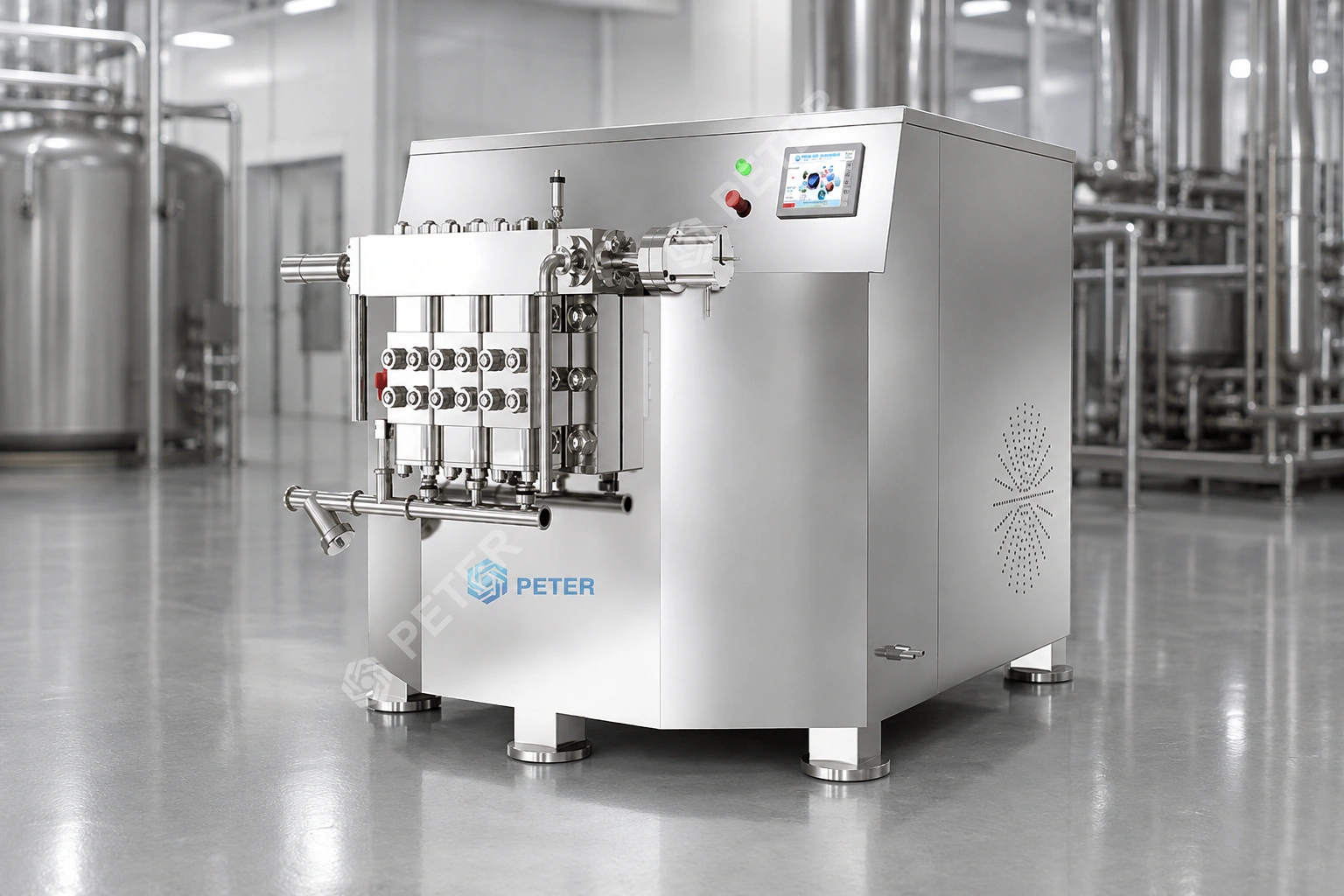
Apply the same discipline to food emulsions and beverages
For sauces, beverage emulsions, soups, flavor systems, and plant-based drinks, the target is not always the smallest possible particle. A selected size distribution, controlled air content, and protected viscosity may be more valuable than maximum pressure. Premixing, hydration, stabilizer activation, and addition order should be written into the trial protocol, because they can determine whether the pressure stage improves a batch or amplifies its inconsistency.
Use trials that reflect the commercial line
Trial at intended solids, temperature, flow, and residence time—not only with a low-solids bench sample. Take samples at the premix tank, after homogenization, after heat treatment where applicable, and at filling. Compare fresh samples and retained samples for separation, sedimentation, viscosity, color, air release, and sensory effects. ISO 4833-1 can support aerobic colony-count enumeration within a release program; it verifies a microbiological result, not a homogenizer claim.
Retain clearly labelled samples under the agreed storage conditions and inspect them at predefined intervals. Photographing a fixed sample volume and recording any serum layer or sediment height can make a visual decision auditable; if centrifugation or accelerated storage is used, qualify the method against the real shelf-life result instead of treating it as a substitute. The same discipline supports a defensible food homogenization equipment specification when development moves to production scale.
Choose performance by product risk and operating reality
Separate product-quality targets from hardware requirements.
| Decision dimension | Dairy milk and cream | Food emulsions and beverages | What to verify |
|---|---|---|---|
| Primary stability concern | Creaming, fat separation, texture consistency | Oil separation, sediment, mouthfeel, viscosity | Defined visual-stability and rheology limits |
| Process window | Often evaluated around 100–250 bar | Product-specific; may differ widely by solids and ingredients | Pressure, inlet/outlet temperature, passes, flow |
| Upstream dependency | Fat state, standardization, preheat | Premix dispersion, hydration, pH, emulsifier addition | Batch sheet and sampling at the inlet |
| Efficiency and TCO | Capacity must match sanitation and production windows | May require more development, screening, or recirculation | Energy, seal/valve wear, CIP time, yield loss |
| Acceptance evidence | Particle-size trend, viscosity, shelf-life observations | Particle-size trend, rheology, sediment/separation study | Agreed methods and release documentation |
Plan capacity, cleaning, and changeovers as one decision
Rated capacity alone can mislead. Allow for start-up, changeover, cleaning-in-place (CIP), sampling, maintenance, and the time needed to release a new SKU. Ask for minimum and normal flow at target pressure, then confirm that upstream tanks, downstream heat exchange, and filling can sustain that rate without bypasses or excessive recirculation.
Cleaning parameters should be product- and site-specific: document the chemical sequence, concentration, temperature, flow, contact time, and verification method required by the plant’s sanitation program. For allergen or high-risk changeovers, define the segregated product sequence, any required flush or dismantling steps, and the release evidence before the next run. A visual check alone is not an allergen-control program; the controls should follow the facility hazard analysis and applicable market requirements.
Illustrative planning calculation: required run-hours = weekly saleable volume ÷ validated net line rate. If that leaves no allowance for CIP, changeovers, or service, the nominal rate is inadequate. Compare lifecycle cost—energy, water and chemicals, spares, labor, product loss, downtime, and capital—not unit price alone.
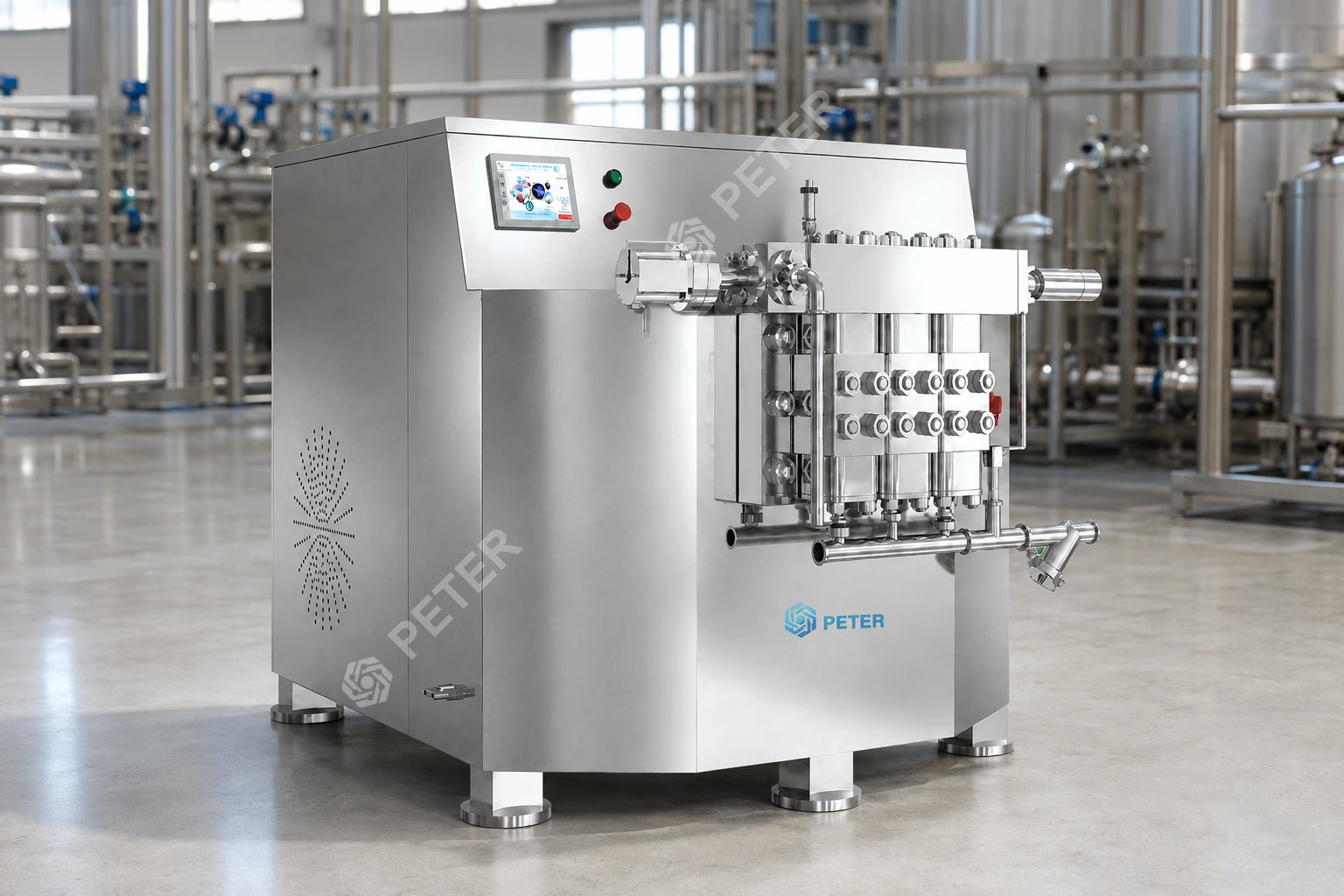
| Capacity-planning lens | Questions for the technical review | Commercial consequence if missed |
|---|---|---|
| SKU variability | Which products differ in solids, fat, acidity, or viscosity? | Frequent re-setting, unstable results, longer changeovers |
| Peak demand | What net rate is needed in the shortest production window? | Overtime, missed dispatches, or oversizing |
| Utilities and heat removal | Can electrical supply, hot water, chilled water, and heat exchange support the duty? | Pressure derating, heat-driven quality drift, lost throughput |
| Wear strategy | What inspection intervals, critical spares, and service access are planned? | Unplanned downtime and variable product quality |
| Scale-up evidence | Which pilot conditions have been repeated at representative flow? | Unbudgeted trials and delayed commissioning |
Standards, hygiene, and claims: keep the boundaries clear
Food-equipment obligations depend on where it is sold and used. In the United States, FDA requirements in 21 CFR Part 117 govern current good manufacturing practice and preventive controls; juice operations also need to consider 21 CFR Part 120. Dairy processors may additionally operate under state, local, and Grade A requirements. In Canada, the Safe Food for Canadians Regulations and CFIA guidance may apply. These are not equipment certifications, and a homogenizer alone does not make a finished product compliant.
Review contact surfaces, drainability, cleanability, seals, CIP parameters, allergen controls, and documentation against the site hazard analysis. ISO 13320 and ASTM D2196 structure measurement; they do not certify stability or safety. Unsupported performance, sanitation, or compliance claims can delay approval, complicate customer audits, and create commercial disputes.
Turn the specification into a controlled buying decision
- Set particle-size, viscosity, stability, and retained-sample limits for priority SKUs.
- Confirm powder hydration, pre-emulsion quality, inlet conditions, and utilities before fixing pressure and flow.
- Run representative trials through the intended heat-treatment sequence and retain samples through the agreed review period.
- Review sanitation access, CIP integration, allergen/changeover controls, spares, service, and commissioning support.
- Compare lifecycle risk and validated net capacity before purchase price.
CAS PETER supports B2B buyers with experimental, pilot, production-type, and high-pressure microfluidizer options that can be discussed against these operating requirements. Before narrowing a shortlist, combine product trials, utility checks, and documented acceptance tests. The decision should focus on a milk homogenizer selection window that the plant can repeat, clean, and verify—not on a generic pressure number.
Frequently asked questions
What does a milk homogenizer do to milk?
It forces milk through a controlled high-pressure zone to reduce and distribute fat globules more uniformly, helping slow cream separation and support a consistent appearance and mouthfeel. It does not by itself pasteurize milk or establish shelf life. Validate the result with an agreed particle-size, stability, viscosity, and retained-sample program.
What pressure is used for milk homogenizer processing?
Many processors begin development in a range of roughly 100–250 bar (10–25 MPa), but the suitable pressure depends on fat composition, total solids, temperature, valve arrangement, and the target product quality. Higher pressure is not automatically better because it can increase heat load and wear. Confirm the setting by trials at commercial conditions and record actual process pressure.
How does homogenizer in food industry affect product stability?
It can reduce the size and improve the distribution of dispersed droplets or particles, which may slow separation and make texture more repeatable. The result still depends on formulation, pre-emulsion quality, pH, hydrocolloids or emulsifiers, and thermal history. Use a storage study and a defined rheology method to show whether stability has actually improved.
What should processors check before selecting a milk homogenizer?
Check product acceptance criteria, required net capacity, pressure and flow range, inlet temperature, utility availability, hygienic design needs, CIP integration, allergen/changeover controls, and the maintenance plan. Include all SKUs and peak production windows rather than using one nominal recipe. For a broader decision framework, see this milk homogenizer versus food homogenizer comparison.
References and next step
- ISO 13320:2020, Particle size analysis — Laser diffraction methods
- ASTM D2196, Rheological Properties of Non-Newtonian Materials by Rotational Viscometer
- U.S. 21 CFR 1240.61 — Mandatory pasteurization for milk and milk products
- U.S. 21 CFR Part 117 — Current Good Manufacturing Practice and Preventive Controls
- Canadian Food Inspection Agency, food safety for industry
The durable lesson is simple: stable dairy and food quality is designed, measured, cleaned, and repeated—it is not purchased as a pressure number.
When you are ready to translate product targets into a pilot or production specification, review CAS PETER’s high-pressure homogenizer options and contact the CAS PETER team to discuss your application.