

Which Seals and Wetted Materials Are Best for Acids, Solvents, and Abrasive Slurries?
“Stainless steel with chemical-resistant seals” is not a complete material specification. An acidic formulation, an organic solvent and an abrasive slurry can challenge different components in the same machine, and the cleaning cycle can expose them to conditions more demanding than production. A buyer may also receive a metal grade for the main body without a complete list of the small product-contact parts. The selection question is therefore not which material is best in isolation, but which documented combination is suitable for the full duty. This guide explains how to compare seal compounds, wetted metals and wear components without treating a broad material name as a guarantee.
Select homogenizer seal materials and wetted parts from the complete formulation, cleaning chemistry, concentrations, temperatures, contact times and mechanical duty. Acid compatibility is not determined by pH alone; solvent compatibility is not settled by a generic elastomer name; abrasion resistance does not prove corrosion resistance. Obtain the actual metal grade, seal compound and wear-part specification for the proposed configuration. Use supplier compatibility information to screen candidates, then agree on the application-specific evidence and acceptance criteria. There is no single combination of stainless steel, elastomer and ceramic that is automatically best for all acids, solvents and slurries.
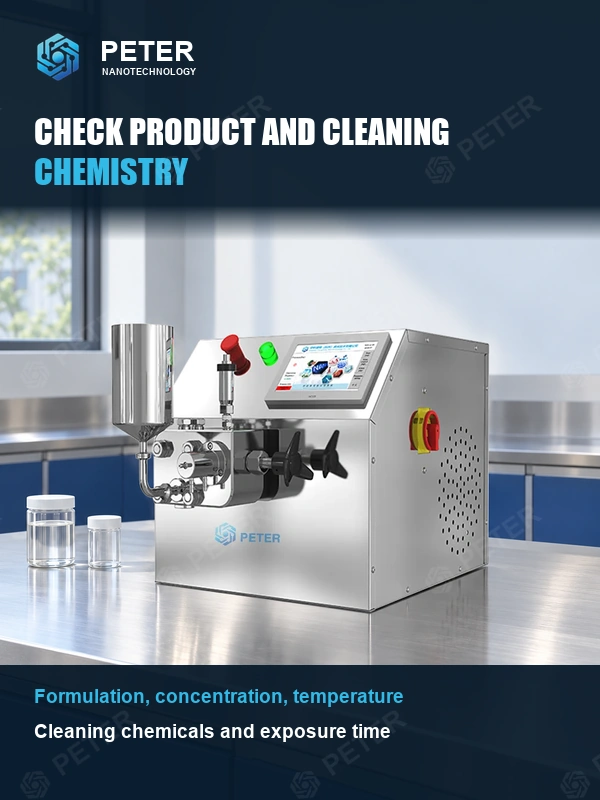
Check product and cleaning chemistry
Give the supplier more than a safety-data-sheet category. Identify the relevant ingredients, concentrations, possible impurities and the range expected during production. For mixtures, note whether composition changes through evaporation, dilution or a cleaning transition. Include the actual temperatures and exposure times rather than only room-temperature conditions.
Cleaning can be the overlooked part of the duty. A component that sees a mild product for most of a shift may also see concentrated cleaning chemicals, hot rinses or repeated thermal cycles. The Trelleborg chemical-compatibility check provides a screening route for material-and-media combinations; detailed access may require registration. Its results still need to be applied to the specific compound and service conditions.
For a proposed high-pressure homogenizer, request a product-contact material list before arranging a trial. Confirm that the trial configuration uses the materials being proposed for production, or document the difference and its consequences.
| Duty | Information that changes the choice | Evidence to request |
|---|---|---|
| Acidic formulation | Acid identity, concentration, impurities and temperature | Compatibility assessment for the exact grade and compound |
| Solvent mixture | Full composition, operating temperature and exposure pattern | Compound-specific compatibility and the separate installation-safety review |
| Abrasive slurry | Solids characteristics, concentration and permitted product contamination | Wear-part specification and representative service or trial evidence |
| Repeated cleaning cycles | Cleaning chemistry, thermal cycling and cumulative exposure | Compatibility with the complete cleaning sequence |
| Pharmaceutical product contact | Potential reaction, leaching, absorption or contamination | Material traceability and application-appropriate quality documentation |
An elastomer family is not a finished seal specification
Names such as EPDM, FKM and NBR identify material families, not every property of a finished compound. Fillers, formulation, hardness and manufacturing details can change suitability. A useful supplier response names the compound or controlled grade and explains the basis for accepting it under the proposed conditions.
Chemical exposure is only one part of the decision. Dynamic motion, pressure cycling, temperature and the seal arrangement also matter. Do not take a compatibility-table rating and assume the same material will work in every moving packing or static seal location. Ask which part of the duty the evidence covers and which part still needs confirmation.
For finished pharmaceutical manufacturing, 21 CFR 211.65 requires contact surfaces not to react with, add to or absorb the product so as to alter it beyond established requirements. A material certificate identifies a supplied material; it does not, by itself, demonstrate compliance of the full process.
Review every wetted metal, not just the main body
A specification that mentions 316L for the main block may leave out a valve component, fitting, spring or another wetted item. Ask for the scope of the statement. The correct question is which parts actually contact product and cleaning media, and what each one is made from.
Do not approve an acid merely because “316L” appears on the quotation. Suitability depends on the chemical environment, including concentration, temperature and relevant impurities. Where corrosion is a credible concern, obtain an application-specific assessment from the material or equipment supplier and define what inspection or testing will support acceptance.
The homogenizer wetted parts record should remain linked to the machine configuration. A later replacement using an apparently equivalent part can change the material exposure, traceability or cleanability assumptions on which the original acceptance relied.
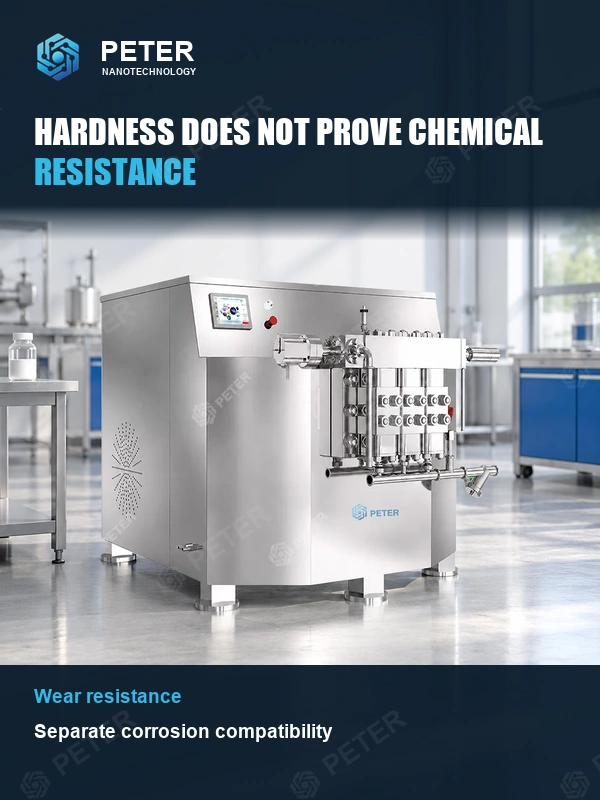
Hardness does not prove chemical resistance
Ceramic and tungsten-carbide components may be candidates for wear-prone positions when the equipment supplier has qualified the particular grade and geometry. Neither name is sufficiently specific to establish compatibility. Ask about the actual ceramic type or carbide grade, including binder where applicable, and the chemical and mechanical limits of the assembled component.
An abrasive slurry homogenizer application needs a wear criterion tied to both equipment condition and product quality. A short run may show that the feed can pass, while revealing little about service life or contamination after extended operation. Avoid turning a successful sample into a guaranteed replacement interval.
When reviewing homogenizer wetted-part options, separate the quoted standard configuration from any application-specific alternatives. The product page does not establish that every possible material option is fitted. Obtain written confirmation for the proposed machine and formulation.
| Supplier item | What to verify before acceptance |
|---|---|
| Complete wetted-parts list | Includes small components and seals as well as the main body |
| Metal grades and seal compounds | Specific enough to evaluate the actual chemical exposure |
| Wear-part specification | Identifies grade, permitted duty and replacement criteria |
| Material certificates where required | Traceable to the supplied components and agreed quality scope |
| Change and replacement controls | Prevents undocumented substitutions during service |
Define what a compatibility trial must reveal
Agree on the questions the trial must answer. Depending on the identified risks, this can include visible deterioration, dimensional or mass changes in an appropriate material evaluation, leakage, product contamination or a change in process performance. The test method and limits should come from qualified application review, not from arbitrary thresholds added to a purchasing checklist.
The equipment-maintenance requirements in 21 CFR 211.67 are relevant where pharmaceutical rules apply: maintenance and cleaning are controlled activities with procedures and records. Keep replacement compounds and cleaning changes within that process. The earlier homogenizer cleaning-validation guide explains why a materials decision and a cleaning decision should be reviewed together.
Frequently Asked Questions
How should seals be selected for acidic formulations?
Start with acid identity, concentration, temperature, impurities and exposure time, including the cleaning sequence. Ask for approval of the exact seal compound in its intended mechanical duty rather than choosing from pH alone.
Which wetted materials are suitable for solvent-based products?
There is no universal solvent-compatible combination. Evaluate every wetted metal and seal compound against the actual mixture, then separately assess the equipment and installation hazards associated with the solvent.
What seal materials resist abrasive slurries?
That depends on the seal location, solids characteristics and operating conditions. Review the compound and seal arrangement with the supplier, and measure wear and product contamination through an agreed application trial.
How do elastomers affect chemical compatibility?
The elastomer family and the finished compound both matter. Swelling, loss of properties or interaction with the product can make a nominally suitable family unacceptable in a specific duty.
When are ceramic or tungsten-carbide components appropriate?
They are candidates where the manufacturer has established suitability for the component’s wear and chemical exposure. Confirm the exact grade and operating limits; hardness alone does not establish corrosion resistance or service life.
What information should a supplier provide about wetted materials?
Request the full product-contact list, metal grades, seal compounds, wear-part specifications and applicable traceability records. The documentation should distinguish standard supply from optional materials and cover replacement-part controls.
References
- Trelleborg Sealing Solutions: Chemical compatibility check
- 21 CFR 211.65: Equipment construction
- 21 CFR 211.67: Equipment cleaning and maintenance
Conclusion
The best wetted-material combination is the one supported for the whole duty, including cleaning and maintenance. Begin with the formulation and exposure conditions, then check the actual grades and compounds in every relevant part. Assess corrosion, seal behavior and abrasion separately, and define how the proposed combination will be accepted. Preserve those decisions in the machine record so an undocumented replacement does not undermine them later. When discussing CAS PETER homogenizer configurations, request a complete wetted-parts schedule and identify any unresolved compatibility questions before ordering. A precise specification and an appropriate trial provide a stronger basis for selection than a broad claim of chemical resistance.