

Silica Dispersion by High-Pressure Homogenization: Agglomerate Trial Design
Silica dispersion by high-pressure homogenization should be judged by the removal of troublesome agglomerates, the persistence of that improvement, and the performance of the final formulation. A smaller reported particle size does not prove that every cluster has become an individual primary particle. Start with the silica grade, liquid chemistry and acceptable feed condition, then compare an untreated control with a limited, equipment-approved trial. The practical question is whether processing removes the population that causes your coating, slurry or composite to fail without creating unacceptable heat, wear, contamination or handling problems.
Define which silica population is causing the defect
A procurement specification often contains a nominal primary particle size. That number describes a different question from the size of objects moving through a liquid suspension. A powder may contain strongly joined structures and larger, more weakly associated clusters. Treating these as one interchangeable particle population can produce unrealistic targets and misleading equipment requests.
The ETH Zurich research overview of high-pressure dispersion distinguishes physically held clusters from structures with stronger bonds. Its research illustrates why dispersion response depends on how the particles were made. It does not establish a universal endpoint for every commercial silica grade or certify a particular homogenizer for abrasive service.
Write the actual failure in application terms before choosing an instrument: visible coating defects, blocked application hardware, sediment that cannot be redispersed, excessive viscosity or inconsistent composite properties. Then identify which measurement would detect that failure. A purchasing target that only says “make nanosilica” leaves both the supplier and the laboratory without a useful acceptance test.
Check the powder and liquid before requesting pressure
Record the supplier grade, surface treatment, batch identity, solids basis and the liquid composition. Hydrophilic and surface-treated materials should not be assumed to wet or disperse identically. Give the equipment supplier the safety information and a representative feed description, including the largest persistent objects rather than only the smallest advertised particles.
Prepare the liquid and powder using a reviewed method appropriate to the material. Do not pour a dry powder into a high-pressure inlet or improvise dust handling. Identify how the powder will be wetted, how entrained air will be managed and how the feed will remain representative during the run. Any screening step must be agreed and documented because removing coarse material can change the formulation and conceal the original defect.
Describe the concentration by an explicit basis. A percentage of dry silica in the finished suspension differs from a percentage of a supplied dispersion. Keep a mass record of water, dispersant and powder additions so that dilution cannot be mistaken for a processing benefit. If the feed is adjusted to satisfy equipment limits, keep the original formulation as a separate reference.
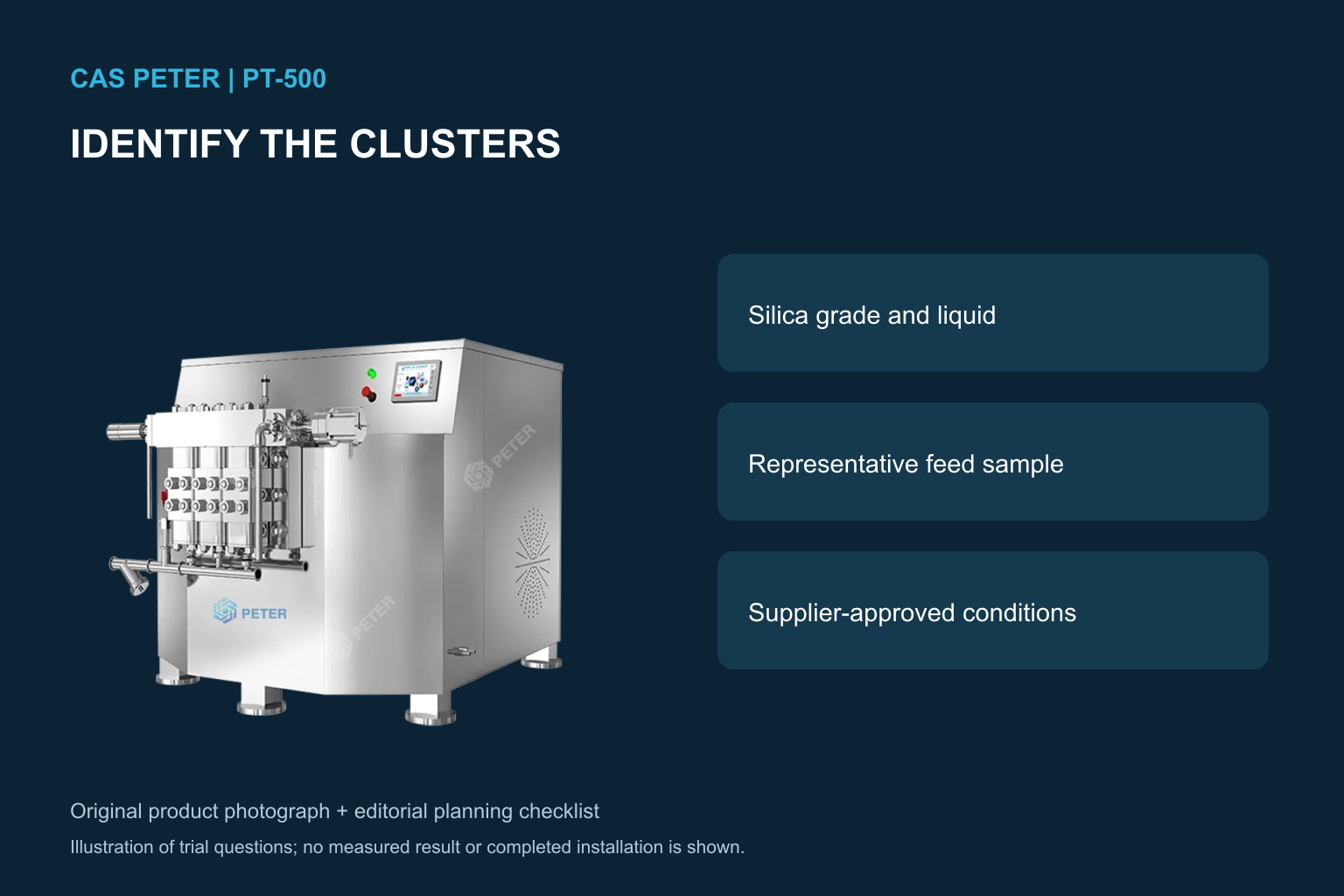
Use chemistry and mechanical processing as separate variables
A University of Birmingham silica de-aggregation study examined energy input alongside pH and temperature in a high-shear mixer. Its abstract reports a multistep response and a persistent population that was not reduced to individual nanoparticles. That work supports caution about interpreting a size plateau; its mixer results are not operating instructions for a high-pressure homogenizer.
For your development work, first hold the liquid recipe constant while testing the mechanical step. If a change in pH or dispersant is also needed, run it as an explicitly identified formulation change. Otherwise an improved result cannot be assigned confidently to pressure, chemistry or their combination. Avoid comparing a newly formulated treated sample with an older, chemically different control.
Set chemical compatibility limits with the material owner and equipment supplier. Do not copy a research pH condition into production without reviewing the entire formulation, seals, wetted parts and downstream application. A condition that improves a laboratory measurement may be unsuitable for storage, packaging or the customer’s process.
Build a trial around a small number of useful comparisons
Begin with an unprocessed, prepared-feed sample and a clearly identified reference method. Choose the first mechanical conditions only after the supplier has approved the feed and configuration. Document actual pressure, flow, inlet and outlet temperatures, processing arrangement and collected mass. These observations let another operator repeat the trial and help explain results that the setpoint alone cannot.
For discrete passes, keep the output from each pass separate until the sampling plan is complete. For recirculation, record the tank volume, mixing condition, run duration and withdrawal points. Recirculation time should not be casually relabelled as a known number of identical passes because individual portions may have different treatment histories. Our dispersion methods overview provides the broader process context.
The following is an editorial trial-planning table, not a set of validated settings. Its distinction between cluster types follows the research linked above; the checks must be adapted to the actual silica and application.
| Observation | First question to investigate | Useful next comparison | Avoid concluding |
|---|---|---|---|
| Coarse population falls after processing | Was the feed sampled representatively? | Repeat collection and measure the complete distribution | All primary particles are separated |
| Average size stops improving | Is a resistant structure or a measurement limit dominant? | Compare an independent method and the defect test | More pressure is automatically necessary |
| Size grows during storage | Did the medium or surface environment change? | Compare matched stored controls in identical containers | The machine failed solely because of its setpoint |
| Viscosity rises while size falls | Has the interaction network changed? | Measure flow under defined shear and temperature | A finer suspension always pumps more easily |
| Application defects persist | Is the relevant coarse tail still present? | Examine the defect and the retained coarse material | The mean size proves the application is acceptable |
Measure both the useful change and the remaining tail
Select measurement methods that can answer the application question. Dynamic light scattering can describe hydrodynamic behaviour in a suitable measurement medium, but the result must be interpreted with the sample preparation and reporting basis. A diluted aliquot may behave differently from the supplied concentrated slurry. Keep dilution composition, mixing history and delay before measurement consistent.
Where defects are driven by a small coarse population, request a method capable of observing that population instead of relying on one average. Microscopy or another size method can provide a complementary view when suitable. Keep the complete reported distribution and the instrument quality checks, including evidence of unstable or unsuitable measurements. The DLS and laser diffraction guide explains why results from different methods should not be treated as interchangeable numbers.
When methods disagree, investigate before selecting the more attractive value. Ask whether the sample settled, whether preparation changed the clusters and whether the methods observe different properties. Document any filtration or sonication used during analysis. Those treatments may be appropriate analytical steps, but they can also remove the very evidence that the process trial is meant to evaluate.
Include rheology in the dispersion decision
A slurry that meets a particle-size target can still be difficult to transfer or apply. Record the instrument geometry, temperature, preparation sequence and measurement conditions when comparing viscosity. A single viscosity value without those conditions may be insufficient to explain pumping or coating behaviour. Keep the measurement focused on the actual operating question rather than collecting a decorative specification.
The educational lecture below introduces non-Newtonian flow and why measurement conditions matter. It explains general fluid behaviour; it is not a silica processing protocol or a demonstration of the pictured equipment. Use it alongside your material-specific measurements, especially when a visually similar suspension gives different readings at different shear conditions.
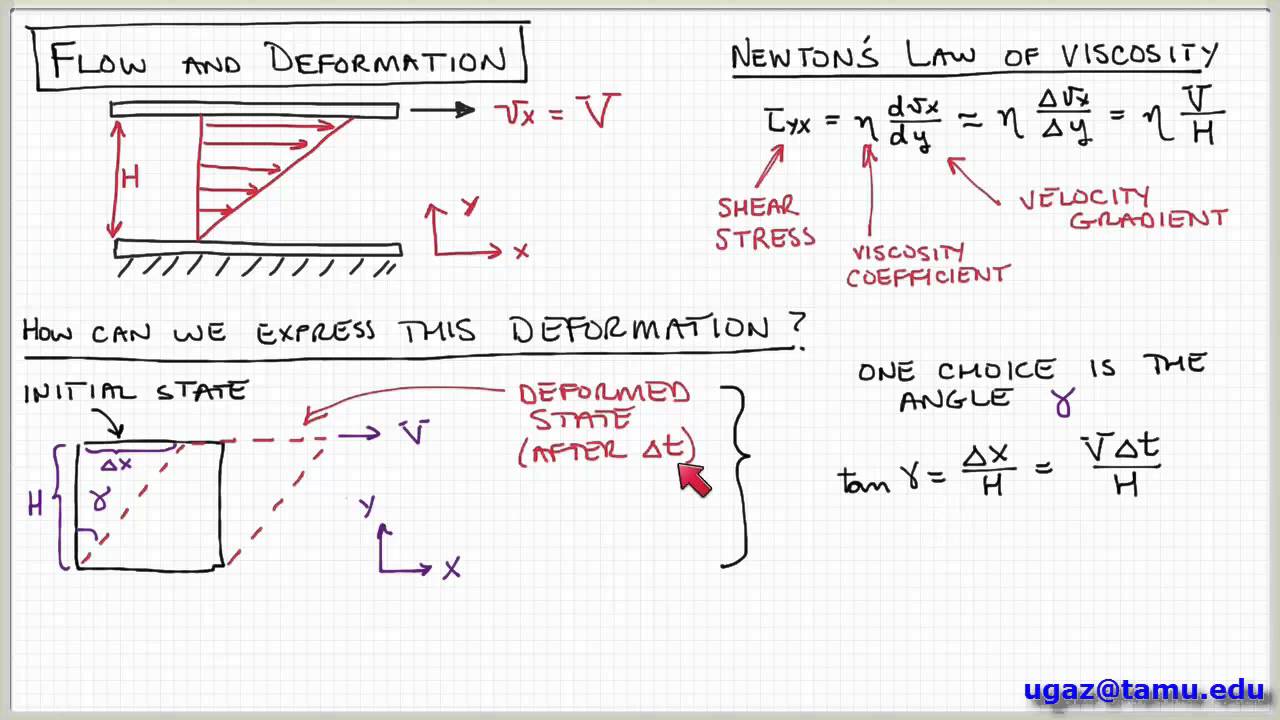
Educational source: Victor Ugaz. Watch the lesson on YouTube.
Check storage and application performance before increasing scale
Store treated and control samples under the same documented conditions. Include the intended container where packaging contact could matter. Record the collection time, storage temperature, visible separation and the method used to redisperse settled material before analysis. Do not quietly shake one sample more vigorously than another and report the resulting difference as inherent stability.
Retest the property that originally caused rejection. For a coating, use the agreed application preparation and inspect the relevant defect. For a composite, compare the agreed material property using the same formulation basis. A short dispersion experiment cannot establish every long-term or end-use claim. It can establish which candidate deserves the next controlled validation step.
Keep a retained sample from the preferred condition and from the untreated feed. These samples help resolve later questions about raw material variation or measurement drift. Repeat the candidate condition with an independently prepared feed batch before treating the result as reproducible. If only one run exists, describe it as a preliminary observation.
Review abrasive-service suitability with the supplier
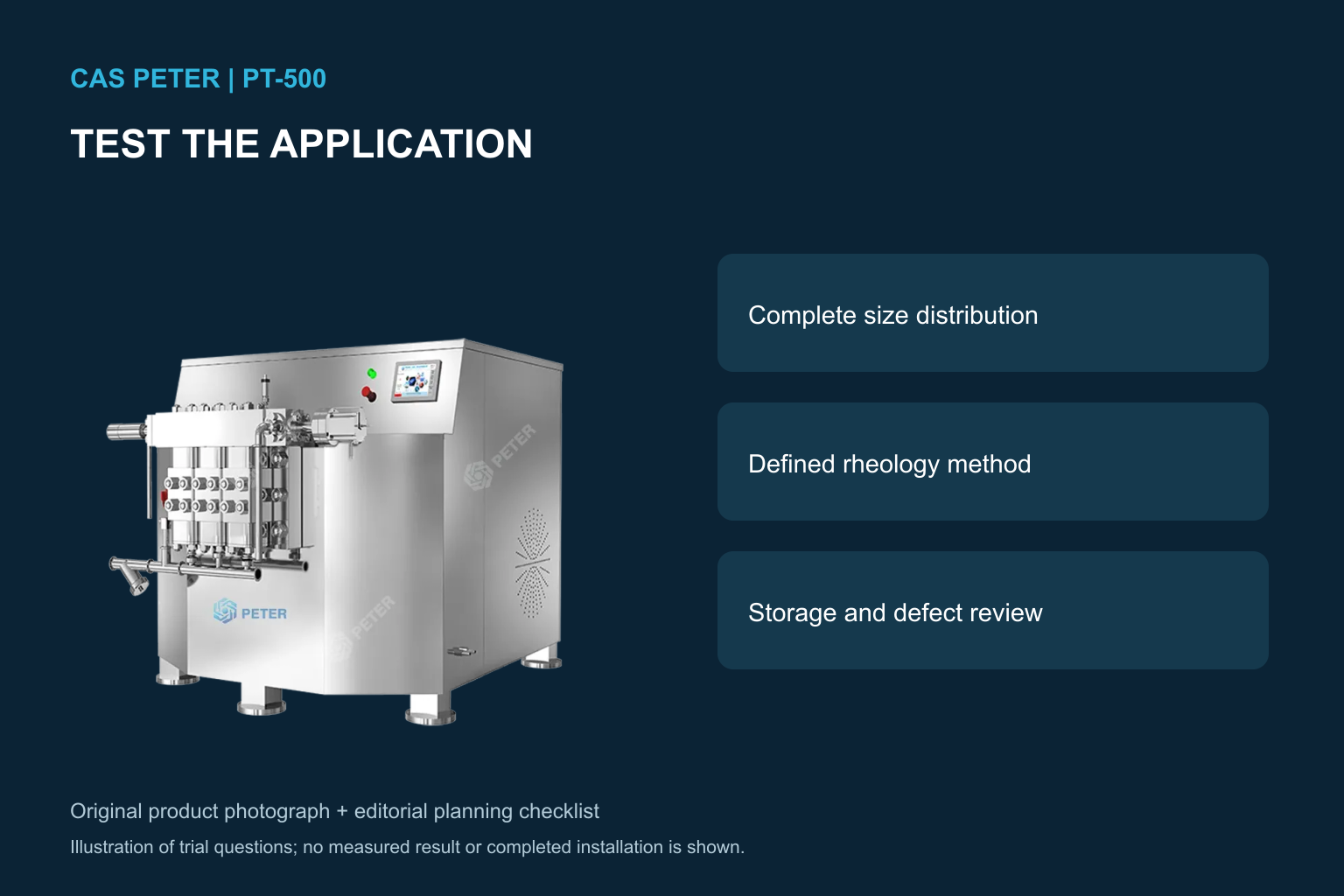
Silica service requires an explicit suitability discussion. Ask about approved feed limits, wetted materials, wear-sensitive components, contamination monitoring and inspection intervals for the proposed configuration. A product name or maximum pressure alone does not answer these questions. Our wetted-materials guide outlines information to gather before a compatibility review.
The CAS PETER PT-500 product page is a starting point for discussing a production-format system. The photograph identifies the catalogued product; it does not document a silica installation or confirm that a standard configuration is suitable for your slurry. Submit the actual composition, abrasiveness concerns, target throughput, temperature limits and acceptance test before requesting a configuration recommendation.
Include the cost of cleaning, product recovery, wear inspection and sample testing in the comparison. An apparent improvement obtained with repeated processing may be unattractive if the handling burden or contamination risk becomes unacceptable. Select the least demanding approved condition that reliably meets the application target, then validate its operating range rather than pursuing the smallest possible number.
Frequently asked questions
Can high-pressure homogenization always separate silica into primary particles?
No. The response depends on the silica structure, bonding and liquid environment. Some clusters may separate while more resistant structures remain. Confirm the relevant population with appropriate measurements and evaluate the final application instead of assuming that a nominal primary size is an achievable processing endpoint.
Why can a silica size result improve while the coating still fails?
The reported average may not detect the small coarse population responsible for defects, or analytical preparation may differ from application preparation. Compare complete distributions, representative sampling and the actual coating test. Keep dilution, filtration and any additional analytical dispersion steps visible in the record.
What should accompany a silica dispersion equipment inquiry?
Provide the exact grade, surface treatment, solids basis, liquid composition, safety information, feed distribution, viscosity conditions and target application. Add throughput, thermal limits, contamination requirements and a measurable acceptance test. Ask the supplier to confirm feed and abrasive-service suitability before selecting trial settings.