

Lycopene Bioaccessibility After Homogenization: Measure the Digested Tomato Matrix
Lycopene bioaccessibility after homogenization must be measured in the digested tomato matrix; smaller pulp particles or a stronger red color cannot establish it. Processing can change pigment extractability, retained lycopene and the structure that digestive fluids encounter. These changes may act in different directions. A useful trial therefore follows the amount of lycopene before processing, after processing and in a clearly defined digestion fraction. Keep tomato variety, solids, oil addition, thermal history and analytical recovery consistent. Select conditions from the combined ingredient-quality result rather than assuming that increasing pressure will always improve the nutritional endpoint.
Define the endpoint before designing the trial
Extractability describes how readily an analytical solvent recovers lycopene from the sample. Retention describes how much remains after an operation under the chosen assay. Bioaccessibility describes the fraction released into a specified digestive fraction in a laboratory model. Absorption and human bioavailability require different evidence. A product can perform well on one endpoint and poorly on another, so a report should identify each measurement rather than using these terms interchangeably.
For an ingredient developer, the decision might concern a tomato-pomace suspension intended for a food formulation. For a juice manufacturer, it might concern the drink after heating and storage. State which material enters the digestion test. Testing a diluted intermediate does not establish performance in a finished drink containing additional oil, protein or fiber. Keep the commercial use visible throughout the experiment.
Choose the comparison before looking at results. A processed sample can be compared with the same untreated feed, a handling control or a current production process. These references answer different questions. A common batch divided between treatments is useful for the initial screening, followed by independent batches to test whether the result survives realistic raw-material variation.
Why published outcomes can differ
A study of tomato processing by-products investigated high-pressure homogenization of pomace suspensions and subsequent simulated digestion. It reported improved lycopene bioaccessibility under its selected conditions. The material included a particular by-product matrix and a defined preparation and digestion sequence. It provides evidence for that system, not a guarantee for every tomato juice or a validated recipe for CAS PETER equipment.
By contrast, the abstract of a study on differently colored tomato pulps reports reduced carotenoid bioaccessibility after homogenization despite reduced particle size. The authors associated the result with changes in matrix structure. Only the abstract is used here; it supports the direction and scope of that reported comparison, not a reconstruction of the full experimental protocol.
These findings justify a matrix-specific trial. Tomato variety, initial tissue structure and processing history differ across studies. The practical lesson is to measure the endpoint in the intended formulation. Choosing only a favorable publication and omitting a contradictory result would make the trial less useful for deciding whether a real process is suitable.
Control the tomato feed and formulation
Record variety, ripeness, storage before processing and the proportions of peel, seed and pulp. For pomace, document how the upstream operation separated the material. A pomace rich in peel is not interchangeable with an ordinary juice. Determine solids using a consistent method and account for any water added during preparation. Comparing concentrations alone can be misleading if the samples were diluted differently.
Match the predispersion and screening procedure. Removing large material from one trial but retaining it in another changes both the feed and its lycopene inventory. Weigh removed fractions where relevant and identify them in the mass balance. A visually smoother sample can reflect selective removal rather than a beneficial homogenization effect. The fate of the material matters as much as the appearance of the collected liquid.
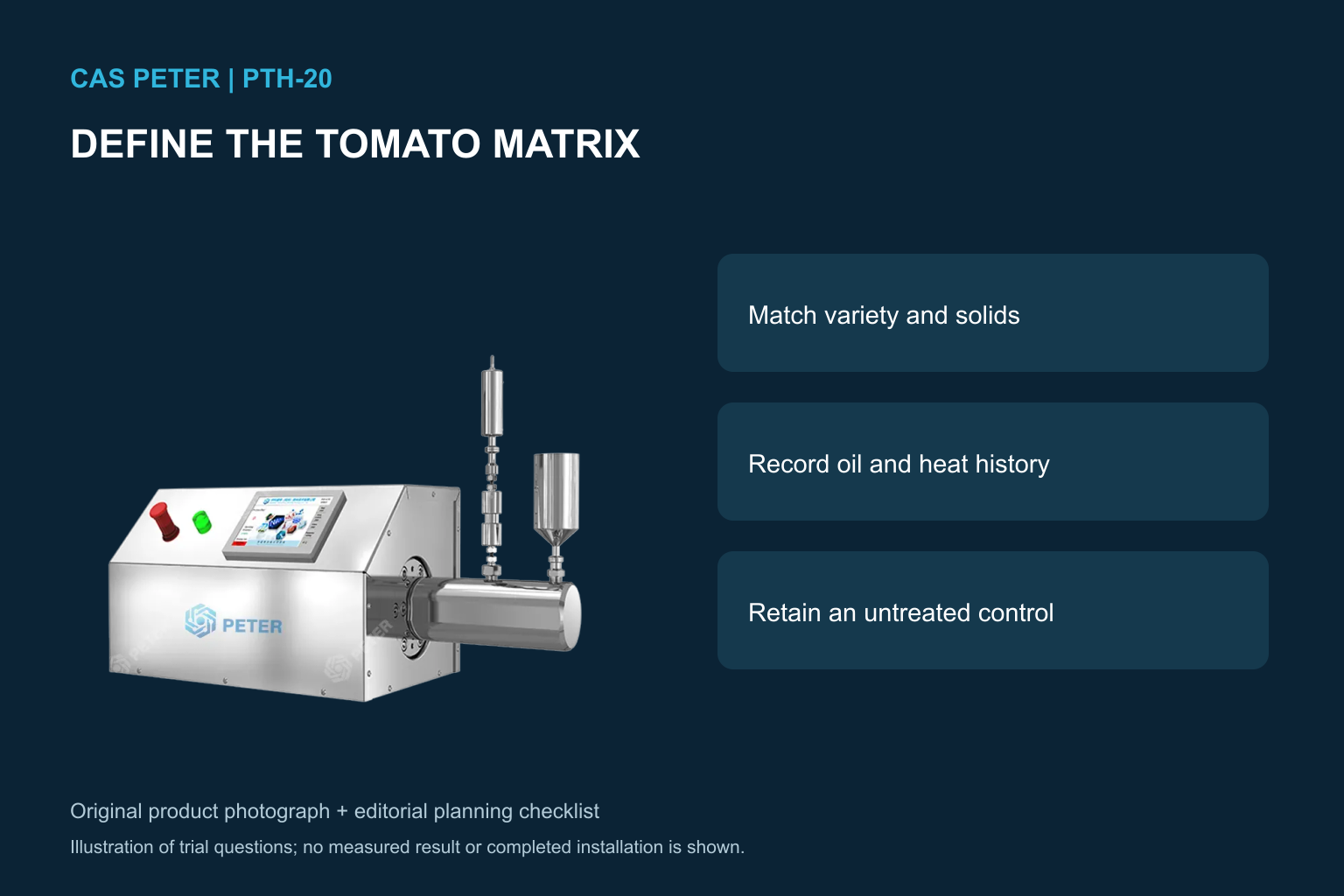
Document oil type and amount when oil is part of the formulation. Do not add oil solely to the treated digestion sample and interpret the difference as a pressure effect. The same principle applies to emulsifiers, proteins and other ingredients. If formulation and processing are both being optimized, design the comparison so their effects can be distinguished rather than changing them together without controls.
Record pressure together with thermal exposure
Capture inlet and outlet temperatures for each pass, cooling conditions, actual pressure, flow and recovered sample mass. A nominal pressure does not describe the entire exposure. Repeated recirculation can produce a different history from a defined pass arrangement, particularly if the vessel is not uniformly mixed. Describe the configuration and sample collection point so the treatment can be repeated.
Include the subsequent heat treatment if the final product will be heated. Testing freshly homogenized material and selling a result for a thermally processed product leaves a missing step. Where practical, compare the selected processing conditions through the complete sequence. Keep oxygen exposure, light exposure and the delay before extraction or digestion consistent, because sample handling can affect the analytical result.
Use a stopping rule that reflects the objective. Once size changes become small, additional passes still require evaluation for retained pigment, heating and process cost. A maximum-pressure trial alone does not identify a useful operating window. A lower-intensity condition that meets the complete product requirement may be a better candidate for validation.
Build a lycopene mass balance
Measure lycopene in the feed and processed sample using a method suitable for the tomato matrix. The pomace study used solvent extraction and spectrophotometric determination; that method should be described accurately when comparing with its findings. A trial needing isomer-specific information requires an appropriate separation method rather than assuming one absorbance value distinguishes every carotenoid form.
Use analytical blanks, recovery checks and representative sampling. A fibrous suspension can separate while aliquots are being taken, so define how the sample is mixed before withdrawal. Excessively vigorous mixing immediately before the test can itself change the material. Keep extraction conditions consistent and protect samples according to the validated analytical procedure. A change in extraction recovery should not automatically be called creation or destruction of lycopene.
State the denominator for every percentage. The fraction recovered in the intestinal sample relative to the amount initially entering digestion differs from recovery relative to the amount measured after processing. Both can be informative, but they answer different questions. If concentrations are converted to amounts, include the actual fraction volumes and dilution factors. Reporting only a percentage can conceal loss of material earlier in the process.
Distinguish intestinal release from micellar incorporation
Define the digestion protocol, enzyme preparations, bile conditions, pH control, incubation and sample separation. Whole intestinal digesta, a centrifuged supernatant and a specifically isolated micellar fraction are not automatically equivalent. Read the method before labeling a fraction. The linked pomace study should be interpreted according to its stated digestion and release measurements; it does not establish that every recovered fraction represents absorption by humans.
If micellar recovery is the chosen endpoint, validate the separation procedure. Residual fine pulp or oil droplets can carry lycopene into a collected liquid and inflate a result labeled micellar. Conversely, adsorption to filters or losses during fraction transfer can depress recovery. Use appropriate recovery controls and document what the collected fraction contains. Separation is part of the assay, not merely a convenient sample-cleaning step.
The following decision table is an original trial framework informed by the two linked studies. It lists measurements to distinguish possible explanations; it contains no claimed machine performance or universal acceptance values.
| Observation | Possible ambiguity | Check to add | Interpretation boundary |
|---|---|---|---|
| Smaller tomato particles | Release may coexist with a stronger fiber network | Matrix structure and digestion outcome | Size alone does not establish bioaccessibility |
| Higher extracted lycopene | Analytical recovery may have changed | Matched extraction recovery and mass basis | Do not claim pigment formation |
| Higher intestinal concentration | Digestion volume may differ | Recovered amount and dilution correction | Concentration is not total recovery |
| Higher micellar percentage | Denominator may have fallen | Retained lycopene and absolute fraction amount | A larger percentage need not mean a larger delivered amount |
| Better fresh result | Heating or storage may alter the product | Complete production and storage sequence | Fresh intermediate data do not qualify the finished food |
Connect the laboratory result with product quality
Evaluate texture, separation, color and relevant sensory properties alongside the digestion endpoint. A tomato ingredient that meets one analytical objective but is unsuitable for blending, filling or storage has not met the whole brief. Keep these quality requirements explicit. They should be measured separately rather than inferred from lycopene release or particle size.
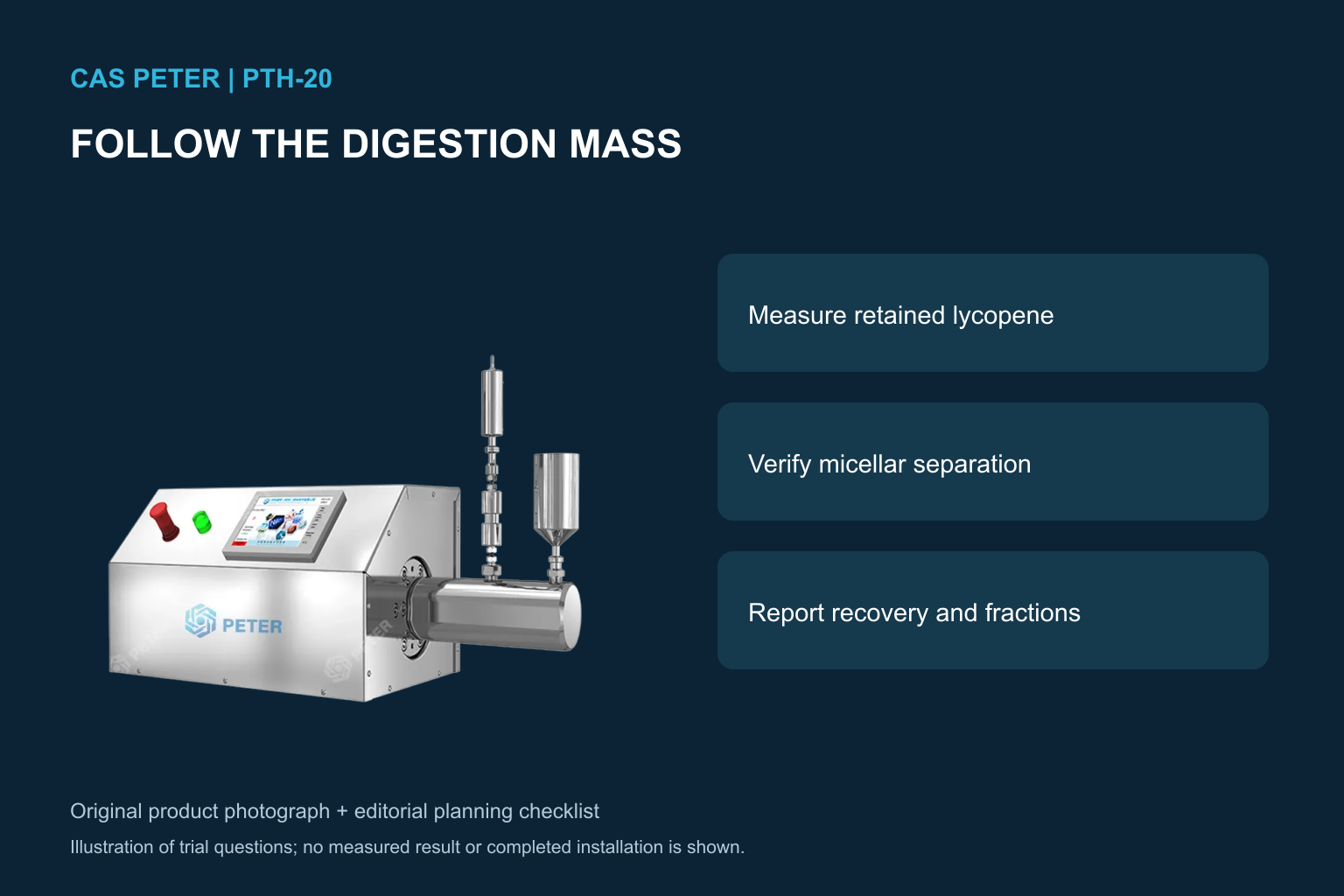
The CAS PETER PTH-20 product page can support an equipment discussion for a representative trial. Confirm feed compatibility, cooling, wetted materials and the required flow with the supplier. The model image is a product reference, not evidence that a particular tomato feed has already been tested or that the published research conditions can be transferred unchanged.
Use the food homogenization guide for broader planning. The article on tomato juice separation and texture addresses physical product behavior, while lutein emulsion bioaccessibility discusses a different carotenoid system. These are complementary topics; neither replaces a tomato-specific lycopene digestion measurement.
Make the final comparison reproducible
Repeat the selected condition on independent batches, keeping the analytical sequence balanced between untreated and processed samples. Report variation and recovery limitations, not only the best result. Include raw-material information and every meaningful change between the laboratory trial and the intended production sequence. A single favorable aliquot is a screening observation, not qualification of a manufacturing process.
An inquiry package should contain the tomato material description, solids, formulation, intended output, expected processing sequence and the exact quality endpoint. Include feed samples and the test methods used to judge success. This supports a trial in which equipment, formulation and analysis are aligned around a measurable product requirement.
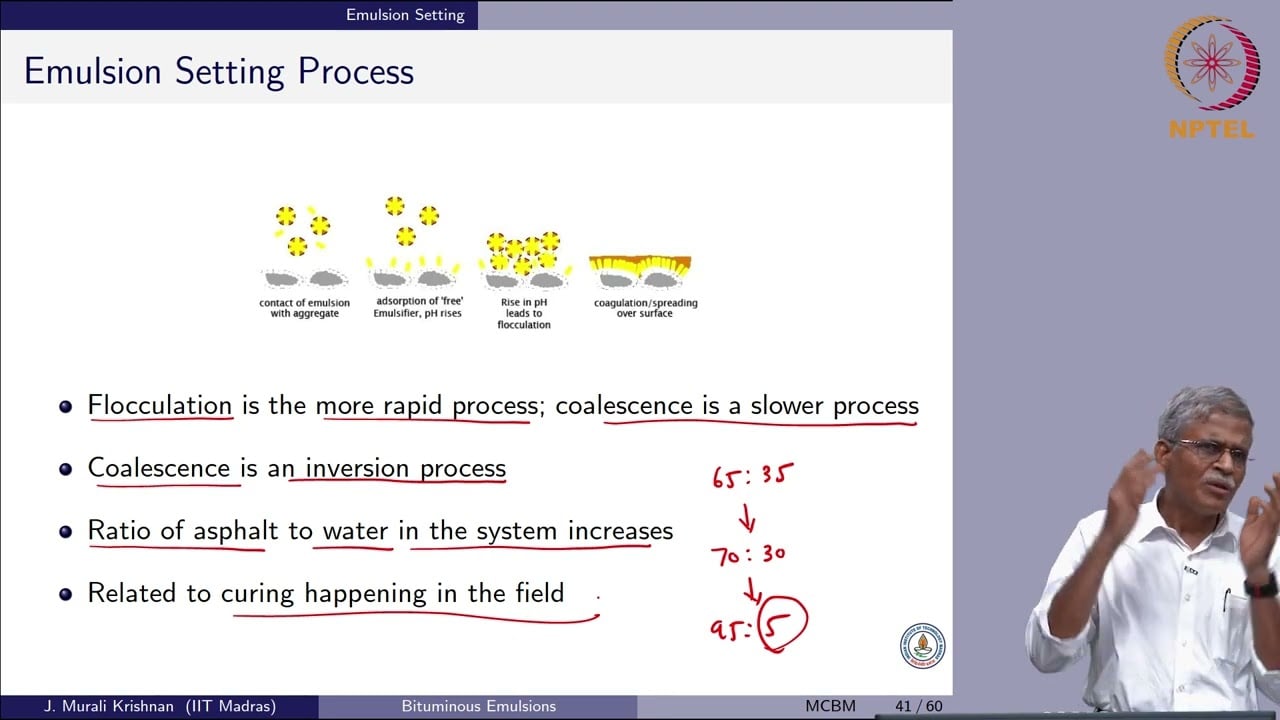
Educational video: understanding emulsified food systems
This neutral NPTEL lesson explains emulsion principles relevant when the tomato formulation includes an oil phase. It provides background for understanding the food matrix; it is not a lycopene digestion protocol and does not supply treatment settings.
Educational source: NPTEL-NOC IITM. Watch the lesson on YouTube.
Frequently asked questions
Will smaller tomato particles always increase lycopene bioaccessibility?
No. Published tomato studies report different directions of change. Homogenization can alter the tissue and fiber network as well as particle size. Measure lycopene retention and a clearly defined digestion fraction in the intended tomato formulation instead of using size as a substitute.
Is an intestinal supernatant automatically a micellar fraction?
No. The meaning depends on the digestion and separation method. Fine solids or oil droplets may remain in a liquid fraction. Define the collected fraction and validate its recovery before labeling the result micellar bioaccessibility or comparing it with another method.
Can an in vitro result support a human absorption claim?
An in vitro digestion result describes the specified laboratory model. It does not by itself establish absorption, clinical benefit or human bioavailability. Report the actual measured endpoint and reserve broader claims for evidence designed to support them.