

Lentil Protein Homogenization: Separate Ingredient Pretreatment from Emulsion Formation
Lentil protein homogenization should be evaluated as two separate operations: treating the hydrated protein ingredient and forming the finished oil-in-water emulsion. A smaller particle size in the protein dispersion does not establish that the final droplets resist flocculation, heating or storage. Keep the emulsification step fixed when comparing protein pretreatments, then repeat the most useful comparison in the intended complete formula. This approach helps a development team decide whether pressure processing improves ingredient availability, droplet formation or actual product stability, rather than attributing every change to a single machine setting.
Define which material passes through the homogenizer
A lentil protein dispersion contains hydrated powder particles, protein aggregates and soluble material. Once oil is added, the system also contains droplets with their own interfacial composition. Measuring either system as though it contained only one type of particle can lead to an incorrect interpretation. Specify whether the treatment occurs before oil addition, after coarse emulsification or at both stages. Each arrangement answers a different development question.
Ingredient pretreatment asks whether changing the aqueous protein changes its subsequent performance under a common emulsification procedure. Processing the complete emulsion asks how a particular formula responds to the emulsification operation itself. Running both operations at once without controls makes it difficult to determine which stage supplied the benefit. It also makes transfer to another factory sequence harder because the receiving line may hydrate and emulsify in a different order.
For broader context, the food homogenization guide describes the relationship between processing and finished food quality. Here the narrower goal is to design a comparison for lentil protein, with a clear boundary between the ingredient and the emulsion it eventually stabilizes.
What the available lentil studies actually establish
The published abstract of Malterre and colleagues’ lentil emulsion investigation reports improved physical and thermal stability for emulsions made using pretreated protein dispersions in a specific concentrated formula. This is evidence for an ingredient pretreatment within a defined formulation and thermal sequence, rather than proof that any lentil beverage will remain stable. Its results support holding the final emulsification procedure and formula under control when comparing pretreatments.
A separate University College Cork research record describes improved solubility, smaller dispersion particles and improved colloidal stability for the particular lentil isolate suspensions examined. This is ingredient-level evidence. It does not establish an interchangeable operating recipe for a different isolate, nor does it demonstrate the stability of every oil-containing formula. The two studies justify a controlled trial, rather than a promise that increasing pressure always gives a better emulsion.
The practical implication is to keep the evidence categories separate in a development report. Label solubility as a measured ingredient property, dispersion size as a particle result and emulsion stability as a finished-system result. A purchasing specification should identify which of these the supplier is expected to demonstrate.
Fix hydration before comparing pretreatments
Start with one documented lot of protein powder. Record its declared protein content, moisture basis and any added ingredients. Prepare all comparison batches on the same basis: equal powder mass is different from equal protein mass when comparing isolates and concentrates. If a future project compares ingredient grades, make that a distinct experiment rather than introducing it during pressure screening.
Use the same water, pH adjustment sequence, hydration time and mixing conditions. Keep a retained portion of the untreated dispersion. Check whether large visible powder lumps remain before a machine trial; poorly wetted feed can obscure the effect of the later treatment. An apparently better result may simply reflect longer hydration or warmer preparation in one batch.
Document the preparation timeline as well as the final composition. A batch held overnight before testing and another processed immediately are not equivalent controls. Where preparation cannot be synchronized, record the actual hold and include a matched unprocessed sample so the comparison remains interpretable.
Separate ingredient measurements from emulsion measurements
The following table is an editorial trial-planning framework, informed by the two research sources above. It contains no universal acceptance limits. Set limits from the intended food application and the repeatability of the chosen methods before examining the results.
| Stage | Question to answer | Useful comparison | Interpretation to avoid |
|---|---|---|---|
| Hydrated ingredient | Did preparation leave large undispersed material? | Matched hydration control and microscopy | Calling every coarse particle an oil droplet |
| Pretreated ingredient | Did dispersion and measured soluble protein change? | Common separation method and full size distribution | Calling a smaller dispersion completely dissolved |
| Fresh emulsion | Did the same emulsification operation form different droplets? | Fixed oil phase, protein basis and emulsification sequence | Crediting pretreatment when oil loading also changed |
| Final thermal step | Did the complete formula form flocs, oil or sediment? | Before-and-after observations at matched temperature | Treating ingredient dispersion results as product heat stability |
| Storage | Does separation progress and can the product redisperse? | Defined containers, fill and sampling dates | Approving shelf life from a single fresh measurement |
For soluble protein measurements, use a consistent separation and assay procedure. State what enters the measured fraction. Changing centrifugation conditions or sample pH can change the operational definition of solubility, so the number should always travel with its method. A transparent supernatant alone does not quantify the amount of usable protein.
For dispersion size, preserve the full distribution and inspect a coarse fraction where present. A mean can conceal a small population of large particles. Keep dilution and measurement preparation fixed, and document any sonication used by the analytical instrument because it can alter the sample being evaluated.
Build the emulsion comparison around a fixed formula
Prepare emulsions from untreated and pretreated protein dispersions using the same oil, oil loading, aqueous composition and coarse premixing procedure. Use the same protein basis, rather than adjusting one sample until it looks better. Record whether salts, carbohydrates, flavor ingredients or other emulsifiers are present. If these change, the experiment becomes a formula comparison instead of a clean pretreatment comparison.
Run the same final emulsification procedure for the first comparison. Sample before and after that operation. This gives the team a way to distinguish a useful ingredient change from a difference introduced during droplet formation. Later optimization can vary the final emulsification conditions, but the initial comparison needs a stable reference.
When interpreting particle-size results, check for protein aggregates as well as droplets. Microscopy can help reveal whether a large-size population is made of flocs, individual droplets or undispersed solids. A controlled diagnostic dilution may be useful, but record its composition and do not assume that a diluted sample represents stability in the original concentrated product.
Follow the product through its actual thermal sequence
If the product will be heated after emulsification, qualify that sequence. Compare the same samples immediately before heating, after cooling to a common measurement temperature and during the intended storage period. Record heating and cooling histories, including any holding period. A cold fresh emulsion can behave differently from the same formula after its complete manufacturing sequence.
Observe more than a cream layer. Check sediment, visible flocs, free oil and changes in pouring behavior. Photograph containers using a consistent background and fill height. If samples are mixed before analysis, keep a separate undisturbed container for separation observations; otherwise the sampling process can erase evidence of instability.
A lentil dispersion that becomes more structured may be useful in a spoonable food yet unsuitable for a drink that must pour easily. Define the product format first. Do not reject or approve viscosity changes without comparing them to the intended use, filling requirements and consumer preparation instructions.
Read apparently conflicting results without forcing a winner
If dispersion size falls but emulsion separation increases, examine whether the final formula, droplet population or thermal history changed. Do not assume that the initial ingredient measurement was wrong. The two endpoints describe different systems and can legitimately move in different directions. Repeat the comparison with controlled preparation before escalating pressure.
If fresh droplets are smaller but the coarse population grows during storage, investigate aggregation and coalescence with suitable methods. These mechanisms call for different formulation questions. A result that changes after diagnostic dilution deserves further investigation rather than a quick claim of irreversible droplet growth.
If the treated ingredient shows better measured solubility but no useful finished-product benefit, the extra processing may not be justified for that application. Keep the result in the record: it can explain why a laboratory ingredient improvement did not translate into commercial value. The most useful trial identifies the lowest process burden that meets the actual product requirements.
Match an equipment discussion to the validated sequence
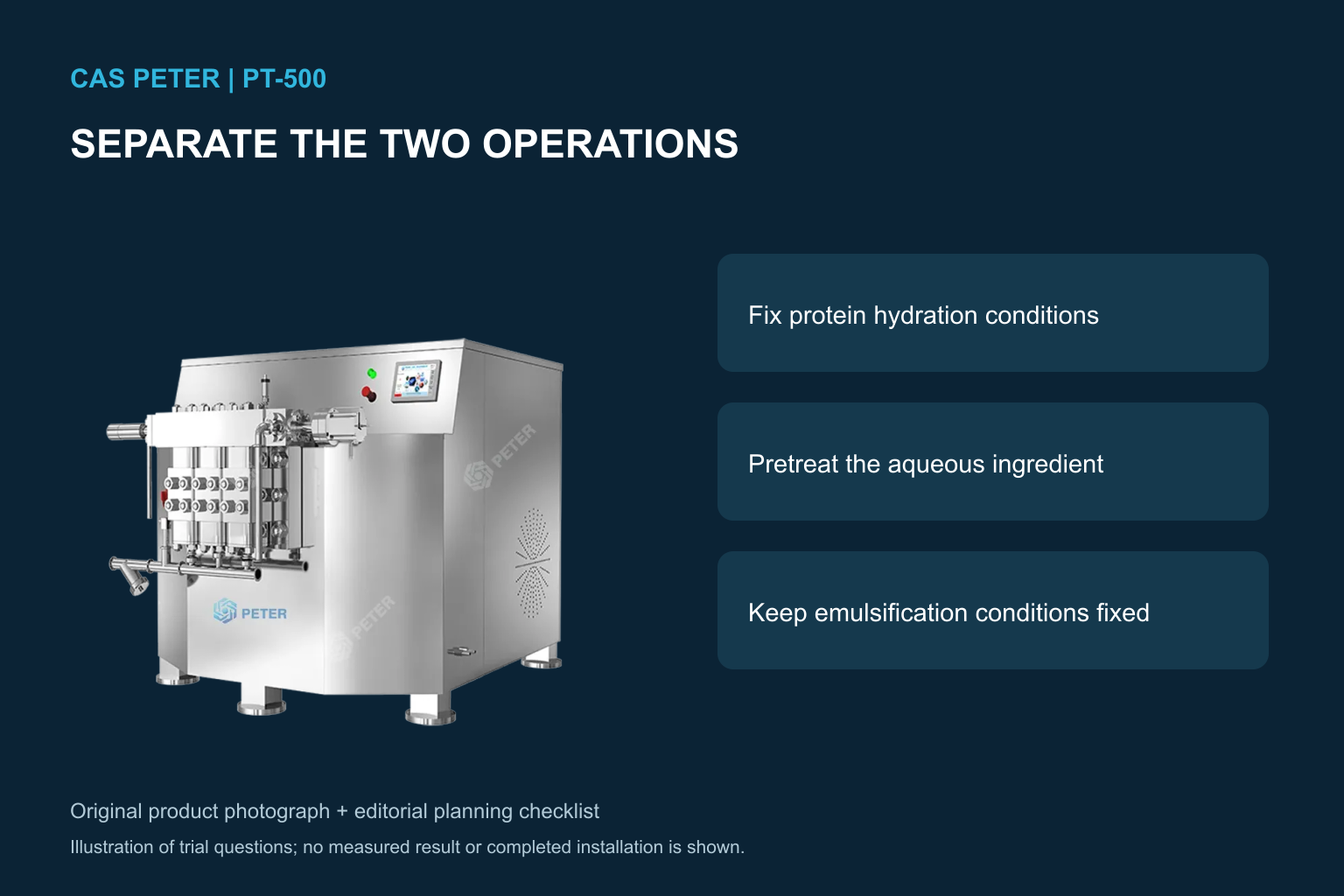
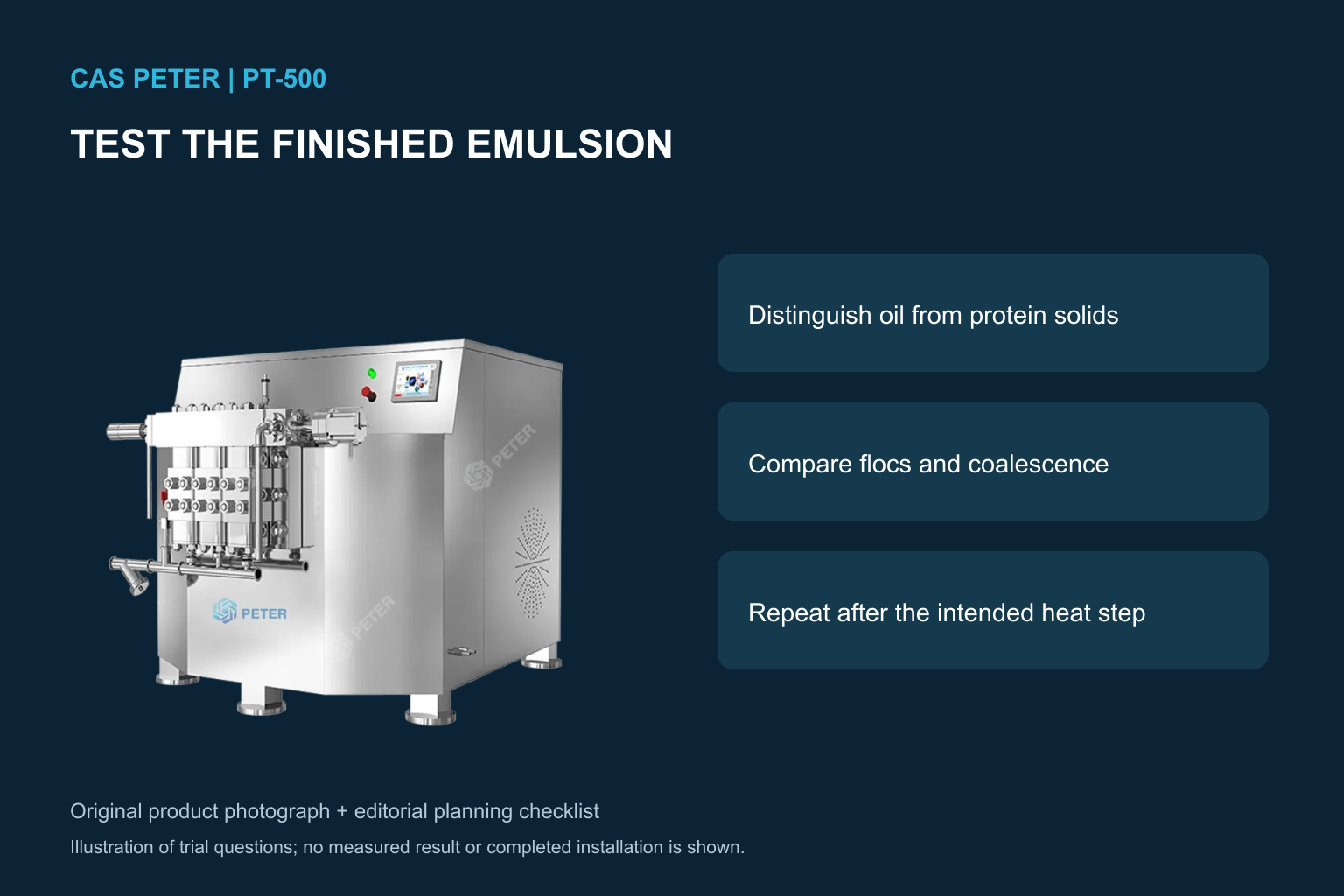
The CAS PETER PT-500 product page provides a starting point for discussing a production-oriented homogenizer configuration. Its inclusion here identifies a real product in the catalog, not a claim that a lentil formula has already been validated on that model. Confirm the intended feed, pressure range, flow under the actual viscosity, temperature management and cleaning requirements with the supplier before selecting a configuration.
Provide the supplier with representative material and the agreed sequence: hydration, ingredient pretreatment, emulsification, heating and storage evaluation. Specify whether the line needs one or two pressure-processing operations. Ask how sampling, cooling and material recovery will be handled so a demonstration can produce the same evidence required by the development protocol.
Keep procurement outcomes separate from laboratory observations. A short trial can support a process-development decision; it cannot by itself establish long-term production capacity, hygienic acceptance or finished-product shelf life. Those claims need their own documented verification under the intended conditions.
Learn the emulsion principles behind the comparison
The following NPTEL lesson introduces emulsion concepts relevant to droplet formation and stability. It is background education, not a lentil processing recipe or a validation of CAS PETER equipment.
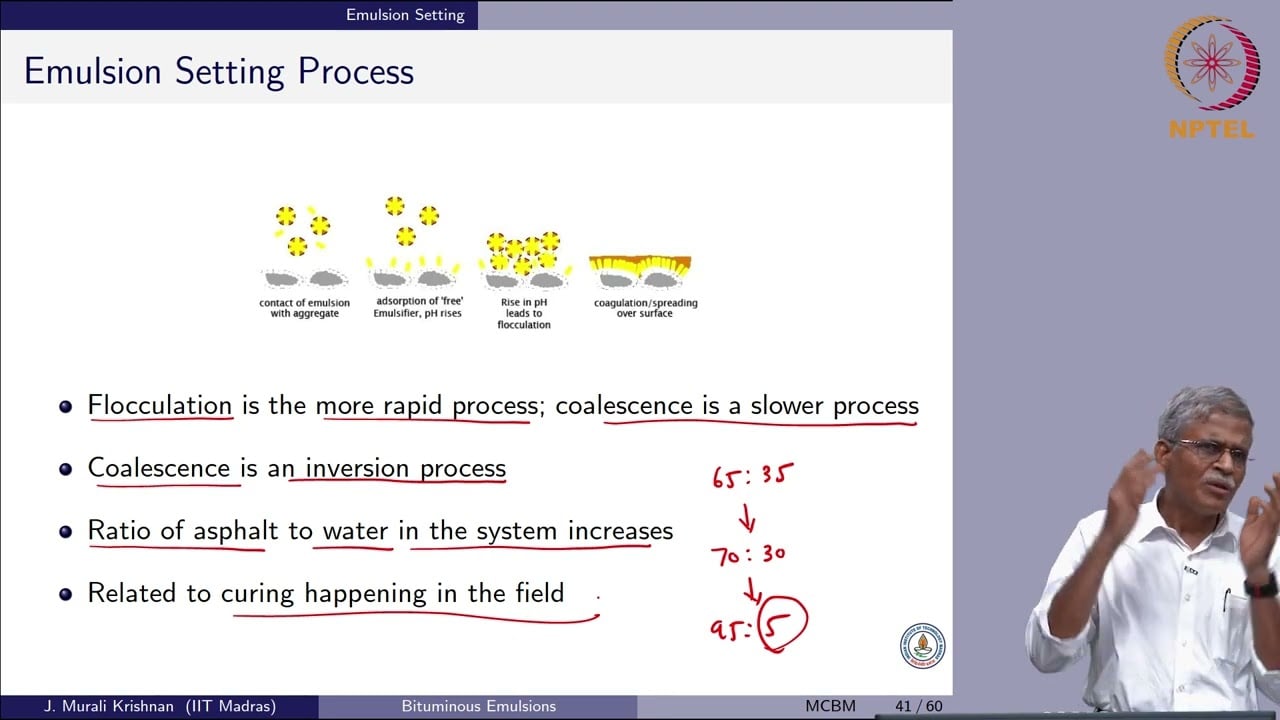
Educational source: NPTEL-NOC IITM. Watch the lesson on YouTube.
Related reading includes pea protein dispersion versus measured solubility and testing a protein ingredient inside the finished formula. These complement the lentil comparison without replacing measurements on the actual ingredient and product.
Questions about lentil protein homogenization
Should the protein dispersion or the finished emulsion be homogenized first?
Choose the sequence from the development question. To evaluate ingredient pretreatment, process the hydrated protein first and keep subsequent emulsification fixed. To evaluate droplet formation, compare a fixed complete formula. If both stages are used, include controls that distinguish their contributions.
Does improved lentil protein solubility prove a stable emulsion?
No. Measured solubility describes an ingredient under a defined analytical procedure. The finished emulsion also depends on oil loading, interfacial behavior, other ingredients, heating and storage. Verify droplet behavior and separation in the complete product before accepting the process.
Can published lentil study settings be used as a production specification?
They can inform trial planning, but they are not a transferable equipment guarantee. Ingredient history, composition, machine configuration and thermal sequence must be assessed with representative material. Select operating conditions from the resulting product evidence and confirmed equipment limits.