

Oat Beta-Glucan Homogenization: Why Viscosity Can Change
Oat beta-glucan homogenization can change viscosity through effects on the polymer-containing system, its particles and the surrounding formulation. The direction and magnitude of the change depend on the ingredient, hydration, enzyme and heat history, solids content and processing conditions. A thinner sample is therefore not automatically better processed, and a thicker sample is not proof that beta-glucan was preserved. A useful trial compares viscosity under matched measurement conditions and examines the relevant molecular, particle and storage evidence. This guide focuses on designing that comparison without confusing whole-oat beverages with isolated beta-glucan solutions.
Define which oat system is being processed
A purified beta-glucan solution, an oat-bran suspension and a formulated oat beverage contain different combinations of soluble polymers, starch, protein, oil and insoluble material. Their responses should not be treated as interchangeable. Begin the trial brief with the ingredient identity, composition information and preparation method.
Specify the target product behavior. A drinkable formulation, a thickened ingredient and a gel application may require different flow properties. The objective should be expressed using a test method and relevant conditions rather than a statement such as maximum smoothness or minimum viscosity.
For an oat beverage, identify whether the development problem concerns insoluble sediment, droplet behavior, mouthfeel or the beta-glucan-containing liquid phase. More than one can occur together. Keep the acceptance criteria separate so an improvement in one property does not conceal a deterioration in another.
Document preparation before changing homogenization
Record ingredient lot, dry-solids basis, hydration time, mixing order, water composition and starting temperature. Include filtration and the amount of material removed. These preparation steps determine the feed reaching the machine and can change both particle content and the concentration of soluble material.
Enzyme treatment and heating deserve their own records. State which treatment occurred, when it stopped and how that was established for the intended process. Do not assume that a pressure step has inactivated an enzyme merely because a paper reported a result under different conditions.
The original study on enzymatic treatment and microfluidization of oat bran investigated molecular weight, particles and suspension or gel properties in defined systems. It supports measuring several interacting properties together. Its results do not establish a universal response for every oat beverage or a ready-to-use process recipe.
Distinguish viscosity changes from structural conclusions
A viscosity measurement is an observation made under specified conditions. It does not, by itself, identify the molecular event causing the change. Altered polymer properties, particle interactions, concentration, temperature or preparation history may contribute. Define the additional evidence needed before attributing a result to one mechanism.
A Lund University master’s study of oat beta-glucan emulsions measured viscosity, stability and molecular properties after pressure treatment. The work illustrates that different measurements can move in different directions and should be interpreted together. As a student study in a particular formulation, it is supporting experimental context rather than a universal equipment-performance conclusion.
When molecular weight is central to the development objective, use a suitable analytical method and explain how the beta-glucan fraction was prepared for that measurement. State the sample fraction represented. A whole-suspension viscosity result and a measurement on an isolated soluble fraction should not be described as if they characterize exactly the same material.
Match temperature and shear conditions
For a non-Newtonian suspension, the apparent viscosity can depend on shear rate and measurement history. A single number without temperature, instrument geometry and operating conditions is difficult to compare. Use a defined measurement procedure and retain the flow curve where that is the appropriate description of the material.
Control the time between preparation, processing and measurement. State any rest period or pre-shear procedure, and use it consistently. If one sample is measured while still warm and another after cooling and resting, the difference cannot be attributed confidently to the homogenization condition alone.
The educational fluid-mechanics lecture below, listed in LearnChemE’s teaching resources, explains non-Newtonian behavior. It supports the measurement principle. It is not an oat-specific experiment and does not supply an acceptance threshold for beverage texture or beta-glucan integrity.
| Comparison field | Record needed | Common interpretation error |
|---|---|---|
| Feed composition | Ingredient, solids and removed fractions | Comparing a dilute sample with a concentrated one |
| Preparation history | Hydration, enzymes, heating and hold times | Attributing a preparation change to pressure |
| Rheology | Temperature, shear conditions and time | Treating one unmatched viscosity number as definitive |
| Particle behavior | Representative distribution and microscopy where useful | Assuming smaller particles prove polymer preservation |
| Beta-glucan evidence | Appropriate content and molecular characterization | Inferring molecular weight from appearance |
| Storage response | Defined conditions and repeated observations | Calling an immediate result a shelf-life study |
This is a qualitative comparison framework. It combines the experimental questions raised by oat-system research with standard measurement discipline; it does not prescribe numerical product specifications.
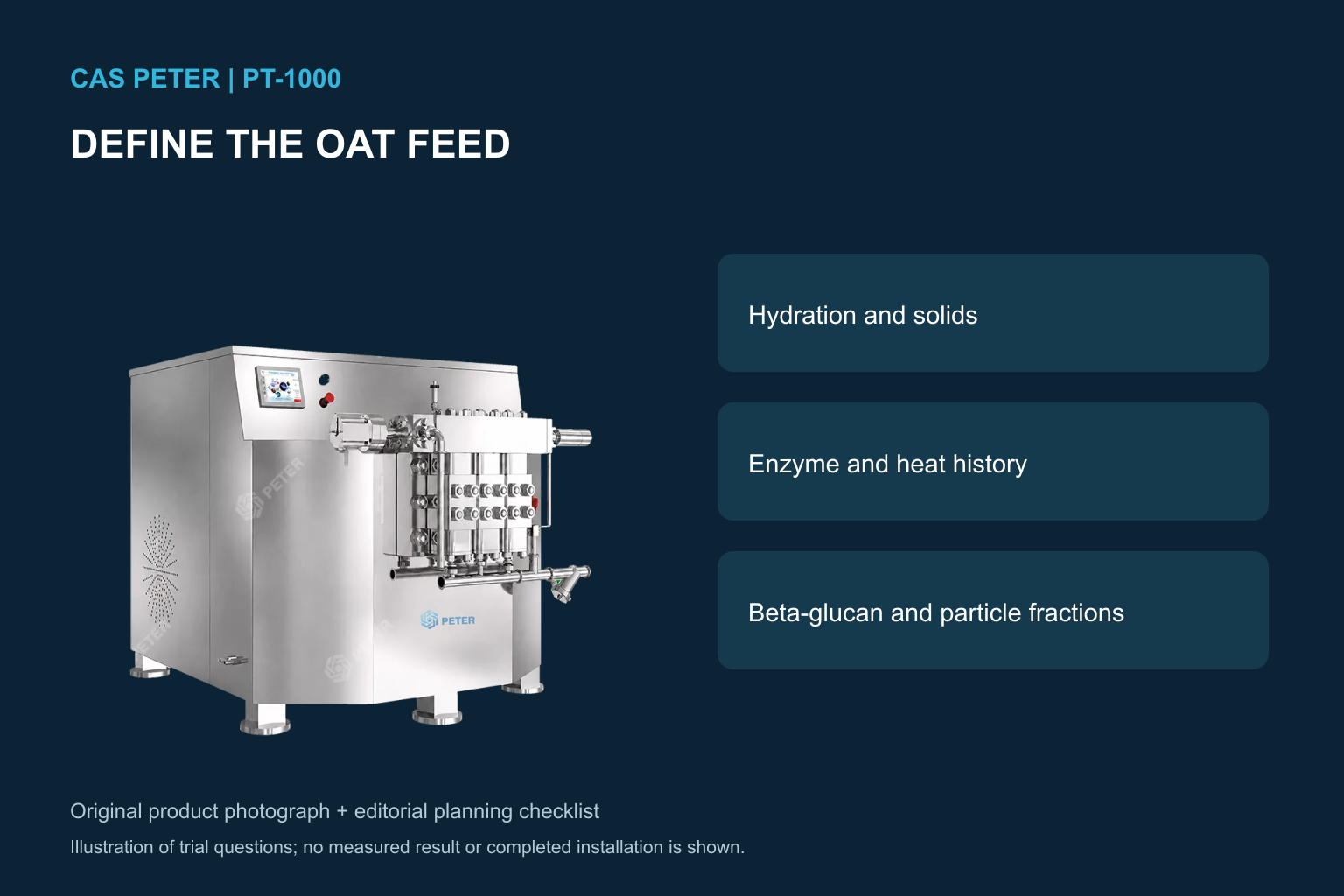
Screen processing without losing the comparison basis
Confirm feed compatibility and an approved equipment window before screening pressure or exposure. Keep the formulation, solids, starting temperature and preparation sequence controlled. Select enough intermediate sampling points to see whether the response continues, levels off or changes direction.
Describe the actual flow arrangement. A complete separated batch pass and a nominal recirculation turnover do not demonstrate identical exposure for every fluid element. Record the arrangement and collection method so the experiment can be repeated and discussed with a supplier.
Measure discharge and collection temperatures as well as the feed. Keep cooling and hold times in the record. If cooling capacity changes between conditions, pressure and thermal exposure are no longer independent. A process comparison should explain that interaction rather than presenting pressure as the only variable.
Read particle and viscosity results together
If the particle distribution becomes finer while viscosity falls, test whether the change meets the intended product requirement. Do not call it a failure solely because the sample became thinner, or a success solely because the distribution became smaller. The acceptable combination depends on the development objective.
If viscosity rises, review temperature, starch and protein history, hydration and the analytical method before assigning the cause. Whole-oat systems contain several components capable of changing flow behavior. Use complementary observations to narrow the explanation rather than choosing a mechanism from a single instrument value.
The site’s guide to starch homogenization trials is useful for separating starch-related questions from beta-glucan questions. The article on plant-protein trial design addresses another component of many oat formulations. These complementary topics do not make a whole-oat beverage equivalent to an isolated protein or starch system.
Separate processing from food-safety claims
High-pressure homogenization is a flowing mechanical treatment. High hydrostatic pressure processing is a different technology, and studies using one should not be described as proof for the other. Check the equipment and treatment description in a paper rather than relying on the words high pressure in its title.
A texture or stability result does not establish microbial safety. Any intended pasteurization, sterilization or storage claim requires an appropriate validated process and product-specific evidence. This article concerns physical-process development and does not provide a food-safety schedule.
Likewise, retain a distinction between measured beta-glucan properties and nutritional or health claims. A formulation’s molecular and physical characteristics can be part of a development investigation, but an equipment trial alone does not establish a permitted label statement or a human-health outcome.
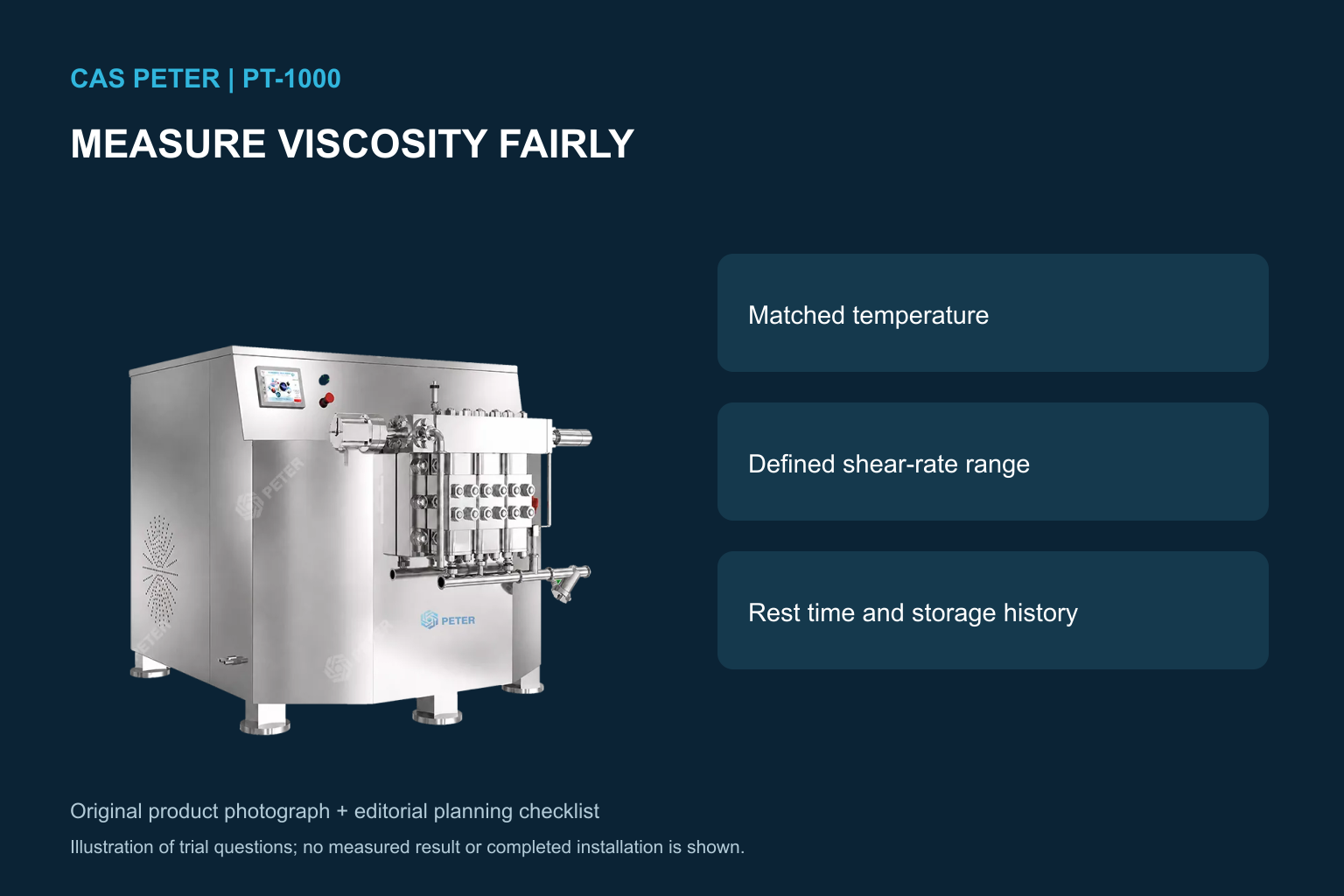
Include recovery and the intended storage period
Record how much material enters processing and how much is recovered, sampled, retained or removed. If a filtration step improves appearance, report the quantity and composition implications of the rejected fraction where relevant. A smoother product achieved by removing material is a different process result from dispersing the same full formulation.
Store representative samples under defined conditions and inspect the properties needed for the project. These may include sedimentation, phase appearance, redispersion behavior and viscosity under the same test method. Decide in advance whether the sample should be measured as stored or after a defined mixing step.
Do not turn a short screening study into a commercial shelf-life statement. Report the actual observation interval, container and temperature. If the development objective includes a later heating or blending step, repeat the relevant measurements afterward rather than assuming the initial homogenized sample represents the finished beverage.
Prepare a production-oriented trial request
The CAS PETER PT-1000 production model provides a starting point for discussing industrial processing. Its public page gives differing throughput figures in the summary and technical table. Obtain a written rating for the proposed configuration, formulation, operating pressure and flow arrangement rather than treating either figure as a guaranteed product output.
Share the oat ingredient system, preparation history, solids, measured flow behavior, coarse-feed information, sample availability and acceptance tests. Ask the supplier to confirm compatibility, temperature and cooling provisions, recovered quantity and sampling access. The model photograph in this article is not evidence that this specific oat formulation has been processed.
For general context, use the food homogenization guide. The trial handoff should state the formulation tested, demonstrated operating window, measured rheology, particle and beta-glucan evidence, recovery and unresolved limits. That package supports a practical decision about the next scale more clearly than a single pressure and viscosity pair.
Educational video: interpreting non-Newtonian viscosity
Victor Ugaz’s introductory fluid-mechanics lecture, linked by LearnChemE, explains the difference between Newtonian and non-Newtonian flow. It helps clarify why measurement conditions belong beside an oat-suspension viscosity result. It does not demonstrate oat processing or recommend a machine setting.
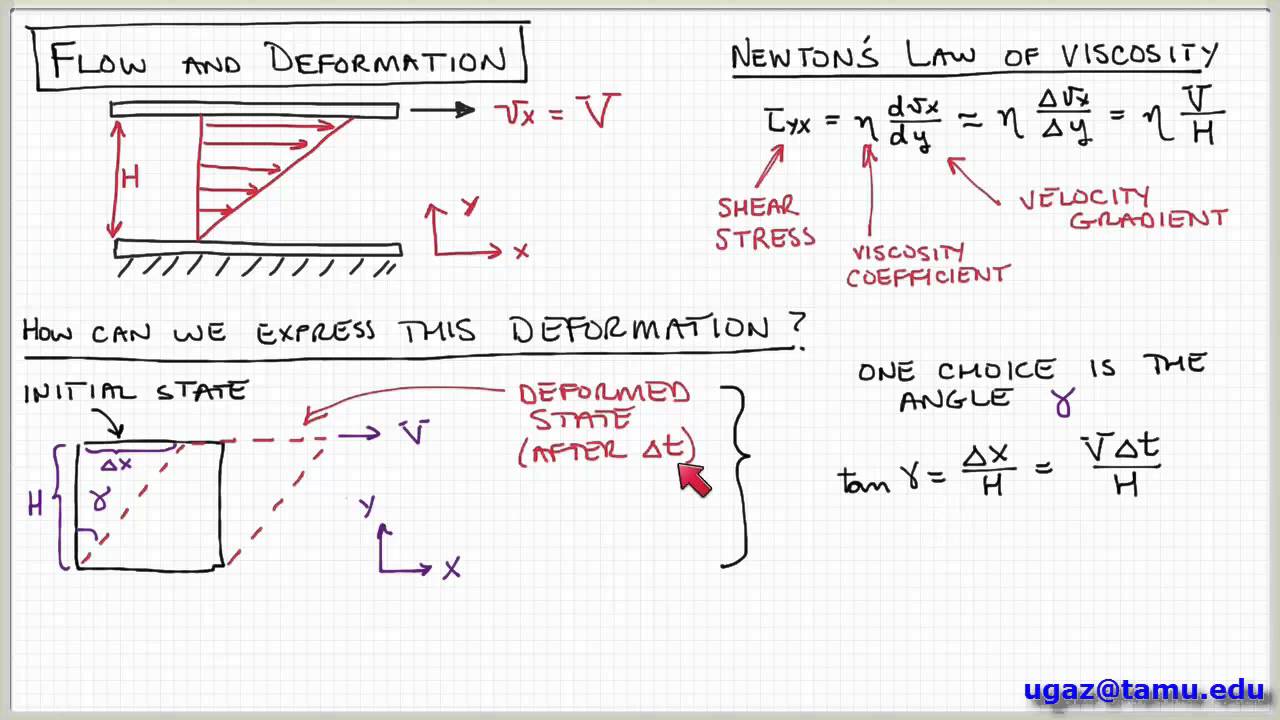
Educational source: Victor Ugaz. Watch the lesson on YouTube.
Frequently asked questions
Does lower viscosity prove beta-glucan degradation?
No. A whole-formulation viscosity change can have several causes. Use appropriate molecular and composition evidence if the claim concerns beta-glucan structure, and report the sample fraction examined.
Can hydrostatic-pressure results set homogenizer conditions?
No. The technologies have different process histories. Confirm which treatment a study actually used and design a representative trial for the equipment being evaluated.
Is one viscosity reading enough to compare oat trials?
Usually it is insufficient without the measurement conditions. Match temperature, shear conditions, preparation history and timing, and retain a flow curve when that is the appropriate description of the material.