

High-Pressure Homogenization of Plant Protein: A Trial Guide
High-pressure homogenization of plant protein should be evaluated against the function the ingredient must perform in the finished formulation. A reduction in aggregate size may improve a dispersion, but it does not automatically establish greater solubility, better emulsification or better stability after storage. Begin with a documented ingredient and hydration method, compare justified processing conditions within the approved equipment window, and measure the relevant functional result alongside recovery and temperature. Results for one pea-protein preparation are not a universal recipe for soy, oat, faba-bean or other plant ingredients.
This guide focuses on designing an ingredient-development trial. For the broader flow-through process and equipment mechanism, see the high-pressure homogenizer working-principle guide. The purpose here is to connect a processing change to a reproducible formulation result rather than select a pressure from a published headline.
Start with the ingredient and its processing history
Record the botanical source, ingredient type, supplier lot, composition and the preparation history available from the supplier. A concentrate, a commercial isolate and a laboratory-extracted protein preparation can differ substantially before they enter the homogenizer. Do not assume that matching the protein percentage makes them interchangeable.
Keep the distinction between the purchased ingredient and the dispersed feed explicit. Record the actual addition level, water or buffer composition, pH, mixing sequence and holding conditions. If a formulation contains oil, salts, sugars or other ingredients, identify whether the homogenization trial is on the protein dispersion alone or the complete formulation.
A primary study on the technological functionality of native pea proteins investigated a defined extracted preparation and compared several properties. Its discussion highlights differences from commercial ingredients and other treatments. That context matters when interpreting a reported improvement; the same pressure setting does not establish the same starting structure or outcome.
Define the end-use question before choosing the test
The development objective may be reduced settling in a beverage, a more useful emulsifying ingredient, improved foaming behavior or a different texture in a formulated product. These are related but separate questions. Select the primary acceptance attribute and the method used to assess it before comparing machine conditions.
A favorable result in a simplified laboratory test can help screen conditions, but the finished application still needs its own confirmation. An ingredient that performs well at one pH or concentration may behave differently after dilution, heating or the addition of other formulation components. Preserve the limits of the screening experiment in the report.
Avoid reducing the decision to “maximum functionality.” Write a concrete question such as whether a specified formulation shows acceptable separation behavior after its intended handling. Then identify the supporting measurements needed to explain the result without treating each supporting number as a separate product claim.
Control hydration and feed preparation
Document how powder is added, wetted and mixed before high-pressure treatment. Keep the holding time and feed temperature consistent across trial conditions. A difference in hydration history can alter the material presented to the machine and make a process comparison difficult to interpret.
Check that the feed is suitable for the proposed configuration. Obtain the supplier’s limits for feed particles, viscosity and other relevant properties, and confirm that the inlet arrangement can supply the material consistently. Increasing pressure is not a general remedy for an unsuitable or poorly supplied feed.
The guide to viscosity, solids and feed particle size explains these capacity considerations. In the trial record, distinguish a feed-preparation problem from a result obtained under stable, repeatable processing conditions.
Measure different functions without confusing their meanings
| Development question | Measurement to define | Interpretation to avoid |
|---|---|---|
| Did the dispersion become finer? | Comparable size distributions with fixed sampling and preparation | Assuming every smaller particle is dissolved protein |
| Did measured solubility change? | A named separation and protein-assay method at a stated pH | Comparing percentages produced by different analytical definitions |
| Does the ingredient support the intended emulsion? | A controlled formulation and emulsification test with an agreed endpoint | Inferring finished-product stability from ingredient size alone |
| Did foaming or texture change? | A repeatable application-relevant method and observation interval | Calling one favorable property an improvement in all functions |
| Is the useful output acceptable? | Recovered quantity meeting the agreed quality requirements | Counting unaccepted material or unmeasured losses as useful product |
This is a proposed development-planning table. The methods and numerical limits must be established for the actual ingredient and application. It is not a universal plant-protein specification.
Keep particle size separate from measured solubility
Particle-size measurements describe the population represented by the chosen method. A solubility test generally uses its own sample preparation, separation and analytical definition. State those details rather than assuming that an apparently uniform dispersion contains only dissolved material.
A multiscale study of commercial pea-protein ingredients under homogenization found ingredient-dependent responses. For some preparations, substantial particle-size changes did not produce a comparable solubility change. That result supports measuring the two attributes separately; it does not establish a universal response for all protein ingredients or equipment.
For a size comparison, retain the method, distribution basis, dilution, temperature and preparation conditions. The DLS versus laser-diffraction guide explains why different instrument outputs cannot simply be exchanged. If filtering or analytical dispersion changes the sample, document its effect on the question being assessed.
Evaluate emulsification with a controlled formulation
If emulsification is the main objective, keep the test formulation and preparation method stable while screening the protein treatment. Record the oil phase, ingredient quantities, pH, mixing history and conditions under which the result is measured. Otherwise, an apparent improvement may come from a changed formulation rather than the protein-processing step.
A study comparing ultrasound and high-pressure modification of pea protein isolate evaluated several functional attributes rather than relying on a single size measurement. Its selected conditions apply to its own material and methods. Use the research to identify relevant test categories, not to transfer its optimum directly into a factory recipe.
Follow the emulsion beyond its initial appearance when that matters to the application. Define the observation period and relevant handling challenges. A freshly produced sample can look acceptable while later measurements reveal a different practical result.
Record the complete thermal and pass history
Document feed, discharge and post-cooling temperatures at defined locations. A cool receiving container does not describe every exposure upstream. Establish the permitted product window and the equipment’s approved operating conditions before the trial, then retain the measured history alongside the functional results.
Also specify what a pass means. A complete transfer into a separate receiving vessel differs from tank recirculation, where portions of material have different exposure histories. Equal nominal turnovers do not prove that all material received the same treatment. Keep the arrangement unchanged during an initial comparison where practical.
The site’s temperature-rise guide and processing-arrangement comparison provide context. Pressure, flow, temperature and exposure history belong together in the trial record.
Compare useful output, not just percentages
Define the quantity that meets the chosen requirements after processing and any included downstream operation. Recovered concentration, accepted mass and elapsed processing time answer different questions. Use the same reporting boundary when comparing conditions.
Consider an illustrative screen with 100 kg of feed in each condition. Condition A provides 92 kg of recovered material meeting the agreed application test, while condition B provides 86 kg. Even if B has a more favorable size statistic, it produces less accepted material in this example. Investigate the quality and recovery tradeoff instead of selecting from size alone.
These figures are hypothetical arithmetic, not CAS PETER results. If a reported functional percentage uses a different denominator, preserve its definition and report the recovered amount separately. Do not combine unrelated percentages into a single unexplained “efficiency” number.
Check behavior in the next operation and during storage
Carry the candidate treatment into the intended formulation sequence. Heating, cooling, dilution, additional ingredients and storage can expose limitations that were absent in a simplified screen. Keep the next operation defined so a process change is not mixed with an uncontrolled handling change.
Use retained samples and a planned observation schedule appropriate to the development question. Record the container, sample state and preparation before each measurement. If separation appears, observe it before mixing and distinguish that observation from a result measured after a specified redispersion step.
The stability-testing guide provides general principles for such records, although a protein dispersion requires its own methods and acceptance criteria. Short screening does not by itself establish a commercial shelf life, nutritional improvement or microbiological safety.
Prepare a representative trial request
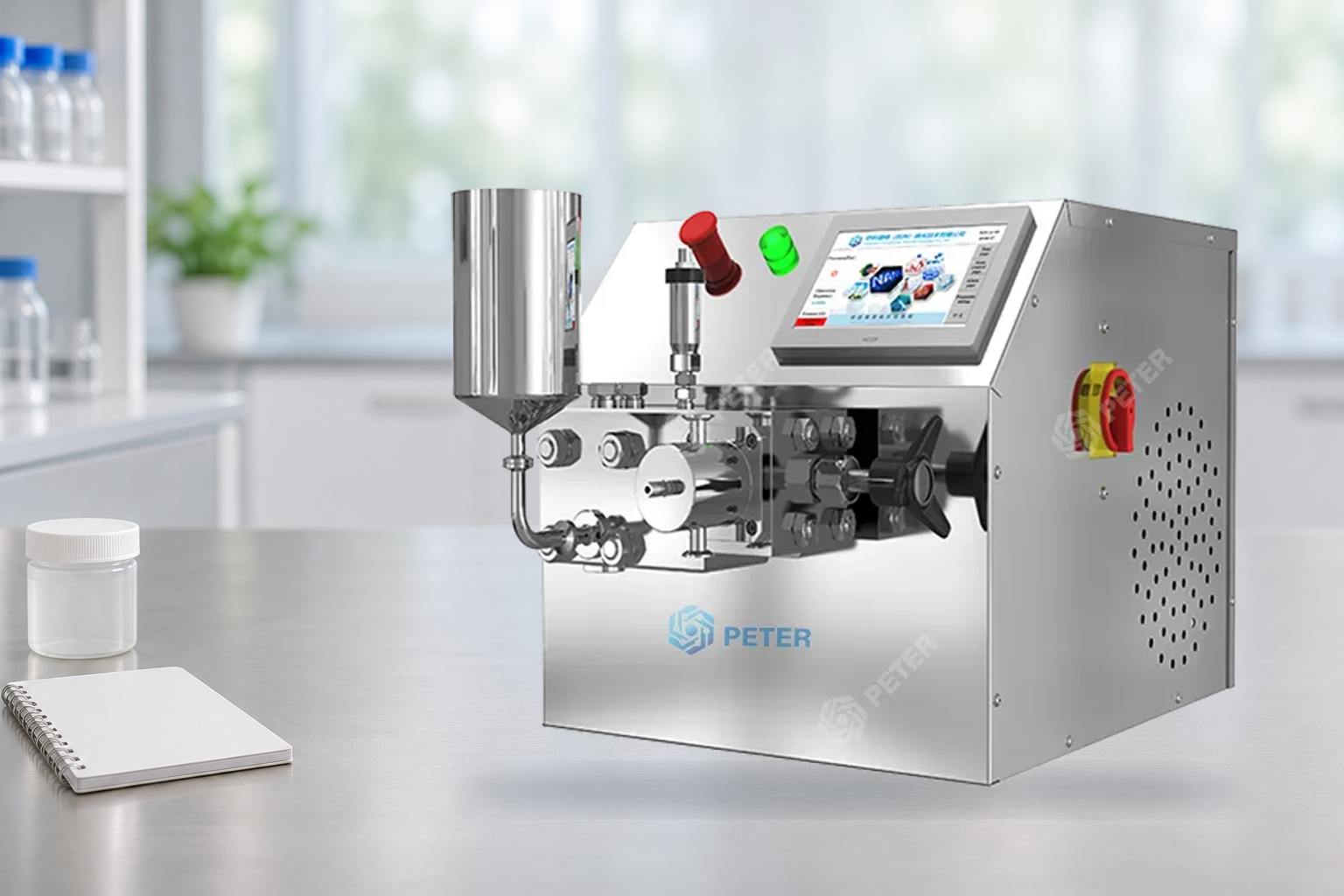
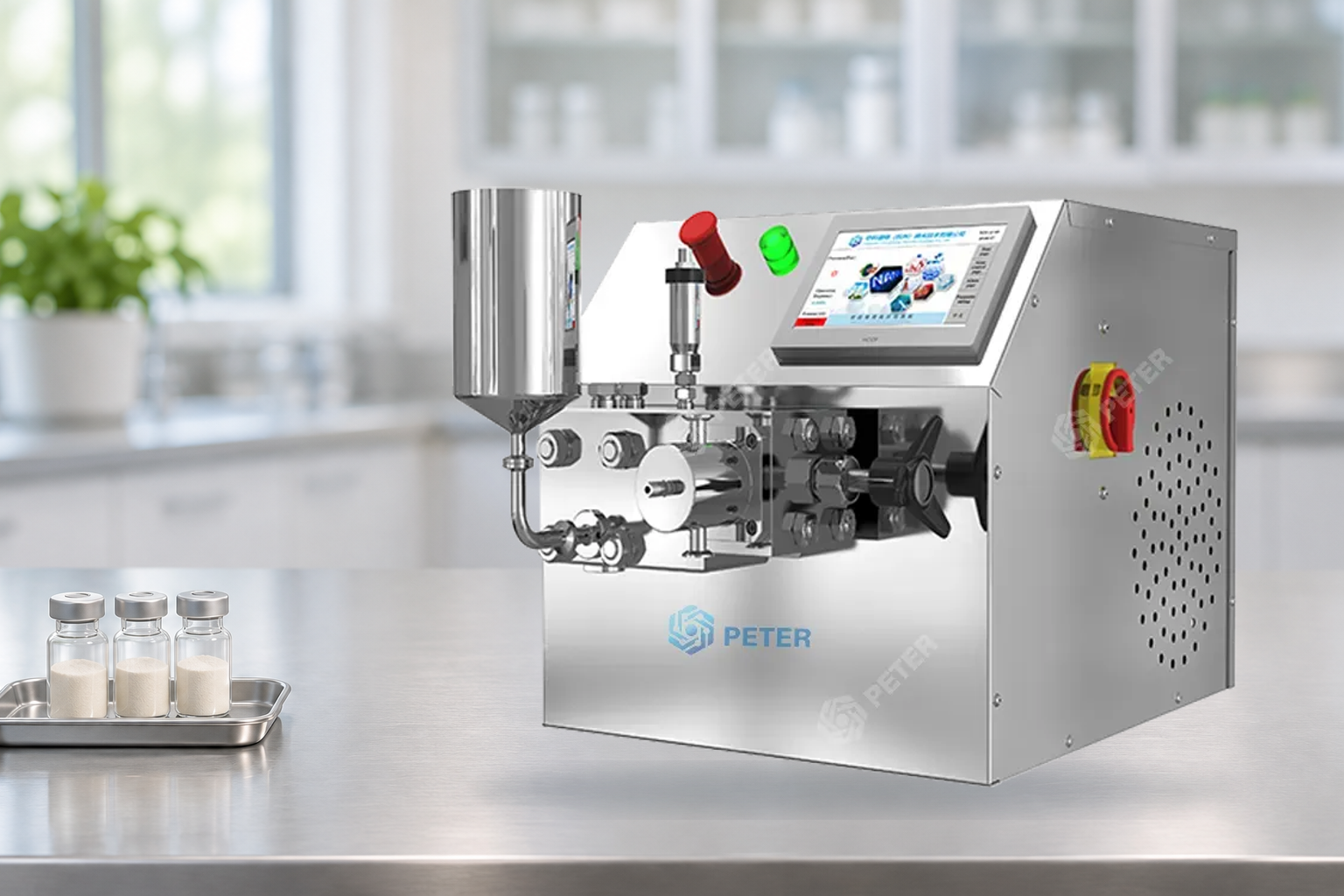
For a CAS PETER PT-20 development trial, provide the ingredient identity, feed preparation, available quantity, required result and permitted thermal conditions. Ask the supplier to confirm feed compatibility, product-contact requirements and the proposed configuration before setting the operating window.
Request the actual pressure and flow records, pass arrangement, temperature history, accepted recovery and analytical methods. Confirm repeatability with representative material before treating a promising screen as a transferable production basis. The equipment photograph identifies the product; it does not document a completed plant-protein trial or food-process approval.
Understand the physical-stability background
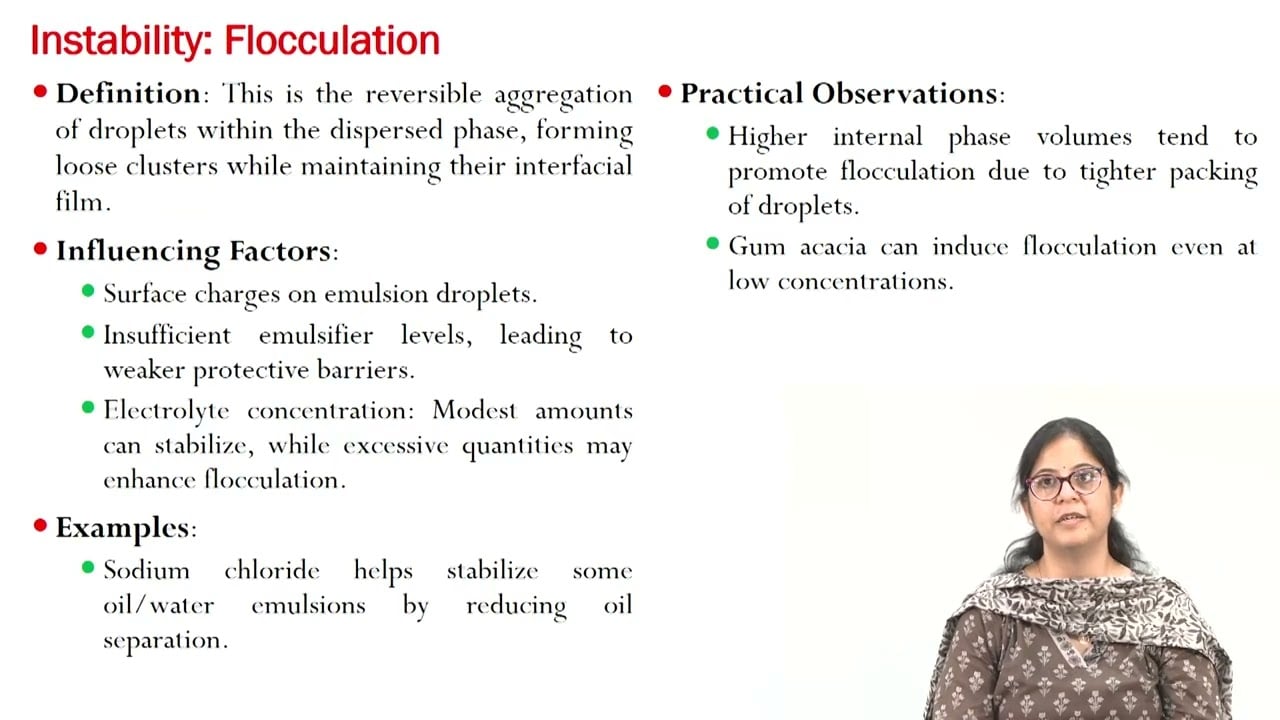
The NPTEL lecture below explains stability of biphasic liquids. It provides background for the emulsion-testing part of this guide, rather than a plant-protein recipe or validation of CAS PETER equipment.
Watch the NPTEL stability lecture.
Frequently asked questions
Does high-pressure homogenization always improve plant-protein solubility?
No. The response depends on the ingredient, preparation and processing conditions. Measure solubility with a defined method rather than infer it from a smaller size reading.
Can settings for pea protein be reused for other plant proteins?
They should not be treated as a qualified recipe. Confirm the actual feed, equipment limits and application result using representative material.
Which pressure gives the best emulsifying properties?
There is no universal optimum. Compare justified conditions using a controlled formulation test, recovery and thermal history within the approved operating window.
Does an acceptable dispersion test prove shelf life or food safety?
No. A physical screening result addresses its stated test conditions. Shelf life, microbiological quality and other product claims require their own appropriate evidence.