

Solid Lipid Nanoparticles: Hot vs Cold Homogenization Trial Design
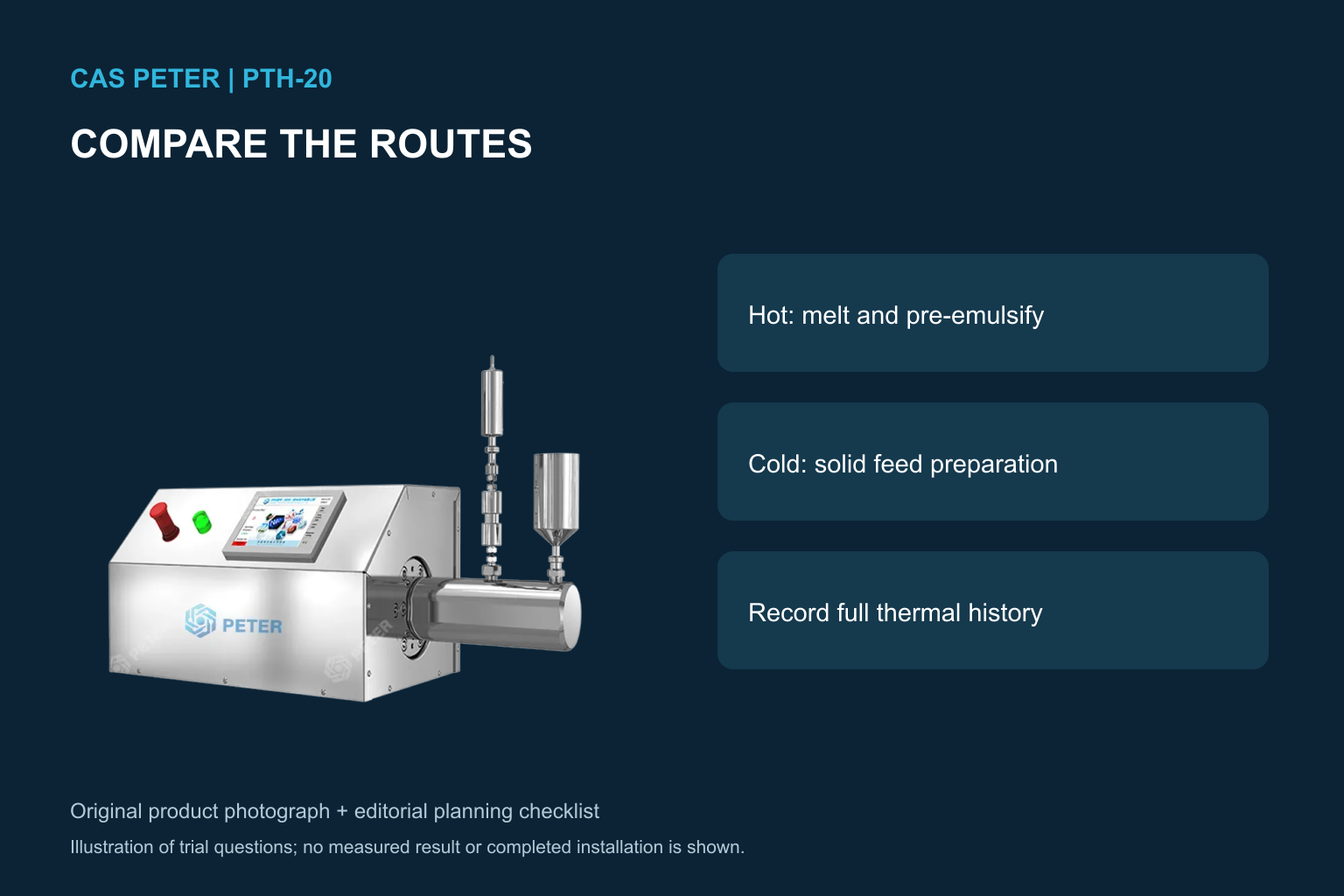
Hot and cold high-pressure homogenization are different routes for preparing solid lipid nanoparticles, with different feed states and thermal histories. In a hot route, a molten lipid pre-emulsion is homogenized before cooling and solidification. A cold route generally includes solidifying and reducing a lipid mixture before homogenizing a suspension under controlled cold conditions. Neither route is automatically superior. The practical choice depends on the active ingredient, lipid behavior, feed compatibility, recovery and stability of the final dispersion. A development trial should therefore compare the whole preparation sequence, rather than choosing a route from pressure or particle size alone.
Start with the particle architecture
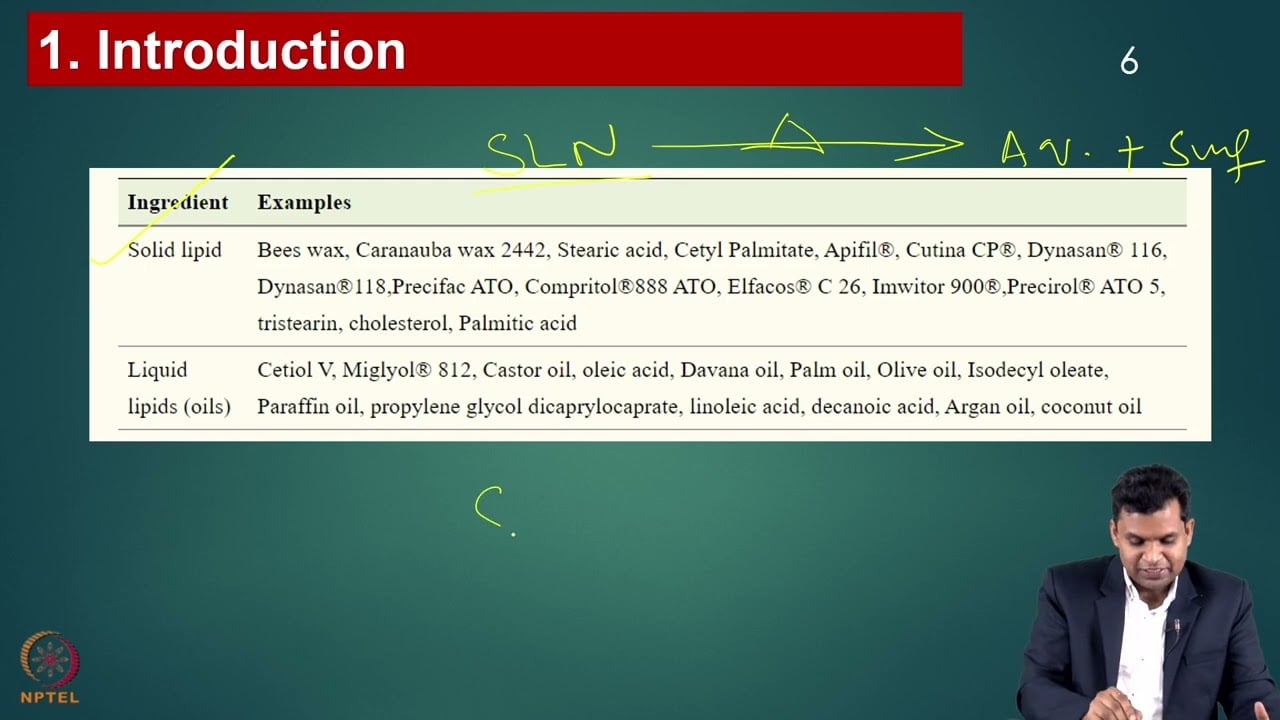
Solid lipid nanoparticles, commonly called SLNs, contain a lipid matrix that is solid under the relevant product conditions. Nanostructured lipid carriers, or NLCs, use a different matrix design involving solid and liquid lipids. Neither term is interchangeable with every formulation called a lipid nanoparticle. Define the composition and the intended structure before selecting an equipment route.
Specify where the active ingredient is expected to reside and how this will be measured. A small hydrodynamic size does not prove successful incorporation. It also does not identify the lipid’s solid state or distinguish all possible colloidal species present in a formulation. Treat size, composition and structure as separate questions.
The published preparation-methods review describes hot and cold homogenization alongside alternative methods. It provides useful route definitions, but the reported operating examples apply to particular formulations. They are not default settings for an untested active ingredient or a CAS PETER machine.
Map the hot route from preparation through cooling
A hot route starts by preparing the lipid and aqueous phases and forming a suitable coarse pre-emulsion. The temperature has to support the intended phase state while remaining compatible with the ingredient and equipment. Record actual temperatures and holding times for both phases, the premix and the homogenizer feed.
The pressure treatment is one stage in that sequence. A stable premix and a controlled feed can make the comparison more reproducible. If the phases have different temperatures or the premix is held for different periods between trials, the feed arriving at the processing head may differ even when the recipe and nominal pressure are unchanged.
Cooling determines the transition from the processed dispersion to the final solid-lipid system. Document how cooling begins, where temperature is measured, and when samples are characterized. An immediate measurement of a still-hot dispersion should not be treated as equivalent to the measurement of the cooled, stored product.
Map the cold route without calling it heat-free
A cold route commonly includes an earlier melt-and-solidify stage, followed by preparation of a fine solid-lipid feed suspension. That earlier thermal exposure still matters. Calling the final homogenization step cold does not establish that the active ingredient avoided heat throughout preparation.
The solid feed must be suitable for the actual flow path. Confirm particle or aggregate characteristics, suspension consistency, minimum volume and materials compatibility with the supplier. A cold route selected to protect an ingredient can introduce another practical difficulty if its coarse feed cannot be processed safely and reproducibly.
Also verify the temperature history during homogenization. Record feed and outlet conditions and the cooling arrangement. A cold starting vessel does not prove a cold processing exposure. Keep the confirmed equipment temperature range distinct from the formulation’s desired temperature and identify any configuration changes needed before a trial.
| Decision field | Hot-route question | Cold-route question |
|---|---|---|
| Active ingredient | Is the full heated exposure acceptable? | Is the earlier melt stage acceptable? |
| Feed state | Is the pre-emulsion reproducible? | Is the solid suspension compatible? |
| Thermal control | Can the phases and premix stay controlled? | Can processing and collection remain controlled? |
| Final particle state | What happens during cooling? | What structure survives size reduction? |
| Recovery | Where does the active ingredient end up? | What remains in coarse or retained fractions? |
This qualitative comparison follows the preparation-route distinction. It does not assign a universal pressure, pass count, temperature or encapsulation target.
Make formulation screening separate from equipment screening
Lipid type, stabilizer selection, concentration and ingredient loading can change the outcome. First establish a formulation that can be prepared consistently, then compare a manageable set of processing conditions. If formulation and pressure change together, the trial may identify a workable sample without explaining why it worked.
The SLN synthesis optimization study investigated preparation and processing variables for its selected lipid and curcumin system. It demonstrates the importance of formulation-specific experiments. Its reported optimum and encapsulation result cannot be transferred to a different material or interpreted as a manufacturer performance promise.
Include an unloaded or reference formulation where it answers a specific question, such as whether the active changes physical behavior. Keep preparation order and storage conditions consistent. Record visible separation, retained material and difficulties with transfer, since these observations can explain analytical differences that particle-size data alone leave unresolved.
Choose measurements that identify the final product
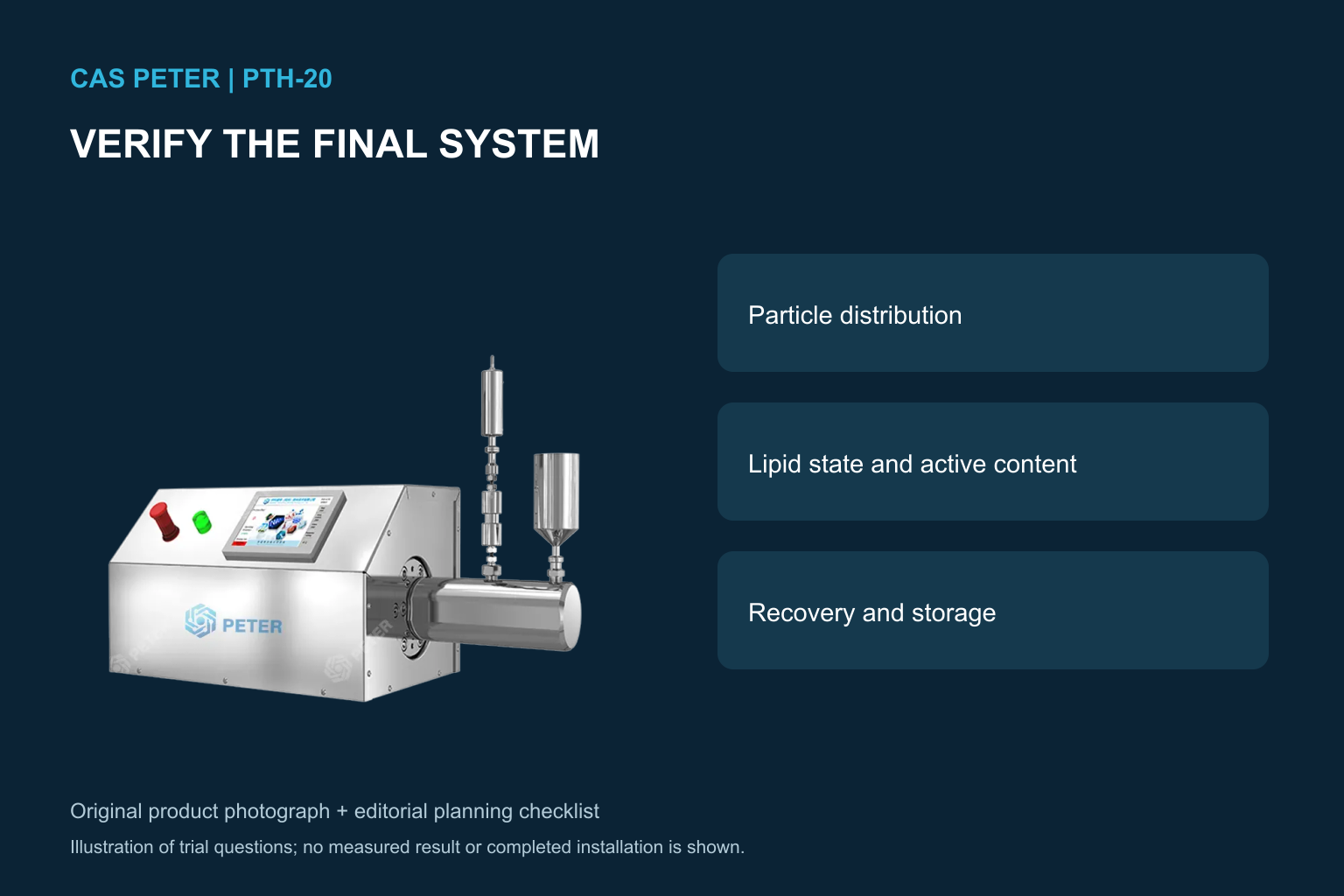
Use particle-size distribution and an appropriate measure of distribution width, with the method and sample preparation stated. Record whether dilution changes the dispersion and whether a coarse fraction is removed before analysis. A measured small-size population can coexist with larger material excluded from the sample.
Assess the lipid matrix using suitable solid-state or thermal methods where those properties matter to the project. Analyze active content and the distinction between associated and unassociated active using a validated separation and assay approach. Report how the separation procedure could influence the result rather than treating the resulting percentage as self-explanatory.
A development acceptance plan should also include chemical integrity where relevant. Retaining the original concentration is different from proving that the active remains chemically unchanged. These are formulation-development measurements; they do not establish clinical efficacy, administration suitability or approval of a finished medicine.
Retain a complete material balance
Track the feed, recovered dispersion, analytical samples and material retained in preparation or processing equipment. If a fraction is filtered, centrifuged or otherwise removed, describe it. An attractive result from the selected recovered portion should be accompanied by the quantity of material represented by that result.
A hypothetical batch may begin with a known amount of active but recover less active in the final collected dispersion because some remains in vessels or rejected fractions. Report the recovered active quantity separately from the percentage associated with particles. A high association percentage can coexist with an unsatisfactory overall active recovery.
Keep calculations traceable to weighed quantities, measured concentrations and collected volumes. Decide whether reported concentration uses the final formulation mass, dispersion volume or lipid amount. Different denominators can produce different percentages that sound similar in a quotation discussion but answer different technical questions.
Include storage and the next handling step
Characterize at a defined time after cooling and again during the planned observation period. Retain particle-size distributions, visible appearance and relevant composition or solid-state observations. Avoid declaring shelf life from a short screening experiment or from an unchanged average size alone.
The scale-up review of SLN production highlights issues associated with preparation, crystallization and transferring production routes. The practical implication is to preserve the complete process history when moving beyond laboratory screening. A nominally identical pressure does not recreate a different premixing, cooling or holding sequence.
If drying, concentration or incorporation into another formulation follows homogenization, test that step explicitly. A dispersion that is useful immediately after processing may behave differently after the next operation. Set the acceptance point at the stage that matters to the project rather than stopping at the easiest sample to measure.
Confirm the quoted model against the chosen route
The CAS PETER PTH-20 model page positions the equipment for nanoparticle and nanoemulsion process discussions. It does not demonstrate that a particular hot or cold SLN recipe is compatible. Confirm feed state, temperature envelope, wetted materials, processing volume, pressure, cooling and collection arrangements before introducing a lipid formulation.
For broader equipment context, use the nanoparticle homogenizer buyer checklist. The existing articles on liposome process choice and nanoemulsion stability testing address related but distinct systems. Liposome results should not be used as proof of a solid-lipid matrix, and an emulsion stability test does not by itself confirm active incorporation.
Provide the supplier with the formulation, a description of both candidate routes and the measurements that will decide between them. Ask for a representative trial and retain the configuration and exposure records. Equipment photographs in this article identify the model only; they do not document an SLN trial or a verified pharmaceutical production process.
Educational video: distinguish neighboring lipid carriers
The NPTEL IIT Bombay lecture below introduces nanostructured lipid carriers and their relationship to solid lipid nanoparticles. It helps explain why carrier architecture belongs in the trial brief. It is an academic overview and does not validate a commercial formulation or the operating capability of the pictured equipment.
Educational source: NPTEL IIT Bombay. Watch the lesson on YouTube.
Frequently asked questions
Is cold homogenization completely free of thermal exposure?
No. A cold route can include an earlier melt stage, and processing temperature must still be controlled. Evaluate the complete preparation history rather than the name of the final operation.
Can the same pressure be used for every lipid formulation?
No. Formulation behavior, feed state, target structure and the confirmed equipment configuration all matter. Published settings are experimental examples, not universal instructions.
Is a small size enough to confirm a successful SLN formulation?
No. Assess matrix state, active content and association, chemical integrity where relevant, recovery and storage behavior. The required evidence depends on the intended development objective.