

Spray-Dried Emulsion Redispersibility: Compare the Feed with the Reconstituted Product
Spray-dried emulsion redispersibility is the ability of a powder to rebuild a useful emulsion under defined reconstitution conditions. It cannot be accepted from the droplet size of the liquid feed alone. Compare the initial emulsion with the reconstituted product, using matched oil concentration and a documented water, temperature and mixing procedure. Also inspect free oil, undispersed material and the behavior required in the final application. Homogenization is one stage in this workflow; formulation, atomization, drying, collection and storage can each change the result.
Separate three different questions about the powder
First ask whether water wets and disperses the powder readily. Next ask whether the original oil-droplet population is recovered. Finally ask whether the rebuilt product performs as intended. These questions are related, but a favorable answer to one does not establish the others. A powder can disperse quickly while releasing a coarser oil phase.
Define the intended reconstitution setting before testing. A beverage powder stirred into cool water, an ingredient mixed into a warm food base and a laboratory sample dispersed with surfactant face different conditions. The specification should state the intended liquid, powder concentration, mixing method and time available to the user or downstream process.
Use the broader emulsion homogenization guide for liquid-feed preparation. This article concentrates on what survives the drying and rebuilding sequence. It does not describe a CAS PETER spray dryer or claim that a particular homogenizer produces an instantly soluble powder.
What the research can establish
A study of spray drying a double-layer emulsion stabilized with orange residue examined reconstituted emulsions as well as dry-powder properties. The researchers used complementary observations to distinguish oil droplets from insoluble material and examined powder collection fractions separately. Its findings are formulation-specific, but the measurement distinction is directly useful when planning a trial.
Another study of maltodextrin properties and volatile retention during spray drying assessed initial emulsions, dry particles and their redispersion using a defined analytical preparation. It connects powder structure with retention in its model system. Its surfactant-assisted redispersion method is an analytical condition, not a recommended consumer preparation or a general food formulation.
These studies show why the dry particle, the oil droplet and the retained ingredient require separate measurements. Neither paper provides a universal pressure, drying temperature or wall-material recipe. The workflow below is a development framework for the actual formulation and supplier-approved equipment conditions.
Establish a traceable liquid-feed baseline
Record oil identity, emulsifier, wall materials, total solids and ingredient addition order. State the oil concentration on a clear mass basis. Verify hydration and pre-emulsification before comparing homogenization treatments, because incomplete preparation can dominate the difference between feeds.
Measure the liquid emulsion at a defined time after processing and again near the point at which it enters the dryer. Keep a sample under the same waiting conditions as a reference. A stable sample measured immediately after homogenization may still change during the real feed hold, and that change belongs in the process record.
Document actual pressure, pass arrangement, temperature history and any intermediate cooling or dilution. If several homogenization conditions are compared, dry each under a controlled and recorded procedure. Avoid changing the wall-material composition and the homogenizer setting simultaneously unless the trial was designed to separate their effects.

Keep atomization and drying visible in the comparison
The liquid feed does not pass unchanged into a powder. Atomization introduces another process step, and drying creates a solid matrix around the dispersed phase. Record the relevant atomizer configuration, feed properties, drying observations and collection timing with the sample identity.
If the purpose is to compare feed homogenization, hold drying conditions as consistent as practical. Where viscosity differences require a different feed rate or otherwise change dryer operation, report that explicitly. The finished result is then the outcome of the combined process rather than an isolated homogenizer effect.
Keep meaningful collection fractions separate during initial investigation. Chamber deposits and routinely collected powder may differ in history and composition. A sample taken only from the easiest fraction to collect can give a misleading picture of the saleable or usable material. State which fraction supports each reported result and how a composite sample was made.
Define a realistic reconstitution procedure
Choose the intended liquid and record its composition, temperature and quantity. Water hardness, salts, acidity and other ingredients can change the relevant environment, so plain laboratory water is not automatically representative. Start with a reproducible water test if useful, then confirm performance in the intended application liquid.
Control the powder addition sequence and mixing energy. Adding all powder onto a still surface is a different challenge from gradual addition into a well-mixed vessel. Use a method that can be repeated and that reasonably reflects the product brief. Record any rest time before measuring and whether the sample is mixed again before sampling.
Do not use intense rehomogenization to prove that a powder redistributes under gentle stirring. If stronger processing is deliberately part of the downstream application, test and describe it as such. Keep an easy-use test and a diagnostic analytical dispersion separate so the product claim remains clear.
| Stage or observation | Defined measurement | Question it answers |
|---|---|---|
| Liquid feed before drying | Droplet distribution and sample preparation record | What dispersed state entered the dryer? |
| Dry powder | Moisture-related properties and collection identity | What material was produced and sampled? |
| Powder during wetting | Visible clumps and time under a fixed mixing method | How readily does the powder incorporate? |
| Reconstituted emulsion | Droplet distribution with complementary observation | Is the useful oil-droplet state recovered? |
| Reconstituted application | Free oil, holding stability and required function | Does the rebuilt product meet its actual use? |
This qualitative planning table separates measurement roles identified by the cited research. It provides no numerical acceptance limits or represented CAS PETER trial outcomes.
Compare oil droplets on a matched basis
Compare equivalent oil concentrations or clearly explain the adjustment used. A diluted feed and a concentrated reconstituted sample can produce different measurement behavior. Record the dispersant, optical model where relevant, dilution, temperature and mixing immediately before analysis.
Use the same meaningful distribution descriptors and inspect more than the average. An apparently unchanged central value may conceal an emerging coarse population. Conversely, a signal from insoluble wall-material fragments may be mistaken for oil droplets. Microscopy or another suitable complementary method can help interpret what the instrument is detecting.
The guide to DLS versus laser diffraction explains why results from different methods cannot simply be treated as equivalent. Select the method around the expected size range and sample composition. Document any analytical surfactant because it may change weak associations that remain present during normal use.
Keep encapsulation, redispersion and retention distinct
A surface-oil measurement concerns how oil is distributed or accessible under a particular extraction method. A redispersion measurement concerns the rebuilt liquid. A retained-flavor or active-content assay concerns a specific ingredient. None of these alone establishes all three outcomes.
If ingredient retention matters, quantify it with a suitable assay and recovery controls. State whether the reported value is per unit powder, per recovered oil or relative to the starting ingredient mass. Drying yield and collection losses can change the practical result even when the concentration in the collected powder looks favorable.
Likewise, match the meaning of any encapsulation-efficiency calculation to the actual extraction method. Different definitions and sample treatments can produce different reported values. Do not use a literature value from another formulation as an acceptance limit for the current product without a justified development basis.

Investigate a failed reconstitution without changing everything
If the powder wets poorly but its droplets look acceptable after a diagnostic dispersion, focus first on the incorporation step and powder properties. If it wets readily but shows free oil or a new coarse droplet population, compare the feed hold, drying stage and normal-use mixing before blaming the original homogenization setting.
If only stored powder fails, retain fresh-powder and storage references. Record packaging, exposure history and the actual conditions experienced by the material. A change that develops during storage requires a different investigation from a failure present immediately after drying.
Follow the rebuilt emulsion through its intended holding time. The complementary nanoemulsion stability testing guide provides further questions about time-dependent behavior. A satisfactory immediate reconstitution result should not be converted into a shelf-life or ingredient-retention claim without the appropriate supporting tests.
Plan an equipment trial around the complete sequence
The CAS PETER PT-40 product page provides the real homogenizer reference used here. Its role in the proposed workflow is preparation of a suitable liquid feed, subject to configuration and material review. It does not establish the design of the dryer or guarantee the resulting powder properties.
Before sending a sample, provide the liquid formulation, solids, expected viscosity, feed temperature, available volume and planned drying schedule. Confirm compatibility, cooling, retained volume and collection arrangements with the supplier. Include enough material for feed analysis, drying, replicate reconstitution and retained samples, using quantities agreed for the actual equipment.
Agree the acceptance report in advance: actual liquid-processing conditions, feed measurements, dryer records, collection basis, powder observations and rebuilt-product results. This makes the test useful for equipment selection because success is connected to the downstream product rather than a favorable liquid-feed photograph alone.
Supporting lesson on emulsions
The following neutral emulsion-technology lesson provides background on the dispersed oil and continuous liquid phases. It supports interpretation of the liquid-feed and reconstituted-product comparison, while the drying and application decisions require the separate measurements described above.
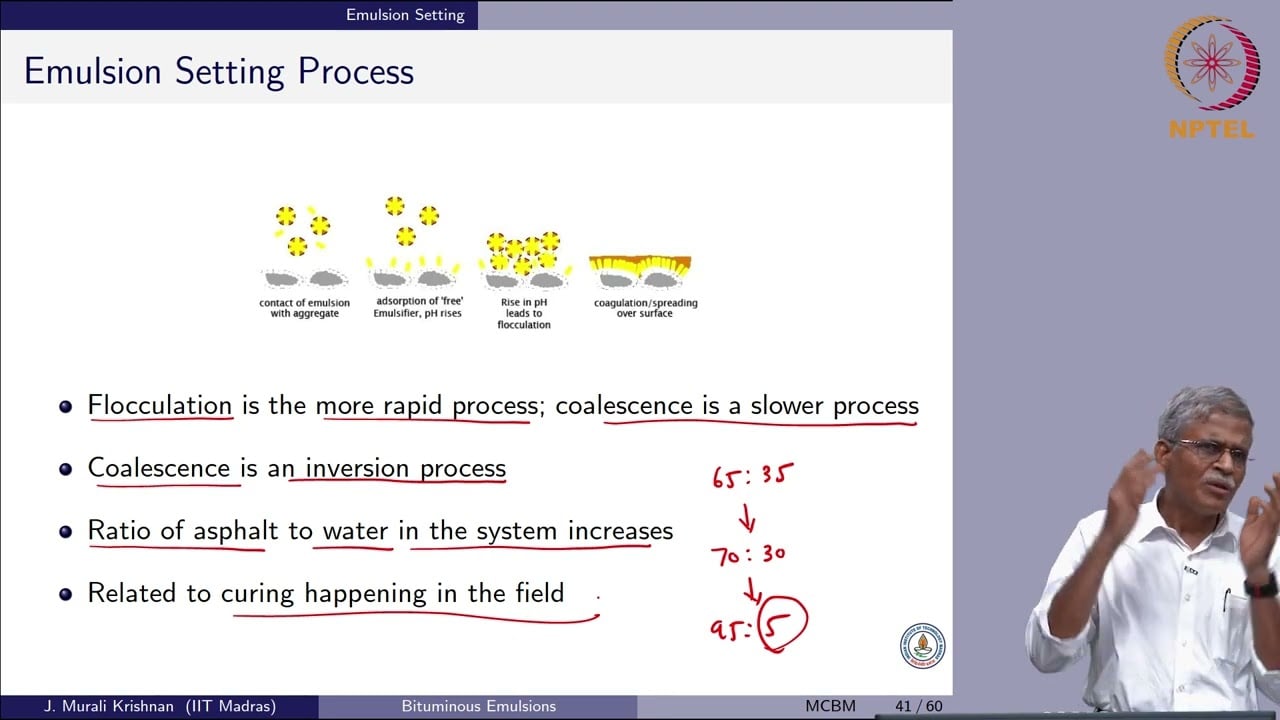
Educational source: NPTEL-NOC IITM. Watch the lesson on YouTube.
FAQ
Does a small feed droplet size guarantee good powder redispersibility?
No. Feed holding, formulation, atomization, drying, powder collection and storage can change the result. Compare the feed with the reconstituted product under defined conditions and inspect performance in the intended application.
Can surfactant-assisted laboratory dispersion replace the normal-use test?
No. It may be useful for a diagnostic measurement, but it describes that analytical preparation. Keep it separate from a test using the actual liquid, concentration and mixing conditions intended for the product.
Is high encapsulation efficiency the same as good redispersibility?
No. Encapsulation efficiency depends on a defined analytical calculation, while redispersibility concerns rebuilding a useful emulsion. Evaluate droplet recovery, incorporation and required product function separately.